
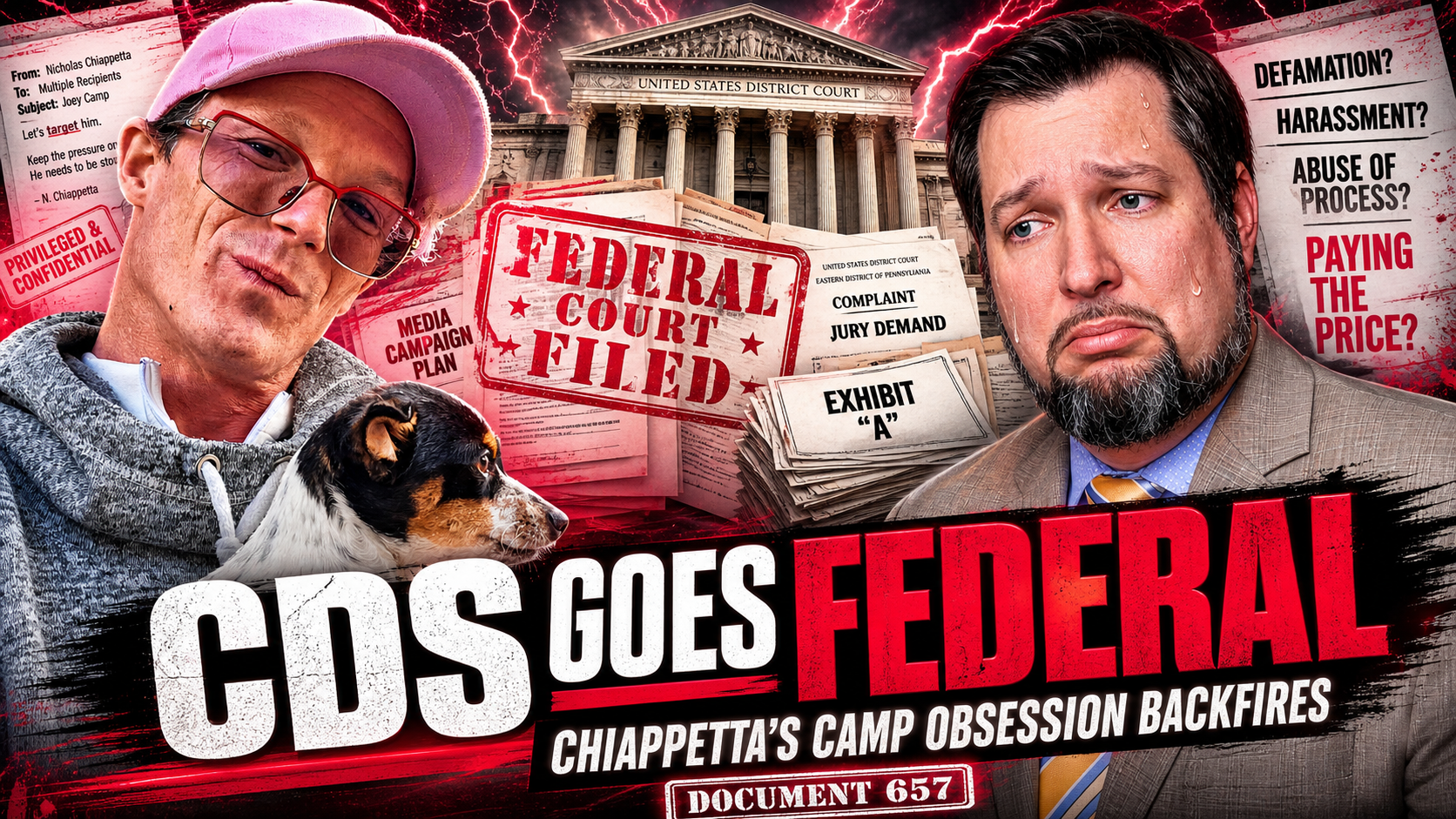
Danesh Lawyer’s Joey Camp Obsession Boomerangs In Fort Myers Federal Court Filing
LUTHMANN NOTE: Lawyer Nick Chiappetta of Lake Worth, Florida, thought he was filing a Joey Camp hit piece in Fort Myers federal court. He may have filed an exhibit, but Document 657 does not coherently claim Camp committed malfeasance by reporting expert witness Robert Gordon to the licensing authorities. It also doesn’t clearly prove Camp authored every attributed communication, or even cleanly lay out exactly what Camp allegedly said without substantial “formatting edits.” It does prove that Attorney-Menace Nicholas Chiappetta has let the specter of Joey Camp dominate the litigation frame. Worse, by attaching Gordon materials, political-bias material, ethics complaints, and Danesh’s own motion in limine, Chiappetta may have opened the door he wanted locked. Politics, expert bias, causation, attribution, and credibility are now fair targets. That is Camp Derangement Syndrome. CDS is what happens when Joey Camp becomes the boogeyman behind every tree — and the lawyer files the fever dream. This piece is called “Joey Camp Derangement Syndrome Goes Federal.”
By Dick LaFontaine and Richard Luthmann
(FORT MYERS, FLORIDA) — In a filing that reads more like a diagnosis, Joey Camp Derangement Syndrome (CDS) has entered the docket in Fort Myers federal court.
Call it CDS. Call it litigation fever. Call it what happens when a lawyer sees Joey Camp behind every email, every insult, every shadow, and every inconvenient fact.
The newest exhibit is not a TikTok rant or a Substack slugfest. It is a May 4, 2026, federal filing by Danesh Noshirvan’s lawyer, Nicholas Chiappetta, in Noshirvan v. Couture, Case No. 2:23-cv-01218-JES-DNF.
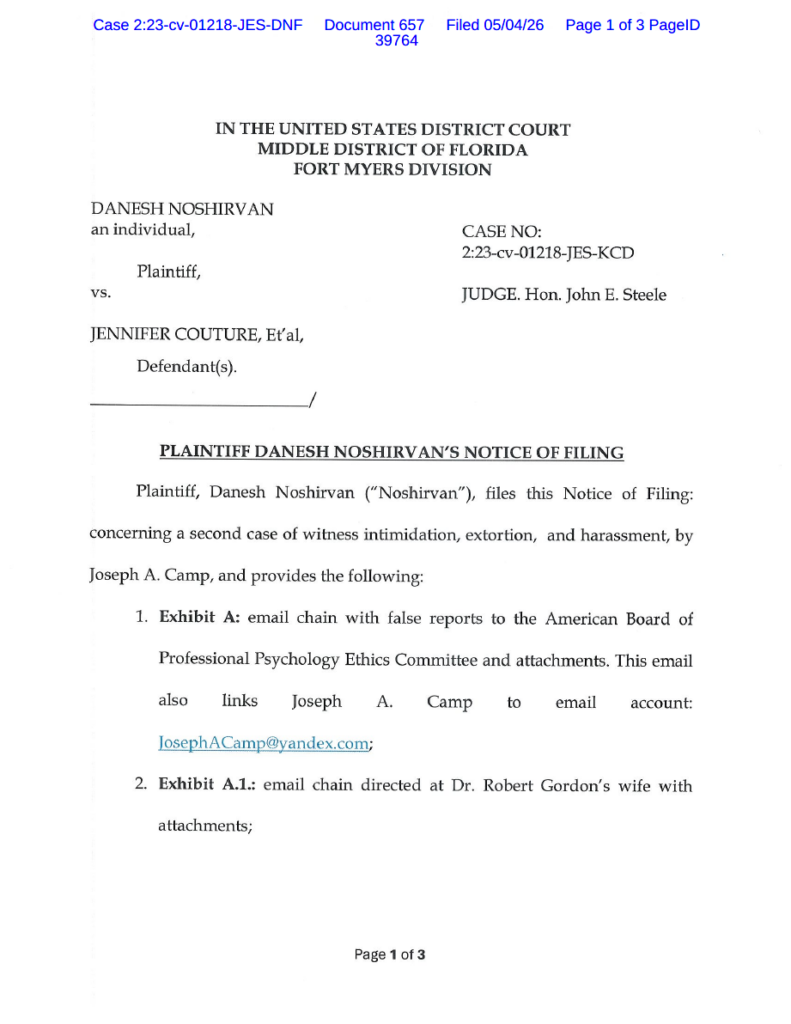
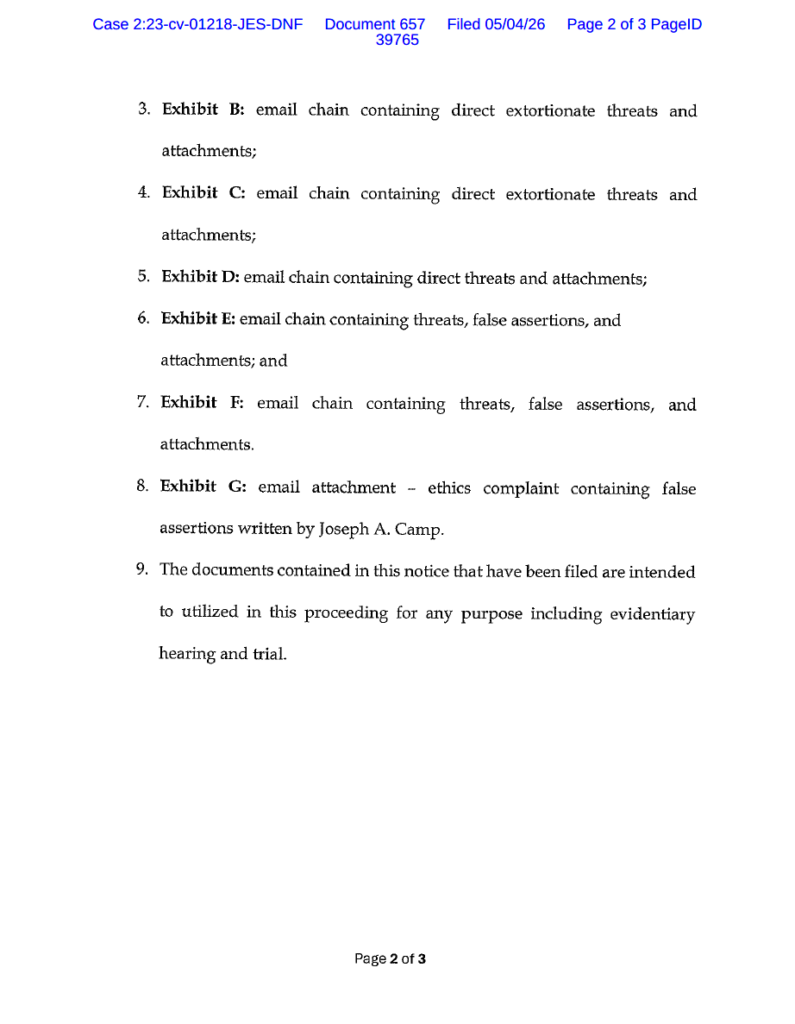
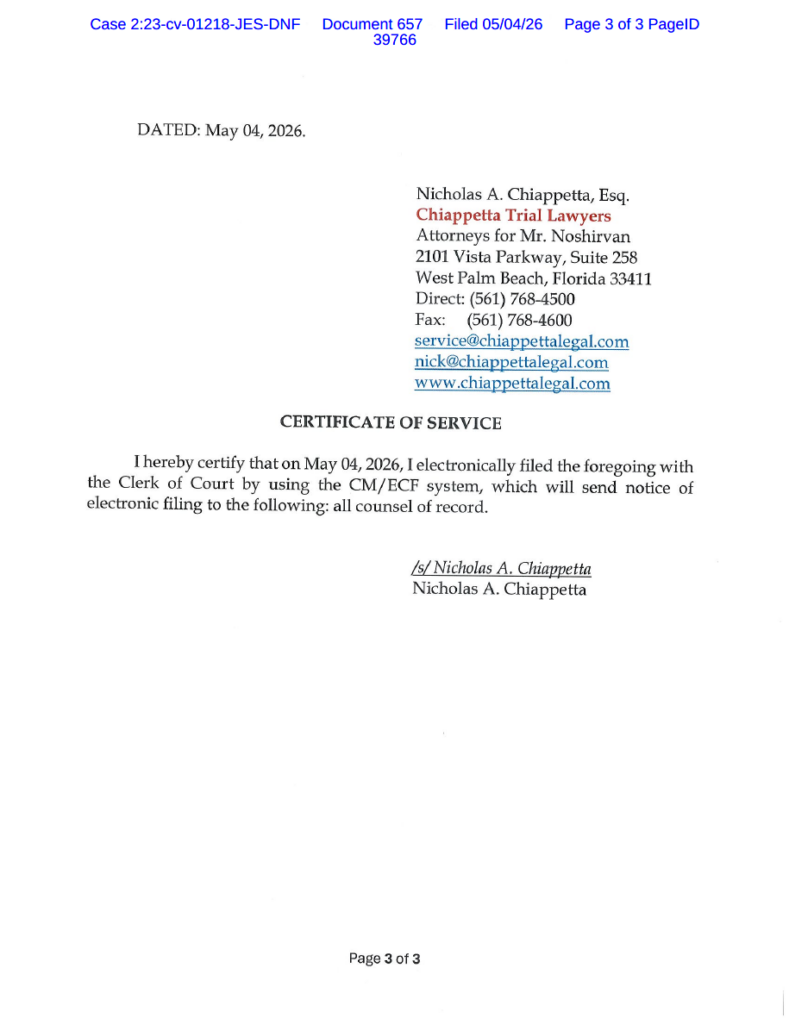
Chiappetta filed a three-page “Notice of Filing” and attached a 139-page pile of emails, ethics complaints, screenshots, political material, and Danesh’s own motion in limine. The notice says the package concerns “a second case of witness intimidation, extortion, and harassment, by Joseph A. Camp,” and it claims the documents may be used “for any purpose, including evidentiary hearing and trial.” That sentence is a blunder. Chiappetta did not bury the Camp issue. He baptized it in CM/ECF.
The problem is simple. The filing attributes the mess to Camp, but the record itself muddies attribution. Some emails appear from Camp-styled accounts. Others are forwarded chains. One exhibit even includes a final “Dirt” email from a “John Doe” account to Danesh.
Additionally, the filing comes on the heels of Camp sending a Cease and Desist – Immediate Retraction Letter to Danesh’s central expert witness.
Camp’s May 4, 2026, legal notice demands that Dr. Robert M. Gordon (Ph.D) retract and apologize for allegedly referring to Camp as “this psychopath” in a May 2 email to Nick Chiappetta, arguing that Gordon never evaluated, interviewed, or assessed Camp and therefore had no ethical or professional basis to make any mental-health characterization of him.
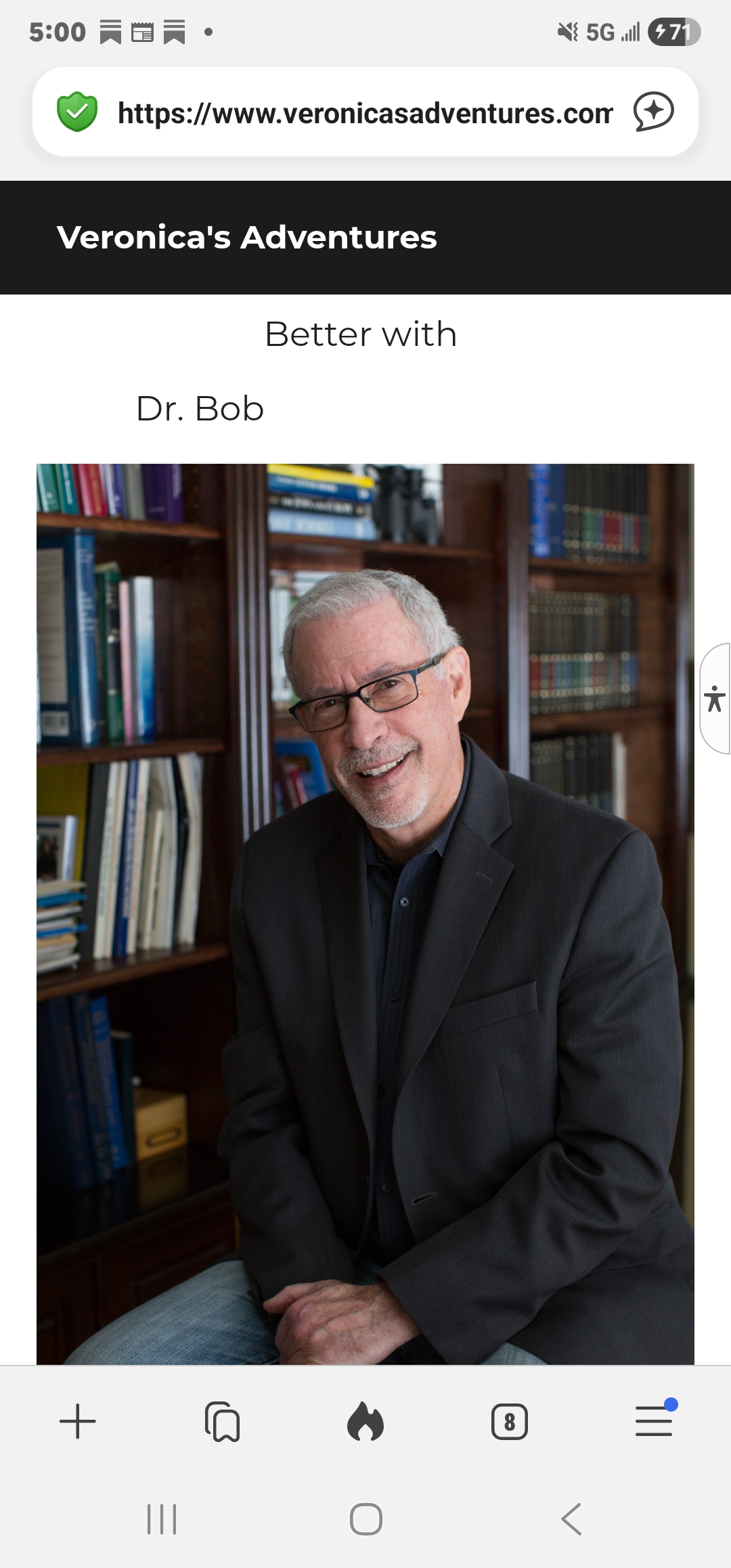
Camp frames the statement as an unauthorized remote diagnosis, cites APA assessment standards, Goldwater Rule principles, forensic-psychology guidelines, and his pending ethics complaints to ABPP, Florida, Pennsylvania, and APA bodies, and demands a written retraction to all recipients, a written apology, a halt to any further psychological labels or characterizations, and written confirmation within ten days.
Camp’s attached email chain shows Gordon asking Chiappetta, “How can you protect me from this psychopath?” while Chiappetta advises blocking Camp’s emails, compiling communications, and characterizing the situation as witness intimidation.
Last year, Chiappetta also cried wolf when expert witness Brad LaPorte’s opinons tanked. The question is whether the Court and the public should buy that excuse again, or just chalk it up to bad lawyers picking bad experts.


The record shows that Chiappetta does not even prove every communication is Camp. It does prove that Chiappetta rushed a dirty bomb into the docket and called it clean evidence.
The filing is even more questionable with the controversey surrounding Chiappetta’s present ethical issues and claims of criminal impersonation of opposing attorney Patrick Trainor, Esq.
That is CDS in legal form. It is not medicine, but media shorthand describing a courtroom fixation so strong that Camp becomes the center of gravity, even when the legal proof needs authentication, foundation, and, apparently, adult supervision.
Joey Camp Derangement Syndrome: The Motion In Limine Just Got Torched
Danesh already had a motion in limine on file. It asked U.S. District Court Judge John E. Steele to exclude a long list of supposedly irrelevant and inflammatory statements.

The motion sought to block references to Danesh as an “Iranian anchor baby,” “jihadist,” “terrorist,” “digital terrorist,” “CCP operative,” foreign agent, hacker, bot user, Supreme Court doxxer, white-people hater, and political extremist, against the weight of the digital record.
It also asked to exclude political references involving antifa, Trump hatred, fascism, immigration, ICE, and police shootings.
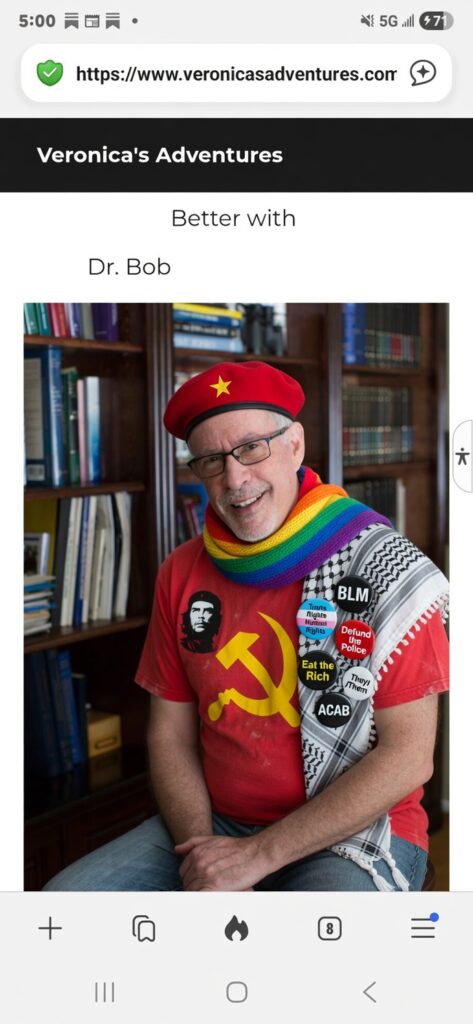
Then Chiappetta filed the Camp package. He did not just complain about Camp. He attached material about Dr. Robert Gordon, Ph.d, Danesh’s psychological expert, including a formal ethics complaint aimed at Gordon and materials discussing Gordon’s political work.
Gordon is not a medical doctor. He prepared non-medical expert reports about the alleged psychological damage to Danesh Noshirvan and his wife, Hannah Butcher Noshirvan.
The Camp filing includes Gordon’s political-leadership paper, which compared Trump, Putin, and Zelenskyy through psychological rating scales.
The paper reported Zelenskyy in the “Healthy” range, Putin in “Major Impairments,” and Trump in “Severe Defects.”
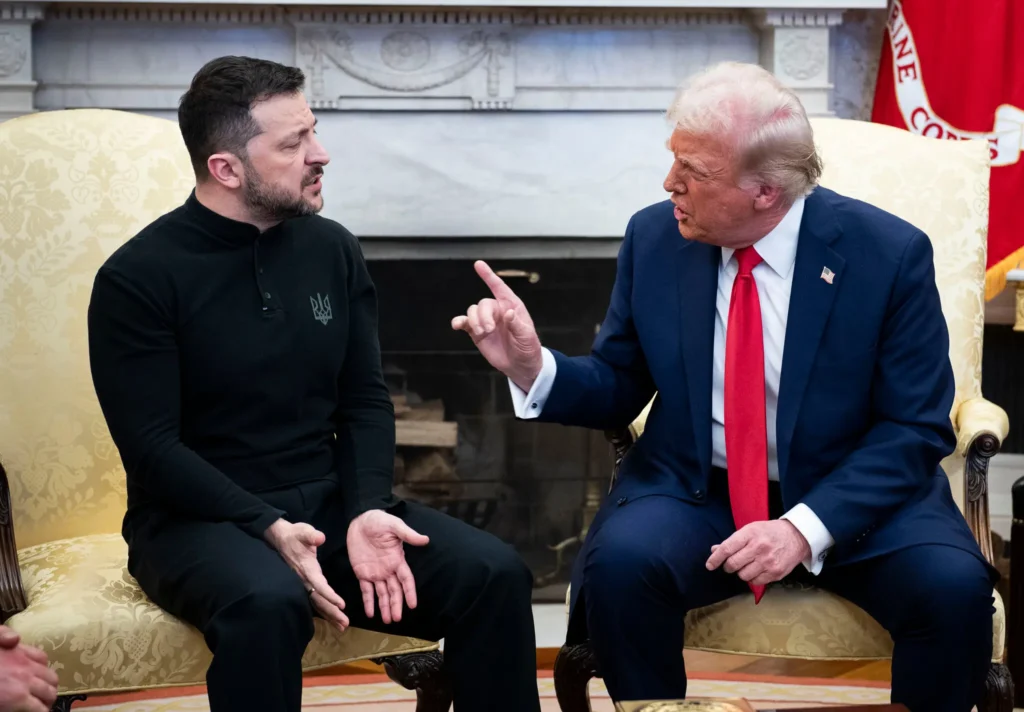
It also discussed the Goldwater Rule problem and Gordon’s view that psychologists do not face the same bar psychiatrists face when assessing public figures at a distance, palpaby so he could criticize President Trump.
That hurts Danesh’s motion. Badly.
Danesh cannot put Gordon forward as a neutral psychological expert, while asking the court to scrub politics from the case. Gordon’s own publication history now makes politics relevant to bias, methodology, expert neutrality, causation, and the reliability of remote psychological judgment.
The attack point is that Dr. Gordon’s Noshirvan opinions are vulnerable on “scope, neutrality, corroboration, and forensic method,” while his political writing shows comfort with politically consequential psychological assessments.
Chiappetta opened that door. Then he walked Danesh through it.
Joey Camp Derangement Syndrome: Eleventh Circuit Law Gives Defendants The Roadmap
The law does not reward a party for hiding bias behind a motion in limine, which is what Chiappetta attempts to do here.
The Supreme Court said in United States v. Abel that proof of bias is “almost always relevant” because the jury has the right to assess evidence bearing on a witness’s accuracy and truthfulness. Abel also held that extrinsic evidence may be used to show bias and that the source and strength of bias matter.
The Eleventh Circuit gives the defense even more ammunition. In United States v. Calle, the court explained that cross-examination must expose facts from which a jury can infer bias or motive and evaluate credibility. Calle also says evidence relevant to a material issue does not become inadmissible merely because it includes bad acts or uncomfortable facts.
Here, the point is not character assassination. It is whether the evidence disproves, explains, or impeaches a material claim, and that principle matters.
Gordon’s opinions appear tied to causation, emotional distress, alleged cyberbullying, and alleged Camp-centered conduct. If Danesh uses Gordon to prove psychological harm (especially where the is no supporting medical diagnosis or course of treatment), the defense gets to test Gordon’s assumptions, his sources, his politics, his methods, and his willingness to make psychological judgments from contested public material.
Rule 702 of the Federal Rules of Evidence requires expert testimony to rest on sufficient facts, reliable methods, and reliable application. Rule 403 allows exclusion only when unfair prejudice substantially outweighs probative value. It is not a magic eraser for damaging impeachment.
That is why Chiappetta’s filing is so self-defeating. It transforms “irrelevant statements” into context and makes the Camp dispute part of the expert-bias fight. Now, Chiappetta’s “open-door invitation” clearly lets defendants argue that politics, Camp, Gordon, Danesh’s online persona, and the disputed emails all bear on motive, credibility, and causation.
Chiappetta’s Malfeasance
Nicholas Chiappetta is already facing serious attorney discipline. A pending attorney grievance is being prosecuted by the Florida Bar. ECF Document 657 has already been forwarded to the Bar investigators:
From: Richard Luthmann <ri**************@********il.com>
Date: On Tuesday, May 5th, 2026 at 9:14 AM
Subject: Attorney-Menace Nicholas Chiappetta – TFB File No. 2026-50,256(15C)
To: Nick Chiappetta <ni**@*************al.com>, pt****@***oo.com <pt****@***oo.com>, ACAPIntake <ac********@********ar.org>, sm****@********ar.org <sm****@********ar.org>, wm*******@********ar.org <wm*******@********ar.org>, kj*****@********ar.org <kj*****@********ar.org>, lw*******@********ar.org <lw*******@********ar.org>, rb*****@********ar.org <rb*****@********ar.org>, eservice Florida courts <se*****@*************al.com>, Vicki Modaffari <vi***@*************al.com>
CC: th***********@***il.com <th***********@***il.com>, Jackson-Fannin, Julian A. <jj******@*********is.com>, hw*******@*********is.com <HW*******@*********is.com>, Patrick Trainor, Esq. <**@***sq.com>, Joey Camp <jo**********@***il.com>, Joseph A. Camp <jo**@**********20.com>, Brian Henry <bh****@*********ry.com>, Sara Burns <sb****@*********ry.com>, kd******@*********ry.com <kd******@*********ry.com>, km*********@*********ry.com <km*********@*********ry.com>, tb******@*********ry.com <tb******@*********ry.com>, Frank Parlato <fr**********@***il.com>, Cortney Kotzian <th************@***il.com>, Dick LaFontaine <RA**********@********il.com>, Rick LaRivière <Ri***********@****on.me>, Modern Thomas Nast <mt*********@********il.com>, Frankie Pressman <fr*************@********il.com>
Dear Sirs and Madams:
Reference is made to this new filing by Attorney-Menace Nicholas Chiappetta in the Noshirvan v. Couture matter in the M.D. Fla. It appears, given his pattern of impersonation, that Attorney-Menace Nicholas Chiappetta is involved in fabricating and/or filing fabricated and disparaging emails to fraudulently aid his case.
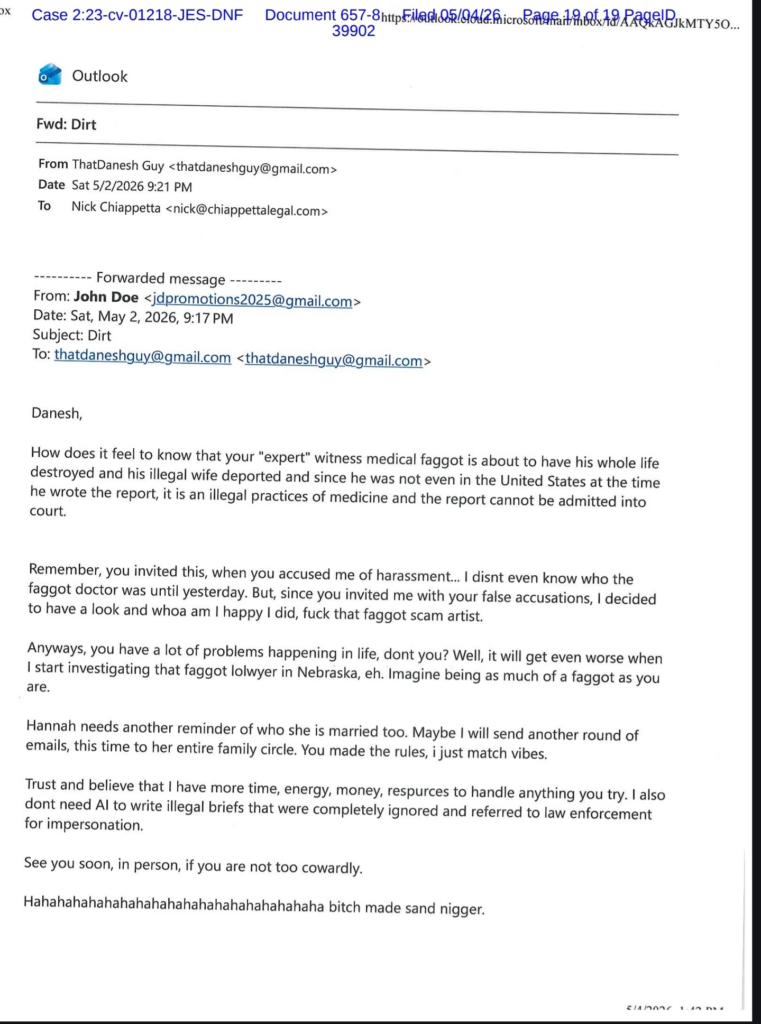
Danesh Noshirvan, Attorney-Menace Nicholas Chiappetta’s client, has previously testified before U.S. Magistrate Judge Nicholas Mizell that he had emails “blocked.” It is unbelievable that this one “got through” unless, of course, it was part of a fraudulent and dishonest common scheme or plan between Attorney-Menace Nicholas Chiappetta, Danesh Noshirvan, Hannah Hoshirvan, and others.
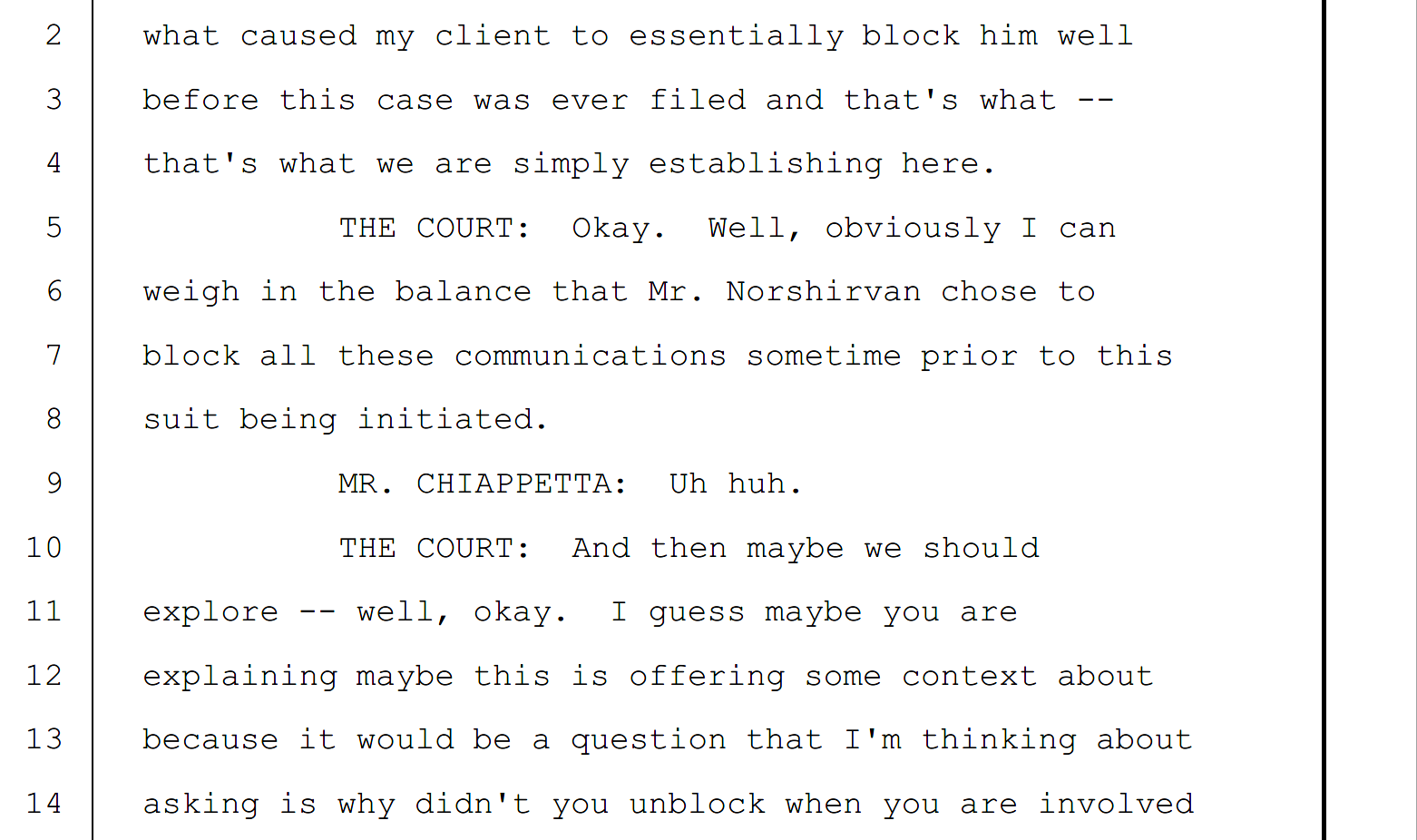
The pattern fits squarely with his criminal impersonation of Attorney Patrick Trainor: pt****@***oo.com. Attorney-Menace Chiappetta ADMITTED this conduct LAST YEAR, and yet the public has not been protected.

Attorney-Menace Chiappetta TOLD ON HIMSELF related to criminal impersonation and dishonesty LAST YEAR, and yet he is still running around Florida with a law license to prey on the citizens and seniors in our great state.
Florida law recognizes a strong public-protection policy encouraging citizens to report professional misconduct. In Tobkin v. Jarboe, the Florida Supreme Court held that individuals who file Florida Bar complaints are protected by an absolute privilege when they keep the complaint within the grievance process, because “individuals with knowledge of attorney misconduct” must be encouraged to step forward so the Court may perform its disciplinary duties. Tobkin v. Jarboe, 710 So. 2d 975, 977 (Fla. 1998). The Court stressed that “[b]ar complainants must be encouraged to step forward with legitimate complaints,” because doing so “further[s] the important public policy of disciplining attorney misconduct.” Id.
The Florida Bar describes its lawyer-regulation function as public protection: as “an official arm of the Florida Supreme Court,” its Division of Lawyer Regulation “protects the public by providing a means to address lawyer misconduct” and “accepts and investigates complaints against lawyers.” https://www.floridabar.org/public/acap/
There is also a string of anti-retaliation framing. Florida’s Supreme Court warned that allowing lawyers to sue complainants would chill valid complaints and “undermine public confidence in this Court’s ability to regulate and discipline unethical members of The Florida Bar.” Tobkin, 710 So. 2d at 977.
The same principle applies with special force to psychiatrists and other health-care practitioners. Florida’s Department of Health has jurisdiction over health-professional discipline and “shall cause to be investigated” any legally sufficient written complaint. Fla. Stat. § 456.073(1). Florida further recognizes that psychiatric practice implicates public safety by authorizing and, in defined threat circumstances, requiring psychiatrist disclosures to law enforcement or potential victims without civil or criminal liability. Fla. Stat. § 456.059. Thus, a citizen complaint about psychiatric misconduct is not harassment or retaliation; it is participation in Florida’s public-protection licensing system.
Further, Florida treats psychology as a regulated public-protection profession, not a private credential immune from scrutiny. The Legislature declared that Chapter 490 exists because “the practice of psychology by unskilled and incompetent practitioners presents a danger to the public health, safety, and welfare,” and that the statute should be “liberally construed” to protect the public. Fla. Stat. § 490.002. Florida’s Department of Health must investigate any legally sufficient written complaint against a regulated health-care practitioner. Fla. Stat. § 456.073(1). Thus, a citizen complaint about psychologist misconduct is not harassment; it is participation in Florida’s public-protection licensing system.
This is important because Attorney-Menace Chiappetta has recently and brazenly attacked professional conduct complaints made against Noshirvan’s expert witness, Dr. Robert Gordon (particularly the Goldwater Rule, unfounded medical and psychological claims, and defamatory statements), in violation of the Florida Statutes and before the disciplinay inquiry can run its full course.
https://www.researchgate.net/publication/385046587_An_Empirical_Study_of_Gauging_Political_Leadership_Comparing_Trump_Putin_and_Zelenskyy
Thank you for your attention to this matter!
Regards,
Richard Luthmann
Writer, Journalist, and Commentator
Tips or Story Ideas:
(239) 631-5957
ri**************@********il.com
LINKTREE
Muck Rack Profile
Substack: This is For Real.
Editor-In-Chief: FLGulf.news
Editor-In-Chief: NYNewsPress.com
Editor-In-Chief: TheFamilyCourtCircus.com
Contributor: Frank Report
Contributor: Sun Bay Paper
Follow Me on Facebook X Instagram LinkedIn TRUTH Rumble Newsbreak SPOTIFY YouTube
We will report any further information received from Chiappetta, his representatives, or the Florida Bar concerning this issue.
Joey Camp Responds
In addition to a Formal Ethics Complaint Against Robert M. Gordon, Ph.D., ABPP and a Supplemental Formal Ethics Complaint, Joey Camp released a statement where he accuses Nick Chiappetta and Dr. Robert Gordon of trying to engineer an exit strategy for Gordon after Gordon’s psychological report came under attack.
Camp claims Chiappetta and Gordon discussed having Gordon quit, then publicly frame the withdrawal as the result of fear, harassment, or intimidation by Camp, whom Gordon allegedly labeled or treated as a “psychopath.”

Camp says this fits what he views as an established litigation pattern: manufacture or exaggerate emails, call it harassment, then use that narrative to protect a weak or compromised expert after the expert is exposed as less independent than advertised. He compares the alleged plan to the earlier “Brad LaPorte situation” and argues that Gordon is acting more like an agent of Danesh’s side than a neutral expert.
“Now that the snake oil salesman got busted, he wants to pull out, and Nick and him conspired, just like with LaPorte, on how to maximize the perjury, fraud, illegal psychological examination of non-party, non-witness, journalist (and public figures such as Donald Trump) now that politics, credibility in techniques and motions in limine are back in play,” Camp’s emailed statement said.
Camp argues that Gordon’s political writings and Goldwater Rule issues have reopened questions about bias, methodology, credibility, and Danesh’s motion in limine.
Camp further accuses Chiappetta of making unsupported allegations and says Chiappetta has used similar tactics before, including in a bar-complaint context. Camp portrays Chiappetta as scrambling to spin the problem now that Gordon’s report has been challenged.
Finally, Camp says he intends to pursue complaints against every license and certification Gordon holds, based on Gordon allegedly defaming, slandering, and diagnosing him without proper basis. He also raises allegations involving Veronica Lee and possible fraud-related issues, though those claims would need independent verification before being treated as established fact.
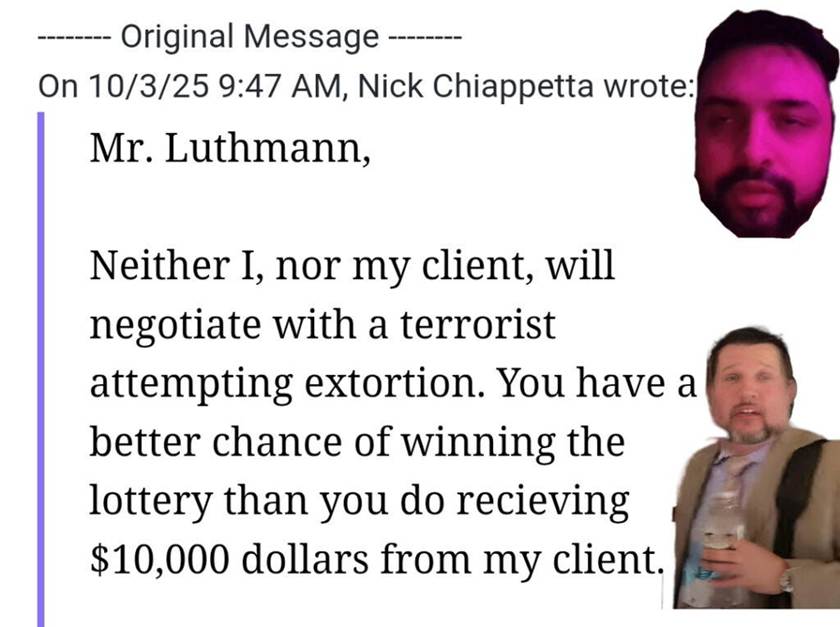
We sent emails to Noshirvan and Chiappetta on this issue for their side of things beyond the ECF filing. No response was received. Chiappetta previously called Luthmann a “terrorist attempting extortion” for participating in court-supervised mediation with U.S. Magistrate Judge Nicholas P. Mizell.
Joey Camp Derangement Syndrome: CDS Explains The Blunder
The filing does not prove every email came from Joey Camp, nor that every accusation in the chains is true. It also does not prove Gordon committed misconduct. Those are foundation, authentication, privilege, and merits questions.
But the filing proves something else. It proves Chiappetta has let Camp, a non-party and a non-witness, dominate the litigation frame. Chiappetta took a package that needed careful handling and blasted it into the federal record, calling it witness intimidation, extortion, and harassment. He attached Gordon materials and Danesh’s own motion in limine.
Chiappetta also told the court the materials may be used at trial. Then, by doing so, he gave defendants a clean argument that the supposedly forbidden subjects are now fair game.
That is the CDS tell. Camp becomes the boogeyman behind every tree when the lawyers stop asking whether each item is authenticated, admissible, strategic, or necessary. Chiappetta asked only whether it helps paint Camp as the villain. That is not trial discipline. That is obsession with a filing stamp.
Judge Steele should not let the trial become the carnival of slurs signature to Danesh Noshirvan’s content creation. Real Rule 403 work still matters and unauthenticated emails require foundation. Genuine prejudice requires redaction.
Hopefully, the Court will reject any blanket blackout that keeps defendants from exploring Gordon’s bias, Danesh’s political framing, Camp attribution, and the causal story behind the claimed emotional damages.
Chiappetta wanted to use Camp as a sword. He may have handed the defense a crowbar.
CDS is not in the DSM. It is in Document 657.
Leave a Reply