
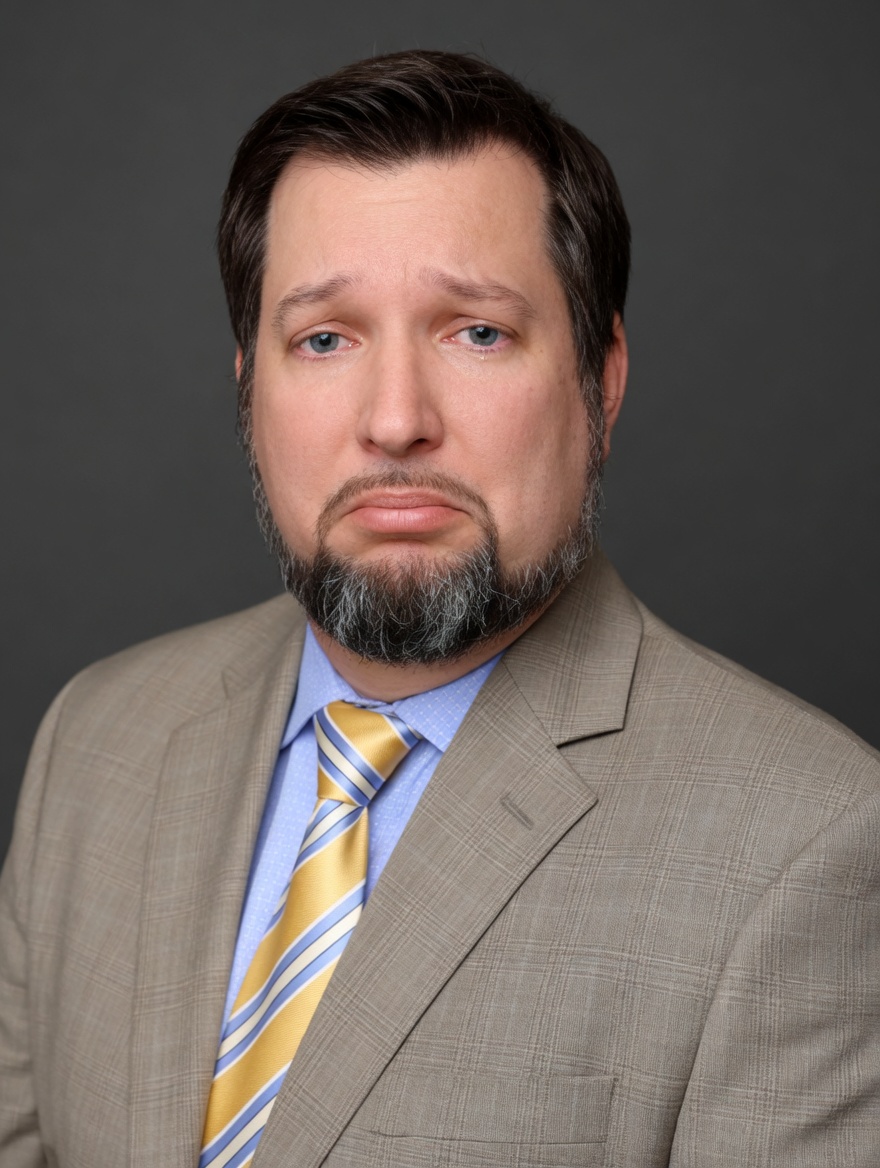
A federal reprimand, an active bar file, and three live Danesh cases now point to the same hard question: Does Nick Chiappetta face real discipline, and if so, what happens to the lawsuits?
LUTHMANN NOTE: Let’s be clear: this isn’t about whether lawyers can represent controversial clients—they can and should. This is about what happens when the lawyer starts looking like part of the operation instead of the guardrail. The Bar doesn’t move cases forward like this unless something smells off. Chiappetta is still standing, but barely. If discipline hits, Danesh Noshirvan’s legal house of cards collapses overnight. And if it doesn’t? The damage is already done. No serious litigator walks into this case blind to the risk. The real question isn’t if the pressure is real. It’s who breaks first. This piece is “Nick Chiappetta’s Bar Troubles.”
By M. Thomas Nast with Richard Luthmann
(FORT MYERS, FLORIDA) – The smoke around Florida Attorney Nick Chiappetta‘s bar troubles is no longer rising only from bloggers, courtroom opponents, or a decades-old paraphernalia charge. It is now rising from the Florida Bar’s own paperwork.
On April 21, 2026, Bar Counsel William Mulligan put it in black and white. He wrote that Chiappetta’s matter was being forwarded to the grievance committee “for further investigation and disposition,” and added that he would serve as the Investigating Member and report back when the investigation was complete.
The companion notice, issued the same day in Florida Bar File No. 2026-50,256(15C), said the grievance committee would consider the matter, that bar counsel would serve as investigating member, and that both the respondent and complainant had ten days to submit anything else they wanted the Bar to consider.
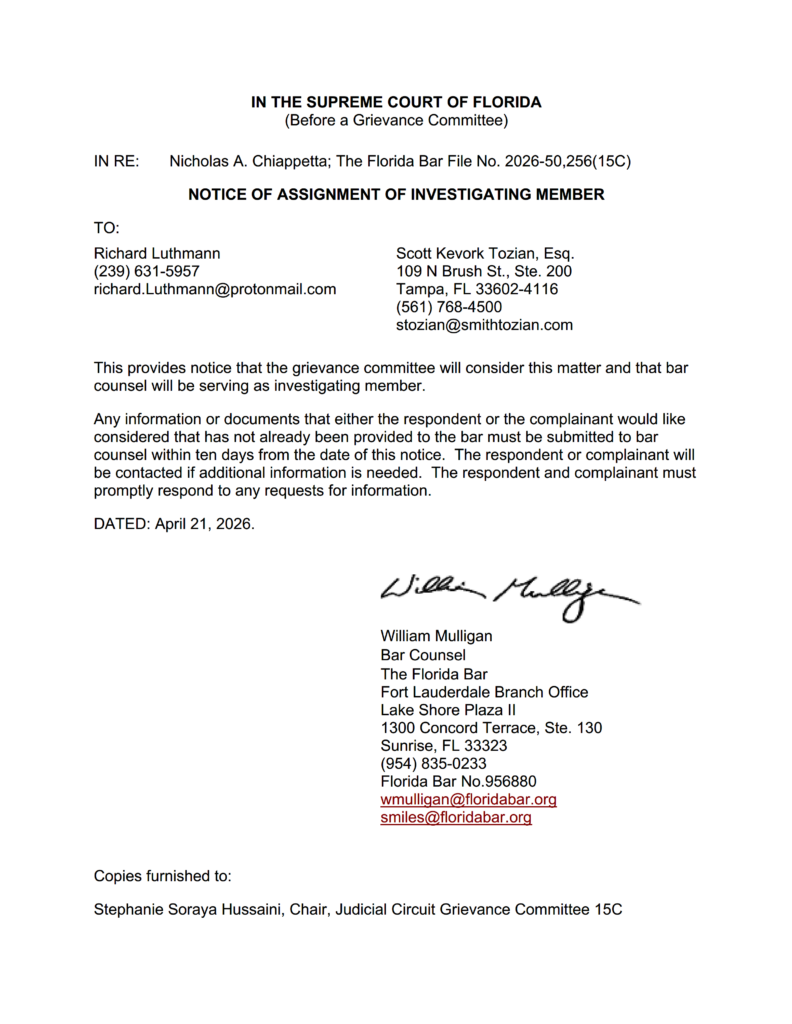
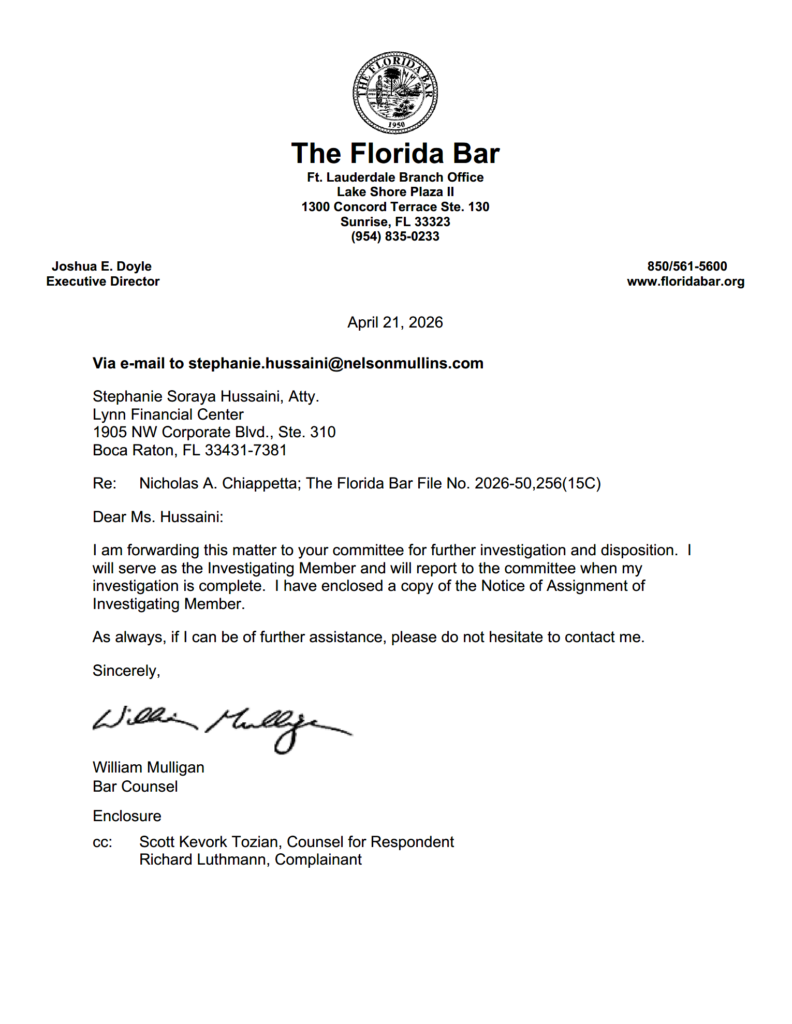
This is not a rumor or internet static. It is a live disciplinary file with a committee, an investigating member, deadlines, and a formal process already in motion. It matters because this is the point where a grievance stops being background noise and starts becoming a real professional threat.
The Florida Bar explains that once Bar counsel decides there are sufficient grounds to proceed, the complaint is forwarded to a grievance committee for additional investigation, and the Bar effectively becomes the complainant-prosecutor.
The Bar also says those grievance committees function like a “grand jury.” They do more fact work, review documents, and hear from witnesses. An investigating member digs in and then makes a recommendation to the committee.
In plain English, the file has crossed from intake chatter into a structured fact-finding stage where the question is no longer whether critics are mad, but whether the Bar believes there may be enough there to justify formal discipline.
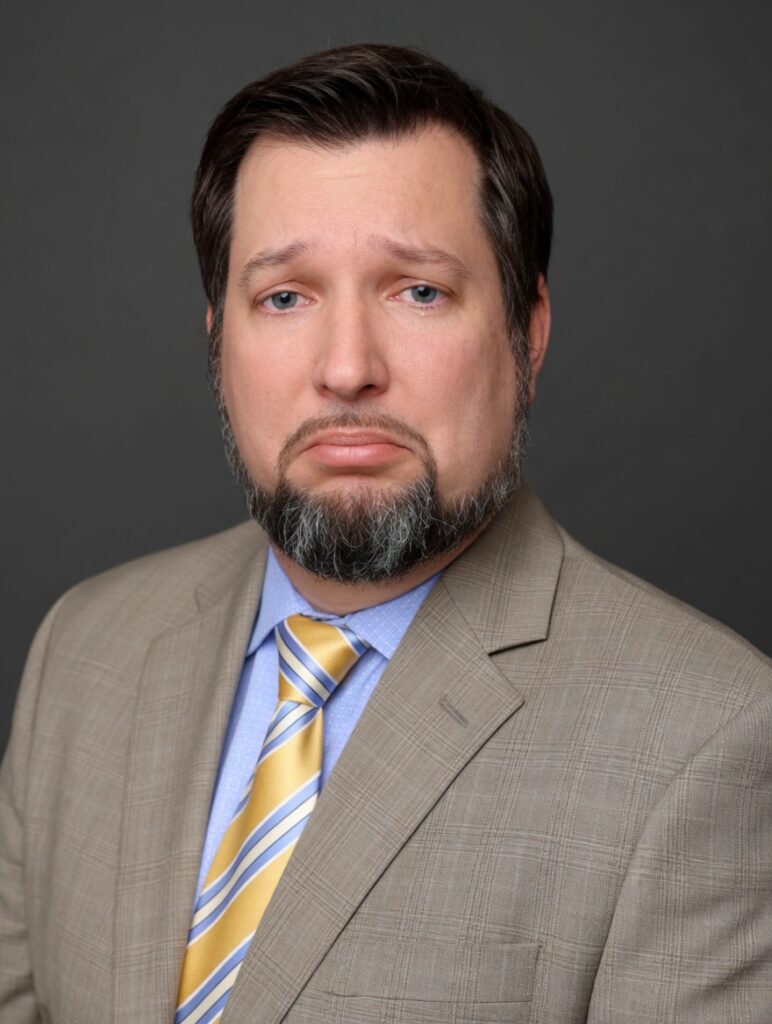
“I call him Nickless,” said Richard Luthmann of Chiappetta. “Nickless filed a Rule 11 sanctions motion against me because I raised these very issues to the Florida Bar, which now says they have more than enough merit to be assigned to an investigating member and put before the grievance committee, and probably the Florida Supreme Court. A Florida lawyer shouldn’t be able to use sanctions threats like jihad to cover up his own transgressions.”
The menu of possible outcomes is broad, and that is why this stage is dangerous but not yet decisive. The grievance committee can find no probable cause and end the matter, or it can close the case with a letter of advice. It can find minor misconduct and issue an admonishment, or it can recommend diversion into a professionalism or practice-management program. These are relatively low-level punishments, the Florida Bar’s “slap on the wrist.”
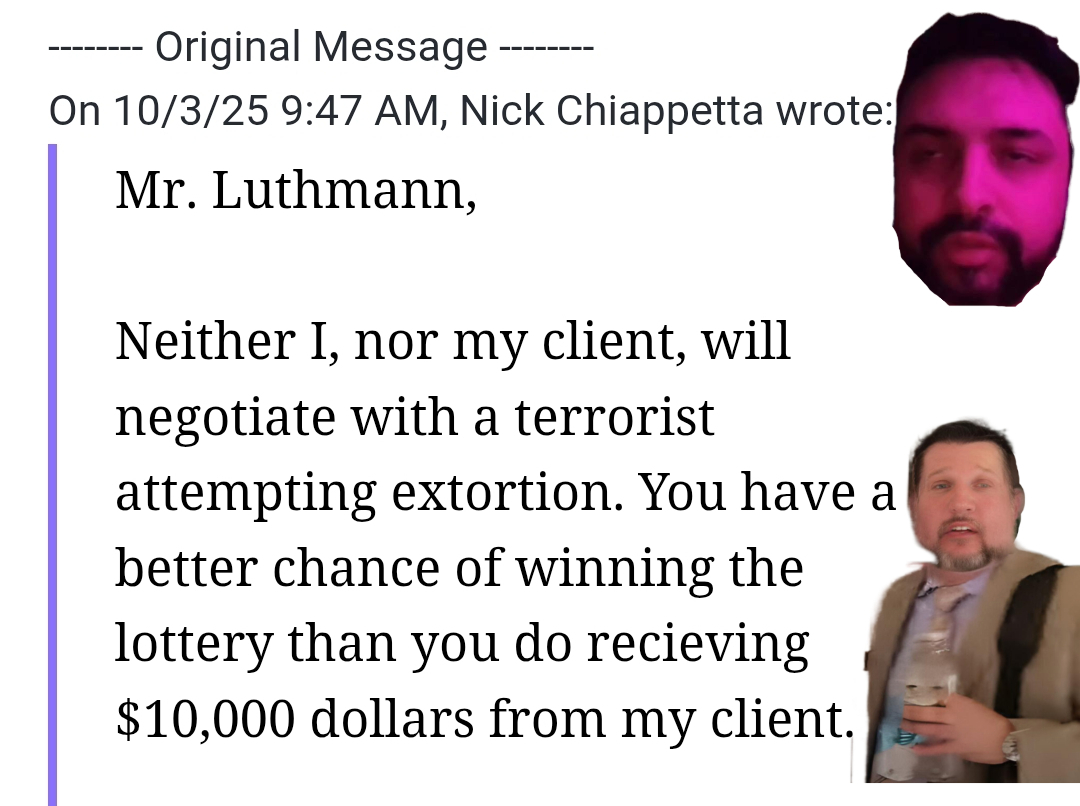
The likely track for Nick Chiappetta’s bar troubles is far worse. With a finding of probable cause, the case is sent toward a formal disciplinary trial in the Florida Supreme Court system. The Bar says these investigations often run three to six months, and sometimes longer, depending on complexity.
The honest update is blunt. Chiappetta is not publicly disciplined yet. But discipline is no longer a hypothetical tossed around by his critics. It is now an institutional possibility inside the Bar’s machinery. The paper trail and clock say so.
And for a lawyer already carrying public baggage from a federal litigation representing a notorious client, that is when the heat stops being theoretical and starts getting personal.
Nick Chiappetta’s Bar Troubles: The court record had already done damage
The bar file gets problematic for Chiappetta because the federal court record has already left marks. His ethics cloud is inseparable from his role as counsel for Danesh Noshirvan, the volatile online personality at the center of the Fort Myers litigation circus. The paper trail says that plainly enough.
In his Bar-defense response, Chiappetta’s own counsel acknowledged that the pending grievance arose from the federal case Luthmann v. Noshirvan, where Chiappetta represented Noshirvan, and then expanded to include Judge John E. Steele’s order in the related Noshirvan v. Garramone and Couture v. Noshirvan matters, where Chiappetta also represents TikTok terror Danesh Noshirvan, who reportedly runs the internet site DaneshFoundYou.co.
The Florida Bar’s September 29, 2025, letter to Chiappetta sharpened the point even further. Bar Counsel made clear that the disciplinary inquiry was not floating in the abstract—it was tied to sanctionable conduct already found in Fort Myers federal court.
And what was that conduct? U.S. District Judge John E. Steele’s order laid it out in bruising detail. During the remote deposition of Hannah Noshirvan, Danesh burst in, cursed out opposing counsel Julian Jackson-Fannin, and turned the proceeding into a profanity-laced sideshow.
Chiappetta initially told his client to stop, but when asked to restrain him, he answered “No,” then joined the attack by telling Jackson-Fannin that his questioning had “inspired” the client and praising the reaction he had just provoked.
The court later found that Chiappetta violated the professional duty to conduct depositions efficiently, orderly, and courteously because he “declined to restrain Noshirvan” when the misconduct was unfolding in real time. That was not a technical foul. It was the moment the lawyer stopped looking like the adult in the room and started looking like part of the problem.
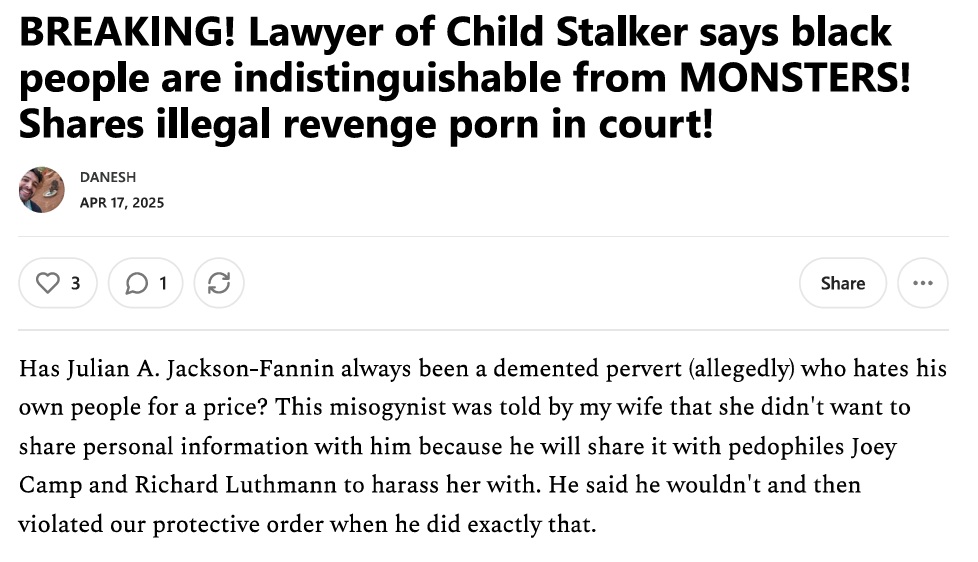
The aftermath made it worse. Judge Steele found that after the deposition, Noshirvan launched inflammatory posts accusing Jackson-Fannin of racism, misogyny, and sexual misconduct, and that those posts led to predictable harassment, including threatening messages and voicemails. The court found that Chiappetta first told Noshirvan to take an April 16 post down and seek relief in court, but then effectively greenlit the client to resume posting, a claim the judge said was “not persuasively rebutted by any evidence.”
The order goes on to say that Chiappetta “also acted in bad faith and is subject to sanctions under the Court’s inherent powers,” and it ends with a public reprimand directed at him by name.
That is why the Bar file matters. Chiappetta is not merely being second-guessed for representing an ugly client. He is under scrutiny because a federal judge concluded that his own conduct in the Noshirvan case crossed professional lines.
“In that same case that Judge Steele continues to nuke Nickless, there are truly heinous claims that he impersonated another attorney, perhaps criminally,” Luthmann said. “It’s definitely dishonesty the Florida Bar should take seriously, especially when the crooked lawyer tells on himself.”
The explosive allegations Luthmann details are the claims that Chiappetta engaged in the impersonation of opposing counsel, New Jersey attorney Patrick Trainor, through a deceptive email setup. A federal filing in Noshirvan v. Couture accuses Chiappetta of creating and using a Yahoo account—pt****@***oo.com—that closely mimicked Trainor’s legitimate domain (ptesq.com) to send and receive correspondence, raising serious questions about intent and ethics.
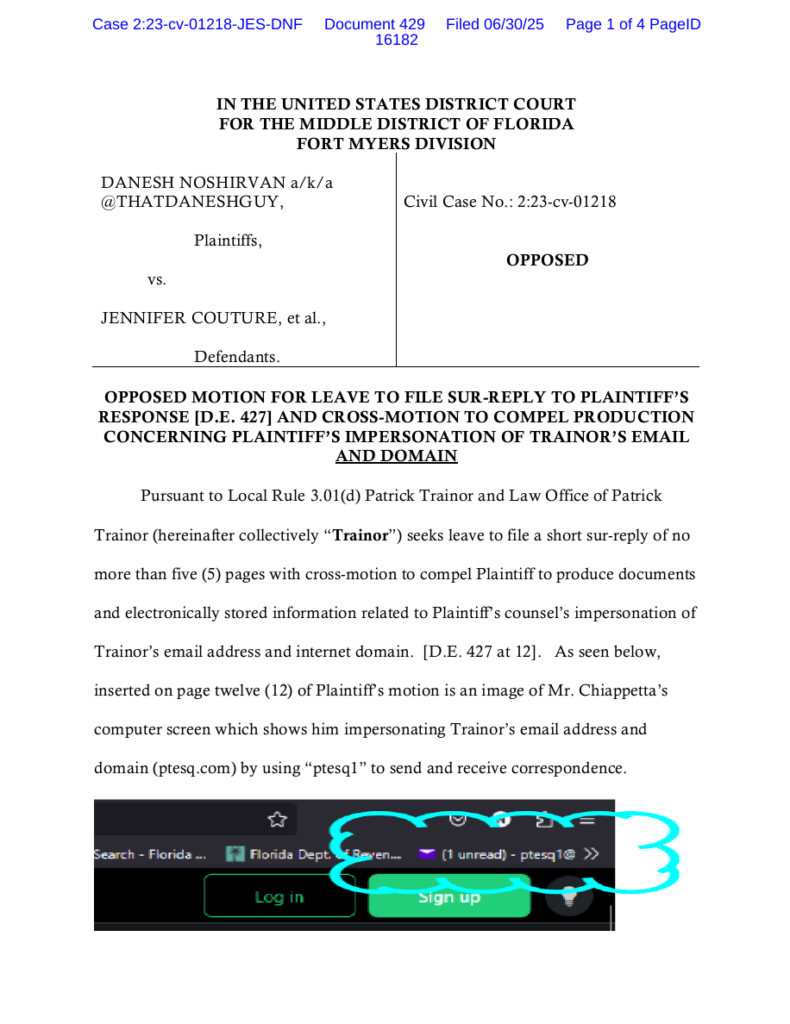
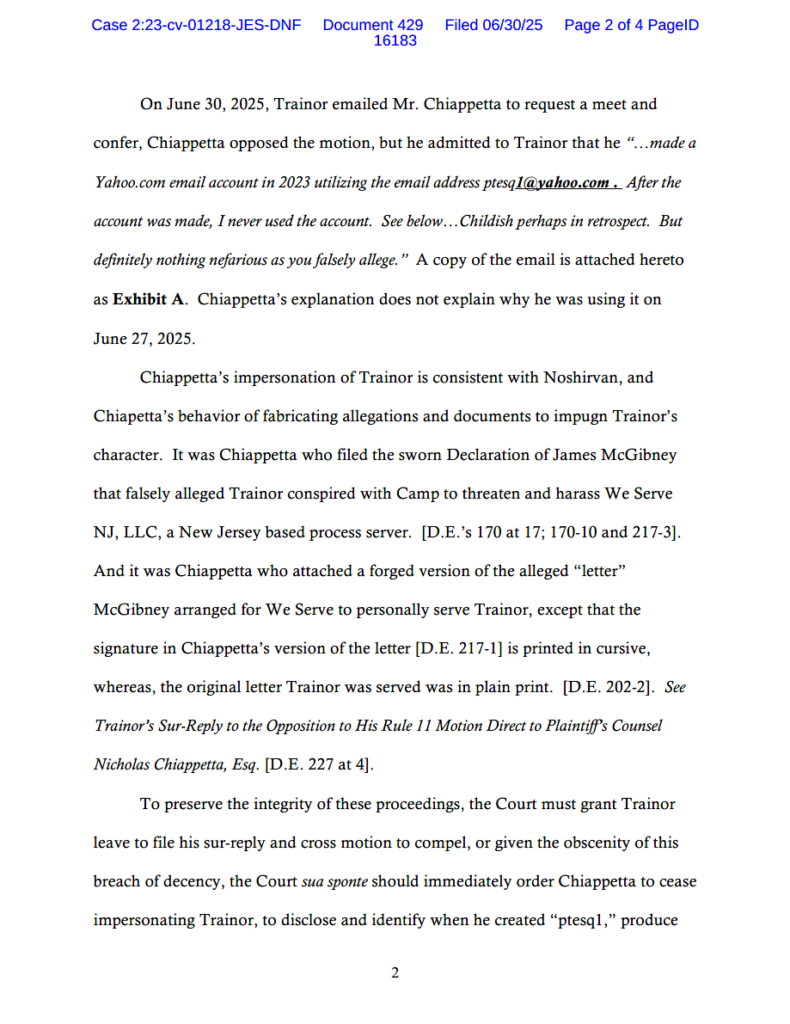
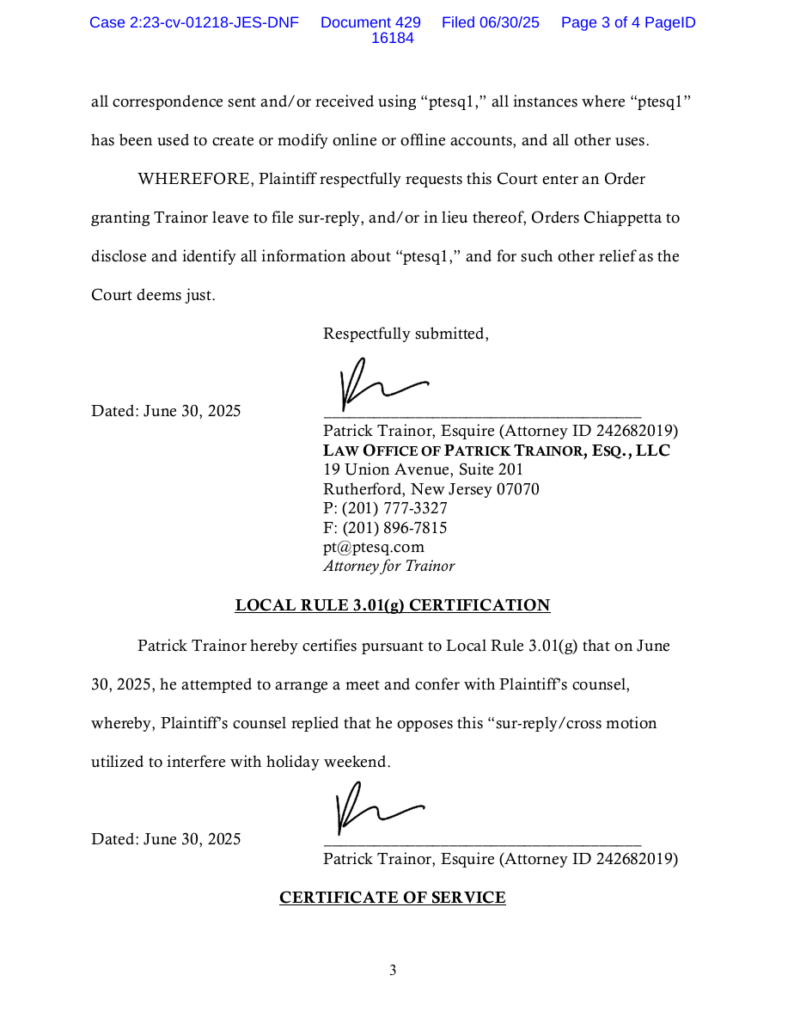
The motion describes this as part of a broader pattern of conduct aimed at manipulating communications and undermining opposing counsel, even alleging the existence of fabricated materials tied to the same litigation.
Chiappetta himself admitted creating the account, dismissing it as “childish perhaps in retrospect,” while denying any nefarious purpose. But in a case already saturated with accusations of bad faith, harassment, and litigation abuse, the optics are brutal.
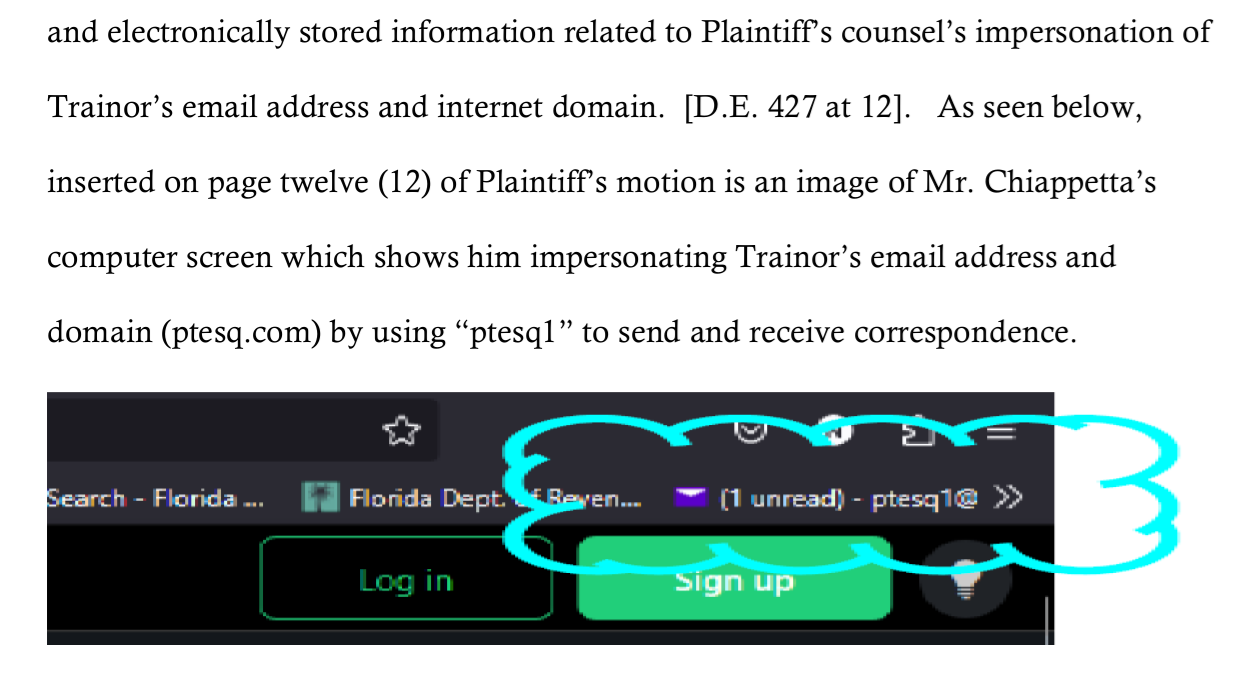
For a lawyer already under Bar scrutiny, even the appearance of impersonating another attorney—whether proven intentional or not—cuts straight to the core duties of honesty, candor, and professional integrity, and adds yet another layer of risk to an already unstable disciplinary picture.
In other words, while Danesh Noshirvan may be throwing hand grenades, the Florida Bar is now asking whether Nick Chiappetta pulled the pin, handed it to his client, and called it advocacy.
Nick Chiappetta Declines to Give His Side of the Story
We reached out to Nicholas Chiappetta prior to publication for his side of things. He has not responded as of press time. Here is what we asked:
——- Forwarded Message ——-
From: Modern Thomas Nast <mt*********@********il.com>
Date: On Tuesday, April 21st, 2026 at 4:26 PM
Subject: Press Inquiry: Florida Bar Investigation of Nicholas Chiappetta and Questions About the Danesh Noshirvan Connection
To: Nick Chiappetta <ni**@*************al.com>, se*****@*************al.com <se*****@*************al.com>, vi***@*************al.com <vi***@*************al.com>, th***********@***il.com <th***********@***il.com>, da*************@***il.com <da*************@***il.com>, da*************@***oo.com <da*************@***oo.com>, pt****@***oo.com <pt****@***oo.com>
CC: st*********@****in.com <st*********@****in.com>, ci*****@****in.com <ci*****@****in.com>, me*************@****in.com <me*************@****in.com>, **@***sq.com <**@***SQ.COM>, jj******@*********is.com <jj******@*********is.com>, hw*******@*********is.com <HW*******@*********is.com>, bh****@*********ry.com <bh****@*********ry.com>, kd******@*********ry.com <kd******@*********ry.com>, tb******@*********ry.com <tb******@*********ry.com>, db***@*********ry.com <db***@*********ry.com>, Jo**@***********ey.news <Jo**@***********ey.news>, jo**@**********20.com <jo**@**********20.com>, Frank Parlato <fr**********@***il.com>, fr*************@********il.com <fr*************@********il.com>, RALafontaine <ra**********@********il.com>, Rick LaRivière <Ri***********@****on.me>, Richard Luthmann <ri**************@********il.com>, th************@***il.com <th************@***il.com>, ti**@*nn.com <ti**@*nn.com>, ne*******@*bc.com <ne*******@*bc.com>, ti**@****ni.com <ti**@****ni.com>, ti**@*********me.com <ti**@*********me.com>, ti**@***fp.com <ti**@***fp.com>, st****************@***********ns.com <st****************@***********ns.com>, SM****@********ar.org <SM****@********ar.org>, wm*******@********ar.org <wm*******@********ar.org>
Attorney Chiappetta,
You are now the subject of a formally advancing Florida Bar grievance matter, and that is not speculation or spin. On April 21, 2026, Bar Counsel William Mulligan wrote that your matter was being forwarded to the grievance committee “for further investigation and disposition,” and that he would serve as the Investigating Member and report back when his investigation is complete. The companion Notice of Assignment confirms that the grievance committee will consider the matter, that Bar Counsel is serving as investigating member, and that both the respondent and the complainant were directed to submit any additional materials within ten days.
That is the backdrop for this inquiry.
The public deserves to know whether this is merely an inconvenience for a lawyer with controversial clients, or whether it is the predictable consequence of a pattern: aggressive lawfare, blurred ethical lines, and representation that appears to edge from advocacy into participation. The Bar’s own paperwork makes clear that this matter has moved beyond a casual complaint and into an active investigative phase.
So here are the questions, and they are not going away.
Do you deny that the Florida Bar is actively investigating you through its grievance committee process? If not, what exactly do you say the investigation concerns? What conduct, in your view, triggered a referral serious enough to warrant assignment of an Investigating Member and a formal call for additional submissions?
Do you believe this is happening because of who you represent?
https://www.thegatewaypundit.com/2026/01/antifa-tiktok-agitator-urges-armed-leftist-militias-fight/
More specifically: do you think your ethics woes are, in whole or in part, tied to your role representing Antifa-connected activist Danesh Noshirvan—a deeply polarizing online figure repeatedly linked by critics to digital mob tactics, retaliatory complaints, censorship campaigns, and politically charged harassment? Do you think the Bar is looking past the client and starting to examine the lawyer standing next to him?
Let’s put the sharper question on the table: is the Bar now asking whether you simply represented an allegedly Antifa-linked agitator, or whether you helped operationalize the tactics surrounding him?
Did you at any point move from counsel to collaborator?
Did you coordinate, encourage, ratify, or facilitate pressure campaigns aimed at critics, journalists, opposing parties, or platform targets?
Did you assist in any strategy designed less to vindicate legal rights than to intimidate, exhaust, silence, or punish?
Did you participate in any filing, threat, demand, or communication that you knew—or should have known—was being used as part of a larger harassment ecosystem rather than legitimate legal advocacy?
Did you ever review the broader public conduct of Danesh Noshirvan and conclude it posed a professional risk to you as counsel?
Did you ignore that risk?
Did you believe your bar card would shield conduct that would look very different if done by a non-lawyer?
Are you prepared to state plainly that your representation of Danesh Noshirvan never crossed the line into aiding reputational warfare, retaliatory process, or extra-judicial coercion?
Are you prepared to state that none of your actions were prejudicial to the administration of justice?
Are you prepared to state that you have no exposure whatsoever for conduct involving frivolous threats, abusive tactics, improper coordination, conflicts, misrepresentations, or participation in misconduct by a client or allied actors?
Because if the answer to any of those questions is less than unequivocal, then the story is no longer just about a loud client. It is about whether a Florida lawyer got too close to the flame and now wants the public to believe the smoke means nothing.
There is also the optics problem, and it is a bad one. Lawyers represent unpopular people all the time. That alone is not misconduct. But when the lawyer’s name begins surfacing not merely as counsel of record, but as an apparent node in the machinery—when the lawyer is perceived as helping give form, threat, and legal cover to a broader campaign—the issue changes. Then the question becomes whether professional judgment remained independent, whether ethical guardrails held, and whether the lawyer understood the difference between defending a client and joining his war.
That is where you now appear to be.
And yes, another uncomfortable question has to be asked: do you think the Bar would be here if your name were not tied to Danesh Noshirvan at all? If you had kept your distance from that circus, would you still be answering to a grievance committee? Or is this the inevitable bill coming due for choosing to stand shoulder-to-shoulder with a client whose public footprint has long invited scrutiny, backlash, and allegations of coordinated abuse?
If your position is that this investigation is baseless, say so. If your position is that it is politically motivated, say so. If your position is that you are being targeted because you represented a controversial man whom critics associate with Antifa-style digital intimidation, say that too.
But answer the core question: why is this happening?
Why did your file get forwarded for further investigation and disposition?
Why is the grievance committee now formally considering the matter?
Why should the public believe this is nothing more than noise?
And why should anyone accept that your role in the Danesh Noshirvan orbit was purely professional, strictly bounded, and ethically spotless?
You have every opportunity to respond in detail. If there is an innocent explanation, now is the time to put it on the record. If there are contextual facts that would rebut the obvious inferences created by the Bar’s own notices, provide them. If you contend that your representation of Danesh Noshirvan has absolutely nothing to do with your present ethics problems, explain why.
Otherwise, the public is left with a very simple and very ugly picture: a Florida lawyer tied to a grievance committee investigation while representing one of the most toxic and controversy-soaked online figures in the game.
That is not a good look.
And unless you answer these questions head-on, it is going to look a lot worse.
Regards,
Modern Thomas Nast
Boss Tweed was just the beginning. Operating in the shadows to expose the shady.
Sent with Proton Mail secure email.
If we receive any response from Chiappetta or anyone related to him, we will issue a further update.
Nick Chiappetta’s Bar Troubles: Withdrawal is not automatic today, but it may be coming
Is Chiappetta gone from the Danesh Noshirvan cases? Not yet. That is the hard answer. The Florida Bar’s own public directory currently lists Nicholas A. Chiappetta as a “Member in Good Standing” who is “Eligible to Practice Law in Florida,” and the profile shows no public discipline history in the last ten years.
That disciplinary status is not window dressing. It means that, as of the Bar’s public-facing records, Chiappetta still holds an active license and can still appear for clients. An open grievance file does not, by itself, strip a lawyer of the right to practice. A pending investigation does not do it either. Even a nasty paper trail, standing alone, does not do it.

Until the Supreme Court of Florida or another court enters an order that actually suspends, disbars, revokes, or otherwise disqualifies him, Chiappetta remains counsel of record who can keep showing up, filing papers, arguing motions, and steering the case.
A grievance committee investigation can damage Chiappetta. A probable-cause finding can endanger him. A public reprimand can shame him. But none of those steps, standing alone, automatically eject him from the Noshirvan cases. A suspension, disbarment, disciplinary revocation, emergency suspension, interim suspension, or a separate case-specific disqualification order would be the kind of event that actually forces withdrawal.
The existing timeline proves that point better than any abstract rulebook lecture. Judge John E. Steele publicly reprimanded Chiappetta in August 2025 after finding that he acted in bad faith in connection with the deposition of Hannah Noshirvan and its aftermath. But the same order did not suspend him from practice, did not disbar him, and did not bar him from continuing as counsel. That is why the next move matters so much more than the last one.
Judge Steele’s August 2025 reprimand was a judicial beating, not a license death sentence. The Bar’s later steps make clear that discipline is being actively considered. That means the practical danger is real, but the trigger has not been pulled yet.
Today, the public record shows a lawyer under live disciplinary scrutiny, not a lawyer already benched. If the grievance committee closes the file, Chiappetta stays in. If it issues only a letter of advice, a minor sanction, or another non-suspensory disposition, he likely stays in.
If the Supreme Court of Florida eventually imposes a suspension, then the calculus changes immediately and dramatically, because suspension strips the privilege to practice. If an emergency or interim suspension were entered, the effect would be even faster and more disruptive. And separate from all of that, a trial judge could still remove him from a particular case through disqualification if the facts and motions justified it.
None of these consequences happen merely because critics are loud, because Judge Steele lit him up, or because a Bar committee is now asking questions. Those events pile on pressure. They do not themselves force withdrawal. That is why Danesh Noshirvan’s lawyer problem is serious, and may become terminal.
Leave a Reply