
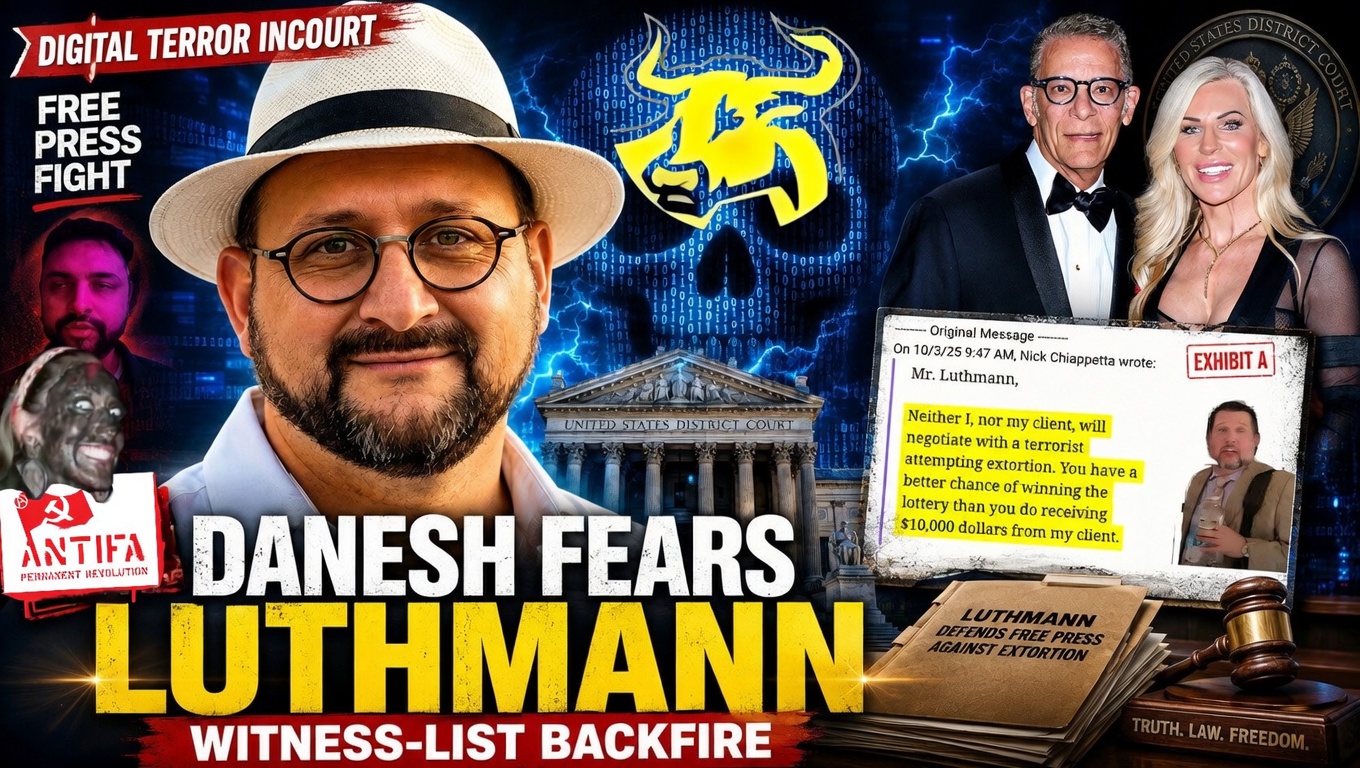
Florida Reporter Says His Testimony Will Torch Danesh Noshirvan’s Faltering Fort Myers Federal Lawsuit
LUTHMANN NOTE: Antifa Leader and Mega Influencer Danesh Noshirvan wanted me on the Fort Myers federal court witness list when he and his lawyer, Nick Chiappetta, thought they could use me, box me out, or spin my reporter’s privilege into some cheap courtroom trick. Then I told the court the truth: I will answer proper, non-privileged questions and protect the free press. Suddenly, they want me gone. That tells you everything. Danesh does not fear lies. He fears receipts. He fears my reporting. He fears what a jury will learn when the TikTok smoke clears. Judge Steele kept the fight alive. The cannon is loaded. Danesh fears Luthmann.
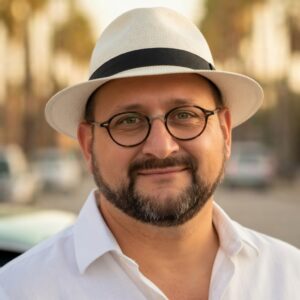
By M. Thomas Nast with Richard Luthmann
Danesh Picked The Wrong Reporter
(FORT MYERS, FLORIDA) — Danesh Noshirvan made the mistake every bully makes when the cameras turn toward him. He thought legal process was a club, and a federal witness list could become a gag order. He thought he could rope journalist Richard Luthmann into his $5 million-plus courtroom carnival, trigger witness sequestration, shove him out of the gallery, and stop him from covering the trial he has owned in print for years.
Then the paper trail started talking in Fort Myers federal court.
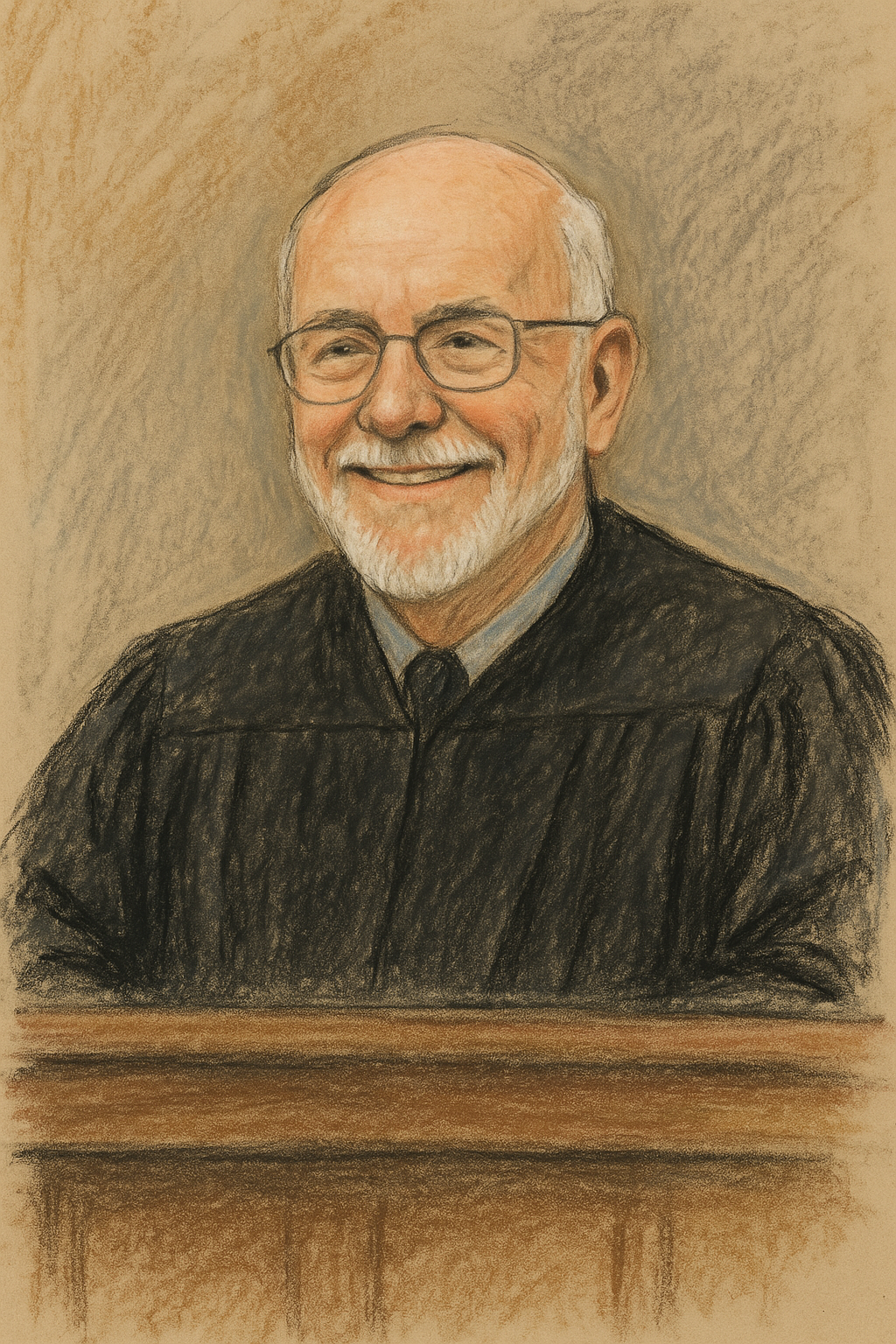
U.S. District Judge John E. Steele did not ring every procedural bell Luthmann asked for. The court denied Luthmann’s bid to intervene in Noshirvan v. Couture. But the May 11 order did something far more important for the next round. It left Luthmann free to come back with a motion to quash or seek a protective order after the court rules on the motions in limine now orbiting his testimony and emails.
That is the legal equivalent of keeping the cannon loaded.
Judge Steele’s order identified the live fight. One motion seeks to exclude Luthmann from testifying as irrelevant and unfairly prejudicial. Another seeks to exclude emails from Luthmann to Patrick Trainor and Trainor’s law firm as irrelevant and cumulative.
The judge did not bless Danesh’s effort to bury Luthmann; he sequenced the fight. The ruling says Luthmann may refile for protective relief after the limine rulings. That is not a defeat. That is a battlefield map. And Danesh knows it.
Danesh Fears Luthmann: The Witness He Cannot Control
Luthmann has become the witness that Danesh cannot control. He is the reporter Danesh cannot out-post, out-lawyer, or out-muscle. For years, Luthmann has hammered the TikTok cancel-culture machine from FLGulfNews, Substack, The Gateway Pundit, Newsbreak, Frank Report, and other outlets.
Luthmann’s March 4 motion says his Substack coverage alone draws more than 1.1 million views per month. Now it’s over 1.5 million.
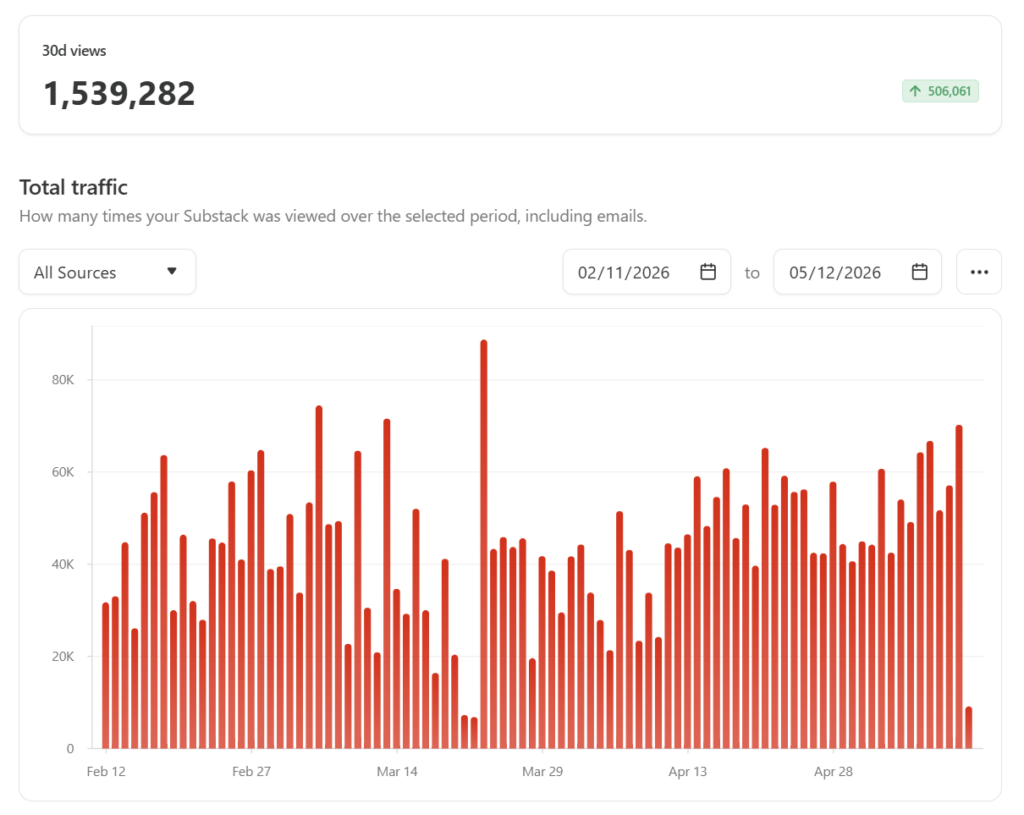
He has covered Danesh’s online mobs, lawfare tactics, doxxing fights, courtroom games, and alleged extremist ties with the sharp end of the spear.
Danesh does not fear a bystander; he fears the man who knows where the bodies are buried in the narrative.
That is why Luthmann’s March 4 motion mattered. It was not a stunt. It was a press-rights counterstrike. Luthmann told the court he was a non-party investigative journalist, not a party soldier, moving to intervene only for the limited purpose of protecting reporters’ privilege, press access, and personal privacy.
Luthmann asked the court to strike him from Danesh’s March 3 witness list, or, if Danesh truly needed him, to make Danesh call him first or preserve his testimony by video before trial.
That would stop Danesh from using Federal Rule of Evidence 615 as a dirty trick to sequester the journalist and keep him out of the courtroom while the trial unfolded.
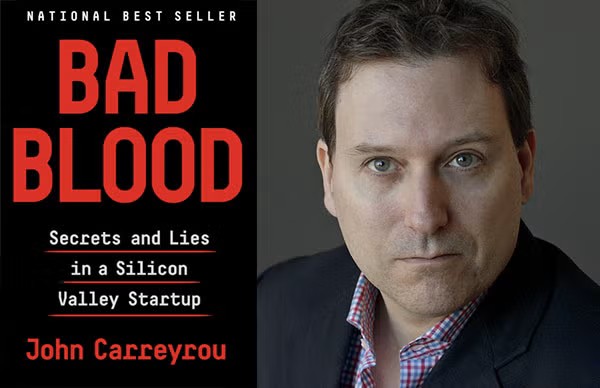
“It’s not a new tactic. It’s a classic scumbag move. Elizabeth Holmes’ lawyers did the same thing in the Theranos trial to Wall Street Journal reporter John Carreyrou,” Luthmann said.
Danesh wanted Luthmann close enough to subpoena, but not close enough to watch.
That was the trick. Luthmann saw it coming from three counties away.
Danesh Fears Luthmann: Chiappetta’s Witness-List Trick Backfired
That was the whole hustle. Danesh listed Luthmann as a witness for supposed document authentication. But Luthmann said he would stipulate to authorship and authenticity of his journalism. No circus, no ambush, no fishing expedition into sources, notes, editorial communications, or medical information needed.
Under Eleventh Circuit law, compelled testimony or materials from a journalist requires a showing that the information sought is highly relevant, necessary to the proper presentation of the case, and unavailable from alternative sources. United States v. Capers, 708 F.3d 1286, 1303 (11th Cir. 2013); United States v. Caporale, 806 F.2d 1487, 1504 (11th Cir. 1986); Miller v. Transamerican Press, Inc., 621 F.2d 721, 726 (5th Cir. 1980), adopted as binding precedent by Bonner v. City of Prichard, 661 F.2d 1206, 1209 (11th Cir. 1981) (en banc).
Florida’s reporter shield statute imposes a similar requirement, barring compelled disclosure unless the party makes a clear and specific showing that the information is relevant and material to unresolved issues, cannot be obtained from alternative sources, and a compelling interest exists. Fla. Stat. § 90.5015(2)(a)–(c).
Luthmann said Danesh had not made that showing because the documents could be authenticated through stipulation or other witnesses. In plain English: Danesh did not need the reporter’s testimony. He needed the reporter removed from the room.
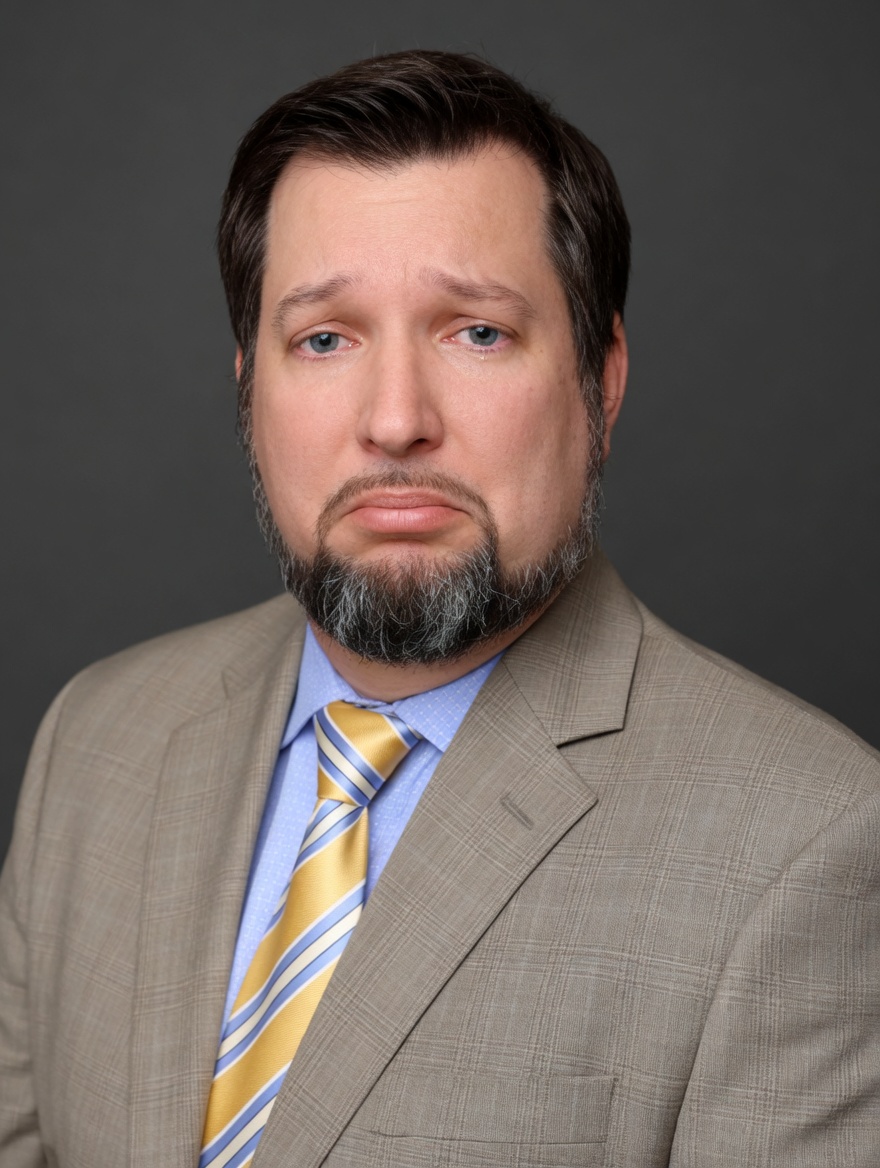
The trick was obvious from the start. Noshirvan and his lawyer Nicholas Chiappetta put Luthmann on the witness list when they thought he would assert privilege, freeze, or give them some made-for-litigation moment they could spin. They thought the journalist would become useful if he refused to answer; that privilege could be twisted into suspicion. They thought the courtroom could be turned into a content farm with subpoenas.
Luthmann’s prior Fifth Amendment invocation was a defensive measure taken amid what he described as threats, online hostility, fear of retaliatory prosecution, and concern that Noshirvan and his associates, including Mr. James McGibney, would twist his testimony into a legal or physical weapon against him—an invocation he later withdrew after Judge Steele’s rulings undercut Noshirvan’s broader “conspiracy theories.“
Then Luthmann took their number, torching that talking point via motion. His filed Declaration is devastating to Danesh because it takes what Noshirvan and Chiappetta apparently hoped would be a dirty little trial trick and turns it into a sworn First Amendment landmine.
The Declaration does three lethal things at once: it establishes Luthmann as a real investigative journalist with a massive audience and a documented body of reporting on Noshirvan; it strips away the false “he’ll plead the Fifth again” narrative by stating under penalty of perjury that Luthmann withdrew any prior Fifth Amendment invocation and will answer proper, non-privileged questions; and it exposes the witness-list maneuver as a tactical attempt to sideline hostile press coverage through Rule 615 sequestration rather than obtain genuinely necessary testimony.
Luthmann does not sound like a frightened witness trying to hide. He sounds like a reporter daring Danesh to put him under oath while warning the court that sources, editorial work product, medical privacy, and press access remain protected terrain.
Even worse for Danesh, Luthmann swears he has little firsthand evidence on the merits except authentication of his own journalism, which he is willing to stipulate to, meaning the stated reason for calling him collapses. The Declaration turns Danesh’s subpoena play into the story: a mega-influencer who once wanted Luthmann listed because he thought privilege could be spun against him now faces a journalist ready to testify, authenticate, protect the press, and explain why the whole maneuver smells like retaliation against unfriendly reporting.
Luthmann puts Danesh and Chiappetta’s motive on trial. The reporter is ready to testify. Danesh is not ready for what that testimony could do.
Danesh Fears Luthmann: In Limine Motion Reads Like A Panic Room Inventory
Then came Danesh’s own motion in limine, and it reads like a panic room inventory. Danesh asked Judge Steele to ban a long list of words, themes, statements, arguments, and insinuations from the trial.
He wants the court to keep defendants, counter-plaintiffs, counsel, and witnesses from referring to him as an “Iranian anchor baby,” a “digital jihadist,” a “jihadist,” a “terrorist,” a “digital terrorist,” a CCP operative, a foreign agent, a hacker, a bot user, an anti-white agitator, or a man who doxed Supreme Court justices.
Danesh wants to block references to Antifa, Trump hatred, fascism, immigration, ICE, police shootings, James McGibney, alleged conspiracies, reports to the FBI, reports to the Florida Department of Health, alleged white-powder claims, and allegations tied to the suicide of a high school football coach.
That is not one motion. That is a confession with margins.
Danesh dressed it up as a Rule 403 fairness pitch, claiming the statements were irrelevant, prejudicial, inflammatory, and designed to inflame jurors with racial, ethnic, religious, political, or ideological bias.
But buried beneath the legal velvet is the hard steel: Danesh does not want the jury to hear the vocabulary of his own brand war.
He does not want the jury to hear what his critics say his online campaigns have done to real people or see the full architecture of the public fight he helped build, exploited, monetized, and then tried to launder through a federal tort case.
Danesh Fears Luthmann: The Words He Wants Buried Tell The Story
Danesh’s “Hail Mary” motion is broader than normal trial housekeeping. It does not merely ask the court to block one slur or one unfair exhibit. It tries to wall off entire subject zones.
Do not say Antifa. Do not say bots. Do not say Supreme Court doxxing. Do not say hacker. Do not say white women. Do not say McGibney. Do not say CCP. Do not say digital terrorist. Do not say foreign influence. Do not say reports to authorities.

Do not say anything that lets the jury see Danesh as the internet shock troop Luthmann has described for years.
That is where Luthmann becomes lethal.
Danesh is suing Dr. Ralph Garramone, Jennifer Couture, Garramone Plastic Surgery, Patrick Trainor, and others in a case that has always smelled like a jackpot grab. Danesh’s damages theory began as a claim exceeding $5 million. The later pretrial damages story ballooned into a moon-shot ask, stacking economic damages, emotional harm, reputational claims, and punitive damages into a staggering demand.
That is the lottery ticket.
The counterpunch is harder. Luthmann says Garramone’s side has a $13.4 million actual-loss claim against Noshirvan backed by tax returns, receivables, and an economist’s report. That is not TikTok boo-hoo math. That is business damages, lost revenue, and canceled work.
That is a plastic surgery practice putting numbers, records, and expert analysis on the table while Danesh tries to sell hurt feelings and reputation fog as gold bars.
The $13.4 Million Counterpunch Changes Everything.
This split is why the reporter matters. Luthmann can connect the dots between publications, campaigns, narratives, litigation tactics, and the broader cancel-culture playbook. He can explain his own reporting, authenticate what he wrote without becoming Danesh’s prop, resist improper questioning into sources, unpublished materials, editorial process, and medical privacy.
And if the jury hears the parts Danesh now wants buried, the case changes from “poor influencer victim” into “internet mob boss ran into receipts.”

That is the problem for Noshirvan and Chiappetta. At first, they wanted to use Luthmann’s journalism to their advantage. They wanted the benefit of his publications, emails, and courtroom proximity and the ability to list him, invoke him, and maybe box him out of the courtroom under the witness rule. But once Luthmann made clear he had no Fifth Amendment problem and no intention of serving as Danesh’s stage prop, the chessboard flipped.
Now Danesh wants distance.
That retreat tells the story better than any press release. Luthmann has Noshirvan and Chiappetta’s number. They wanted the witness when they thought the witness could be managed. They want the witness excluded now because the case is faltering and the testimony could detonate the narrative.
Men do not run from harmless witnesses. They run from witnesses who can sink them.
Judge Steele’s Order Keeps The Cannon Loaded
Judge Steele’s order recognized the next knife fight, ruling that Luthmann’s protective-relief request was premature because pending motions in limine may resolve whether his testimony or emails come in. That is the key. Steele did not say Danesh may rifle through a journalist’s newsgathering files. He did not say Danesh may use witness sequestration to kneecap trial coverage. He did not say Luthmann’s reporter’s privilege is garbage.
He said the matter comes back after the limine rulings, which is why Luthmann is calling it a win.
“My testimony will send Danesh straight to hell where he belongs,” Luthmann said. “Once the motions in limine are decided, I intend to re-file the motion to quash to protect the rights of the free press—if they have the balls to subpoena me. Today’s takeaway is simple: Danesh Fears Luthmann.”
Danesh wanted the sword of process. Now he is stuck with the shield of the First Amendment staring back at him. He wanted Luthmann close enough to subpoena, but not close enough to speak. He wanted the journalist listed when it helped him create leverage, then muzzled when the testimony threatened to detonate the case.
That is not a strategy. That is fear wearing a suit, and Luthmann can smell it from three counties away.


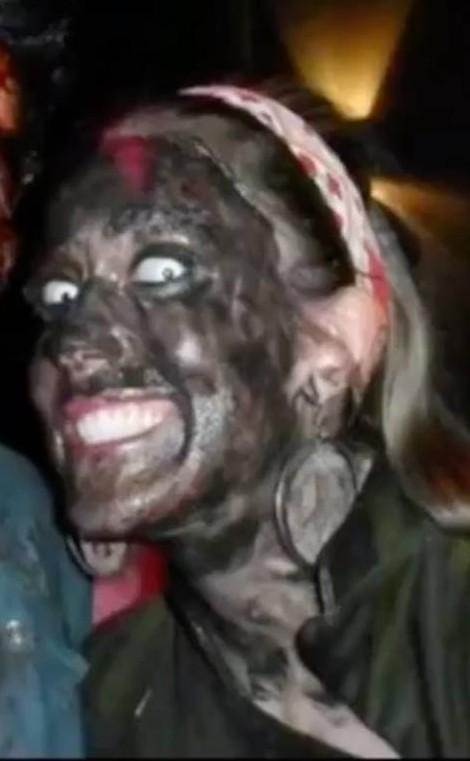
“Danesh and his lawyer, Chiappetta, are watching their case evaporate before their very eyes,” Luthmann said. “Danesh was at his wife Hannah’s Master’s graduation recently. The same Hannah, who some quack expert reports says has complex PTSD. But who, for the past four years, was a master’s student, homemaker, mother, teacher, OnlyFans talent, and God knows what else. That’s no shrinking daisy afraid of the world.”
Luthmann says his journalism covers all of this, and he’s ready to tell the jury.
“The statistics say that the Noshrivan jury will see my reporting. Google Hannah Noshirvan, for example,” Luthmann said. “Do you think the jury won’t? And the OnlyFans pictures and the 2257 courthouse steps video are all they will talk about.”
Judge Steele’s order did not end the press fight. Rather, it preserved the next round and put the issue where Luthmann wanted it: in writing, on the docket, and aimed at the heart of Danesh’s courtroom maneuver.
Danesh Fears Luthmann: The Free Press Fight Is Coming Back
The coming limine rulings will decide whether Danesh gets to sanitize the courtroom into a safe space or whether the jury gets the full, ugly, neon-lit story. Either way, Judge Steele’s order keeps Luthmann in the fight. The journalist who has covered the Danesh machine from the outside may soon have the chance to crack it from the inside.
Danesh built his brand by dragging people into the digital coliseum. Now the coliseum has a witness box, a federal judge, and Richard Luthmann holding the pen.
That is the part Danesh cannot meme away. He is not facing a random blogger, a frightened witness, or some courthouse tourist. He is facing a reporter who read the filings, followed the money, tracked the narrative, and understood the trick before the trick landed. Luthmann saw the play: list the journalist, box him out, threaten privilege, and call it trial management.
Then Luthmann answered with a press-rights motion and forced the real issue into the record.
Judge Steele’s order put the fight exactly where Luthmann wanted it: on the record, in the open, and aimed straight at Danesh’s panic button.
Danesh wanted to use Luthmann’s journalism when it looked useful. Now he wants it buried because it is dangerous. That is the whole story. The TikTok terror king wanted a courtroom prop and got a live grenade instead.
Leave a Reply