
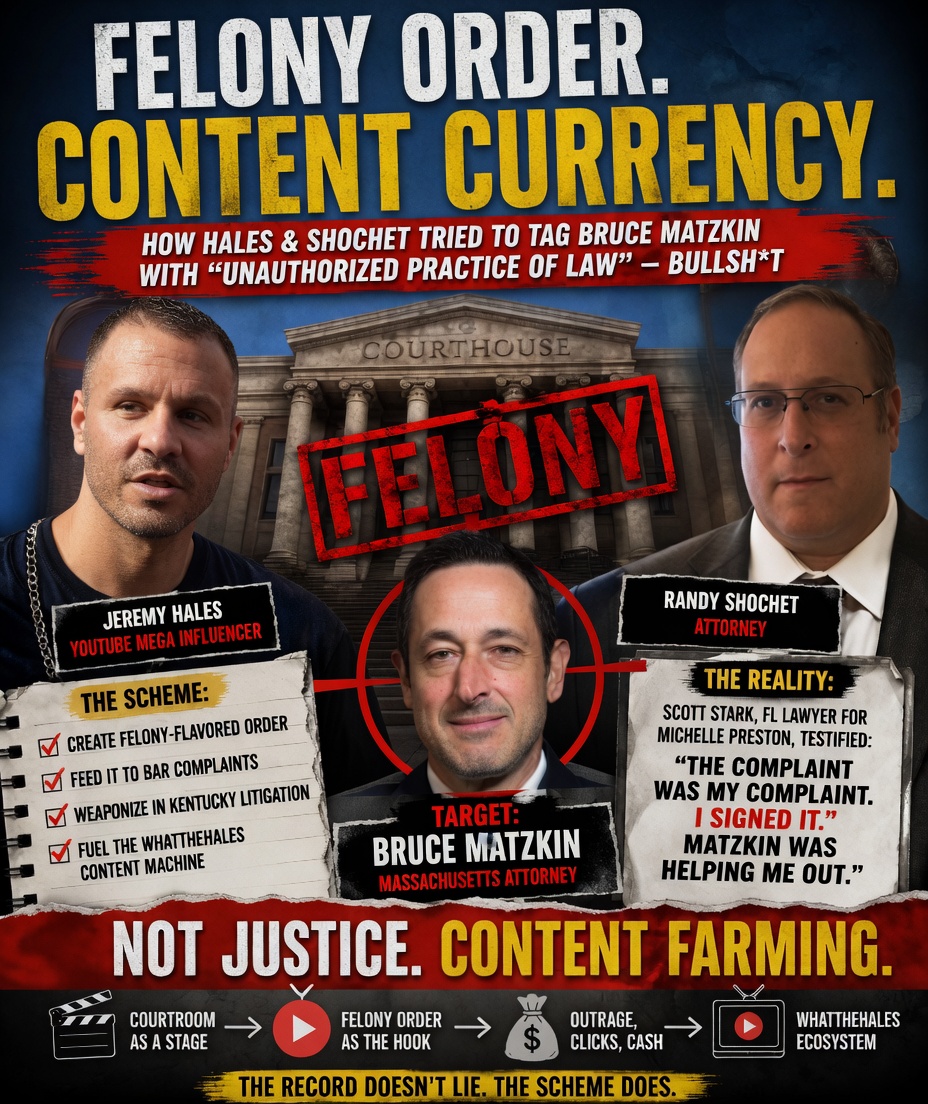
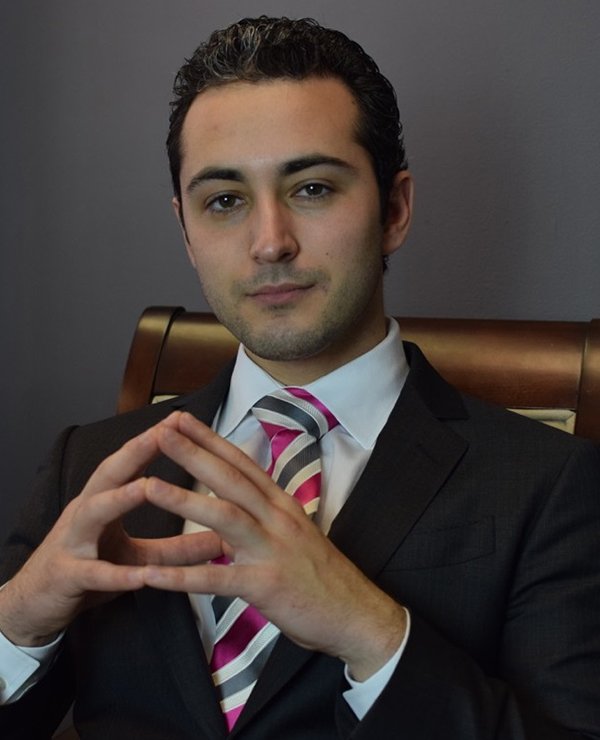
Emails, a deposition, a drafted order, and a Kentucky pressure play expose Jeremy Hales and Randy Shochet as having built a made-for-content “unauthorized practice” rap against Massachusetts lawyer Bruce Matzkin.
LUTHMANN NOTE: This case is not about one motion or one order. It’s about how narratives get built inside litigation. When you line up the Scott Stark deposition, the wrong-docket filing, the clerk emails, the memo framing, the drafted order, and the Kentucky pressure email, a pattern emerges. Each piece alone is explainable. Together, they raise serious questions that land squarely in the laps of Jeremy Hales and Randall Shochet. The system depends on process, notice, and jurisdiction. If those are bent, outcomes can be shaped before arguments are heard. That’s the real story here—not just whether UPL occurred, but whether the process used to declare it was engineered for maximum impact against a Jewish lawyer from Massachusetts. This piece is “Florida Courtroom Content Farm.”
By Rick LaRivière and Richard Luthmann
(LEVY COUNTY, FLORIDA) – This outlet does not start with gossip, rage-bait, or YouTube storylines. It starts with paper. And the paper here is ugly.
The record shows that reportedly anti-Semitic YouTube mega-influencer Jeremy Hales and his lawyer, Randall “Randy” Shochet of Trenton, Florida, tried to turn a messy Florida neighbor-war lawsuit into a professional death trap for Jewish Massachusetts attorney Bruce Matzkin. The label was “unauthorized practice of law” (UPL). The reality, on this record, looks like something else entirely.
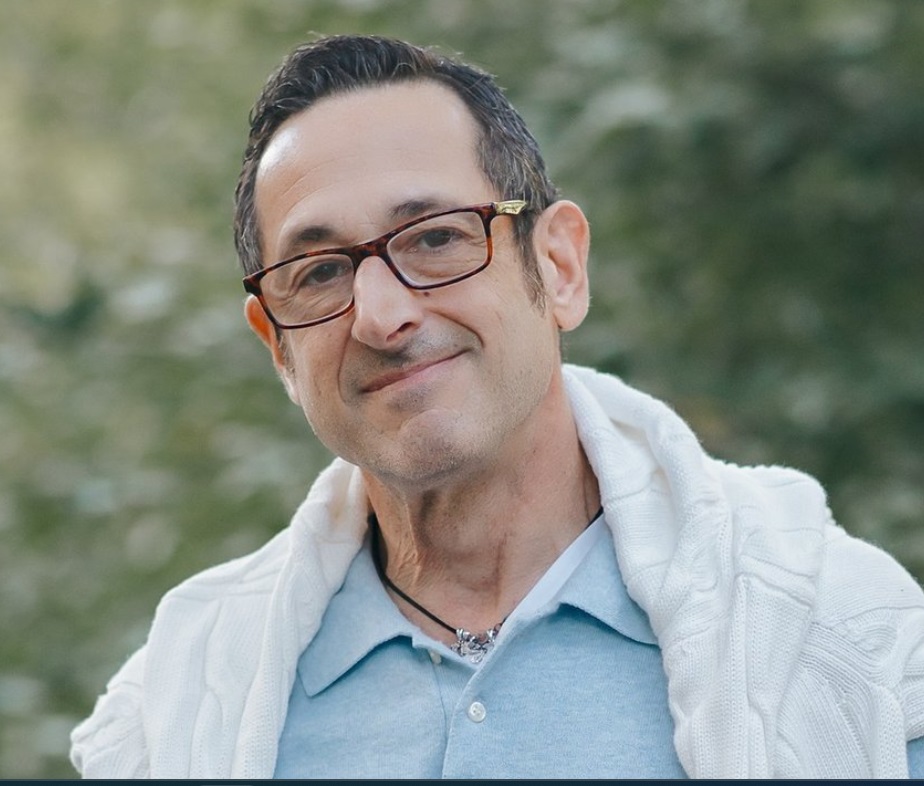
It looks like a content-farming operation with a courtroom attached.
The alleged scheme was simple and brutal. Take scattered filings and emails from one Florida case. Repackage them in another. Brand Matzkin as a rogue out-of-state lawyer. Push for an order using felony language. Feed that order into bar complaints. Use it as leverage in Kentucky litigation. Then let the WhatTheHales ecosystem spin the “UPL” storyline into clicks, outrage, and reputational damage.
There is one major problem. The charge looks like bullshit.
Scott Stark, the actual Florida lawyer for Michelle Preston, testified that the complaint was his complaint. He said he made the final corrections. He signed it. He owned it. Matzkin, Stark said, was not acting in any official role in that case. He was “helping me out.”
That should have ended the smear campaign.
Instead, Hales and Shochet allegedly built around it. They took a weak UPL theory and tried to turn it into a felony-branded cudgel. They did not just want a ruling. They wanted a headline. They wanted a weapon. They wanted content.
That is why this Florida courtroom content farm falls apart under the slightest real scrutiny. The documents do not show Matzkin secretly hijacking a Florida case. They show a litigation machine hunting for a label ugly enough to ruin him.
Florida Courtroom Content Farm: Neighbor War to Legal Chaos
The legal firestorm did not start with a motion. It started with a property dispute that spiraled out of control.
Michelle Preston lived in rural Otter Creek, Florida, when tensions with neighbors Therese and Brett Granger erupted into a full-blown conflict. According to court filings, the dispute involved access to Preston’s property, law enforcement presence, and video recording of events on her land. That footage did not stay private. It moved online.
Enter Jeremy Hales, whose “What The Hales” channel thrives on property disputes, confrontational storytelling, and other “hillbilly catnip.” Videos featuring Preston’s property and personal situation began circulating widely. Preston claimed the broadcasts exposed private areas of her home and pushed a narrative that triggered harassment, including reports to Child Protective Services from viewers reacting to the content.

The lawsuit followed. Preston, through Florida attorney Scott Stark, filed the so-called “thumbnail case” against Hales and others, including Kentucky Attorney Larry Forman, Martha “George” Rizk (Hales’ live-in Middle-Eastern girlfriend), and Tarant Greaves. The claim centered on the use of Preston’s image in YouTube thumbnails without consent. The theory was simple. Her likeness drove clicks, views, and revenue.
But the case did not end with a ruling. It ended with a voluntary dismissal. That move should have closed the book.
Instead, it opened a new chapter. The defense pivoted to sanctions and reframed the lawsuit as frivolous. At the same time, parallel litigation involving the Grangers generated overlapping filings and procedural fights. Those records later became the backbone of a new narrative.
What began as a neighbor dispute had evolved into something else entirely. Litigation, content, and strategy were now intertwined.
The Scott Stark Deposition
The first hard problem for the Hales-Shochet narrative is attorney Scott Stark’s own deposition. Under Shochet’s questioning, Stark admitted Matzkin helped him. But Stark also said he made the final corrections and signed the complaint himself.
“It’s my complaint,” Stark testified.
When pressed, Stark said Matzkin was “not involved in this case in an official manner.” He added that Matzkin was “helping me out.”
That testimony matters. It cuts against the clean UPL storyline. It shows a Florida lawyer remained counsel of record, took ownership of the pleading, and used Matzkin as a helper. That is not the same thing as a rogue Massachusetts lawyer appearing in a Florida court and pretending to be admitted.
Yet Shochet later pushed the opposite frame. He filed a motion accusing Matzkin of unauthorized practice. The motion was filed in the thumbnail case. But Matzkin says the exhibits came from the separate Granger case. That distinction is the fuse.
Florida Courtroom Content Farm: The Wrong Docket Becomes The Weapon
The key UPL allegation is simple: Bruce Matzkin contacted the Levy County Clerk, and in so doing, he must have committed the unauthorized practice of law.
Shochet’s UPL motion, marked “95T” for the thumbnail docket, allegedly on materials from the Granger lawsuit. Matzkin identified three buckets: emails he sent to the clerk about a default in the Granger docket, Preston’s answer and counterclaims in that docket, and Preston’s motion to set aside the default in that docket.

“There is nothing in the motion about UPL in relation to the Thumbnails case,” Matzkin says.
That is where the “Manufactured UPL” theory snaps into focus. Why file the UPL attack in the thumbnail case if the alleged acts occurred in the Granger case?
Matzkin gives two explanations. First, Forman was a defendant in the thumbnail case and later needed the order as leverage in Kentucky. Second, the Grangers may not have wanted to escalate the fight further.
The paper trail supports at least the first inference. Forman was also being sued by Matzkin in Kentucky. Shochet represented Hales in the thumbnail case, where Forman sat as a defendant. Shochet also represented the Grangers in the case where the alleged UPL evidence supposedly originated. That overlap created a litigation switchboard.
This makes perfect sense. The public record already frames Hales as a YouTuber who turns legal fights into internet drama. Hales and Shochet are linked to claims of weaponized lawsuits, false-service disputes, and courtroom theatrics.
Florida Courtroom Content Farm: Clerk Emails And The Hearing Machine
The clerk-channel emails sharpen the picture. On Oct. 23, 2025, Shochet asked Judge Robert Groeb’s judicial assistant for an in-person hearing “regarding this unlicensed attorney’s conduct.” He wanted one hour.

The email chain later showed the court asking if there was any objection to adding the matter to a Dec. 17 hearing. Shochet responded, “No Objection.” The assistant then directed him to prepare the notice.
By Dec. 5, Shochet sent Matzkin an email with the subject line “Notice of Hearing Attached…” The body said only: “Please see attached Motion and Notice of Hearing set by Judge Groeb in this matter.”
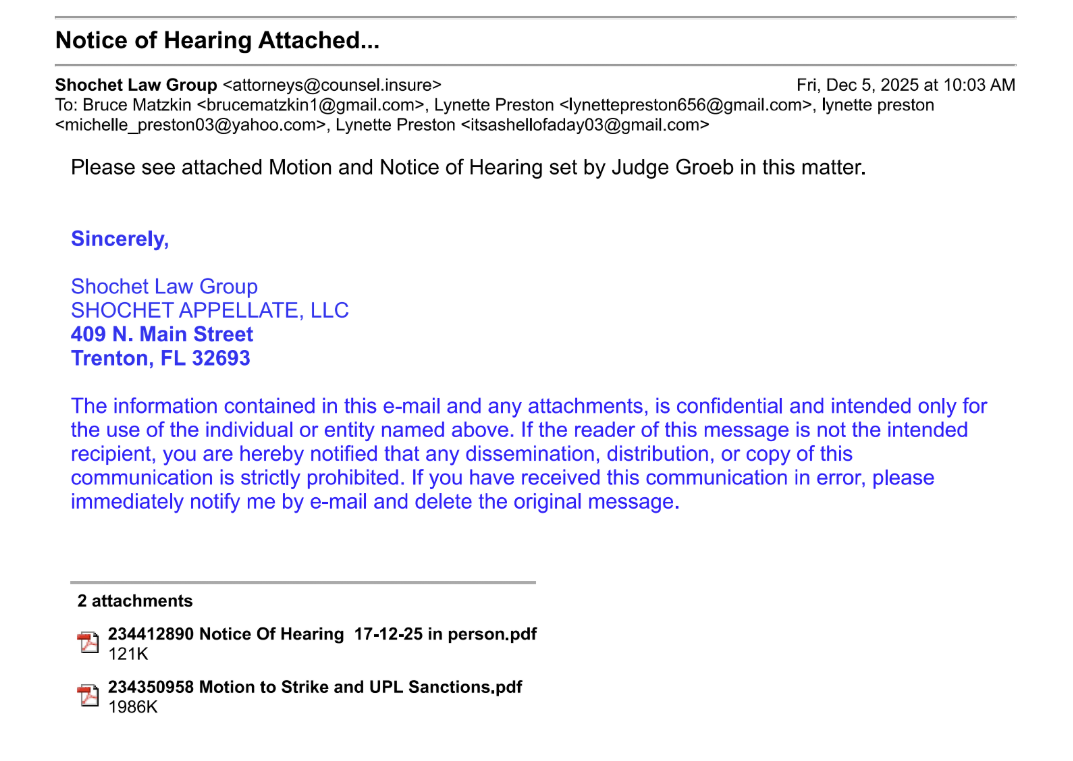
That was the notice Matzkin says he had no meaningful reason to recognize as a direct attack on his law license and livelihood.
Then came the Dec. 8 memo. Shochet framed the issue as whether the court could hear the UPL motion despite Preston’s bankruptcy stay.
But Matzkin says that was a decoy. The memo did not confront the bigger questions. Was Matzkin a party? Had he been served? Could a Levy County circuit judge adjudicate UPL in the first place?
Matzkin called the memo “FOTC — Fraud On The Court.” He said it skipped the core issues and instead guided the judge toward the bankruptcy stay question. He highlighted Shochet’s line that “Matzkin has not taken any position, nor has he responded since this motion was filed on October 23, 2025.” Matzkin called that a built-in misrepresentation because he was not a party, not counsel, and had not been served with process.
Florida Courtroom Content Farm: The Draft Order Drops The Hammer
The order was the payoff.
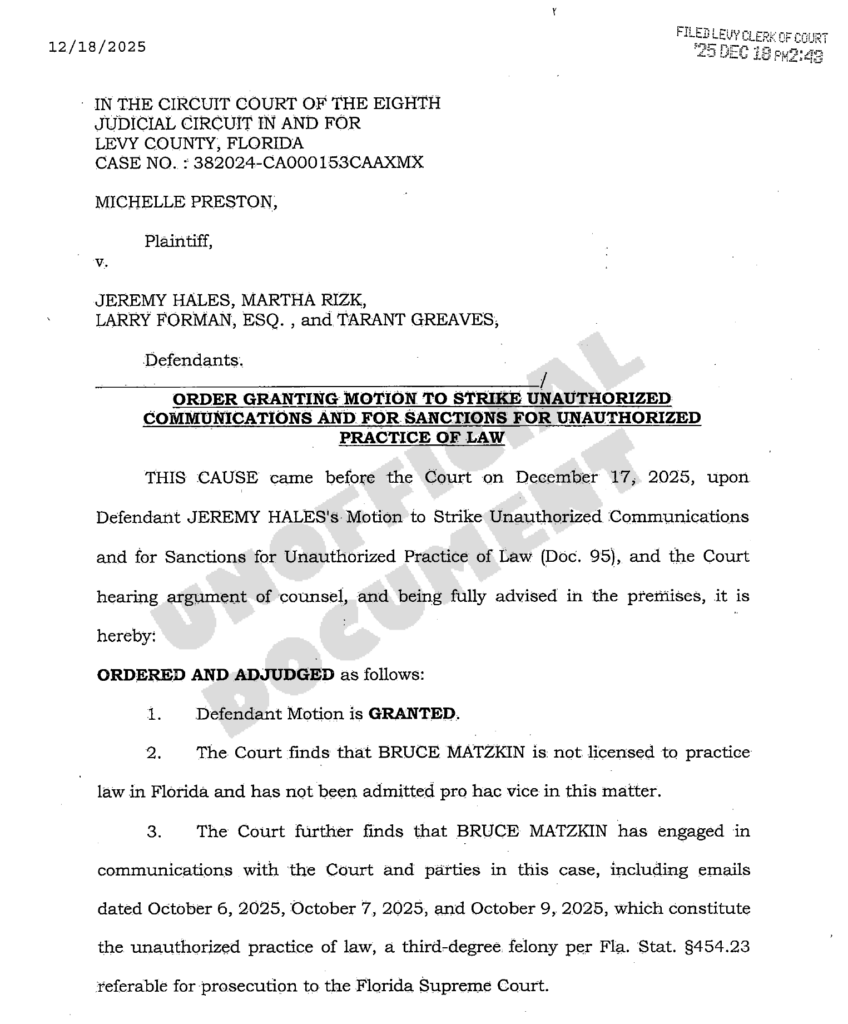
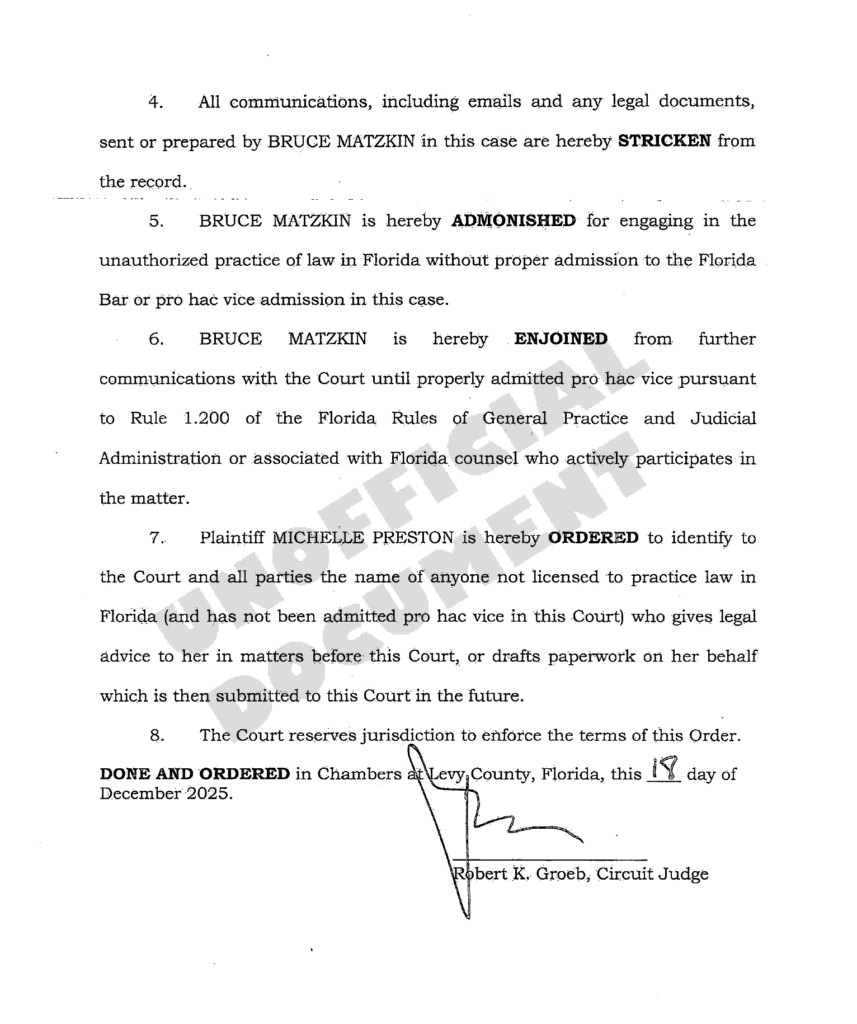
On Dec. 18, Shochet emailed chambers a draft order “pursuant to the court’s instructions yesterday.” Hours later, the court issued an order granting Hales’s motion. The order found Matzkin was not licensed in Florida and had not been admitted pro hac vice.
It then went nuclear.
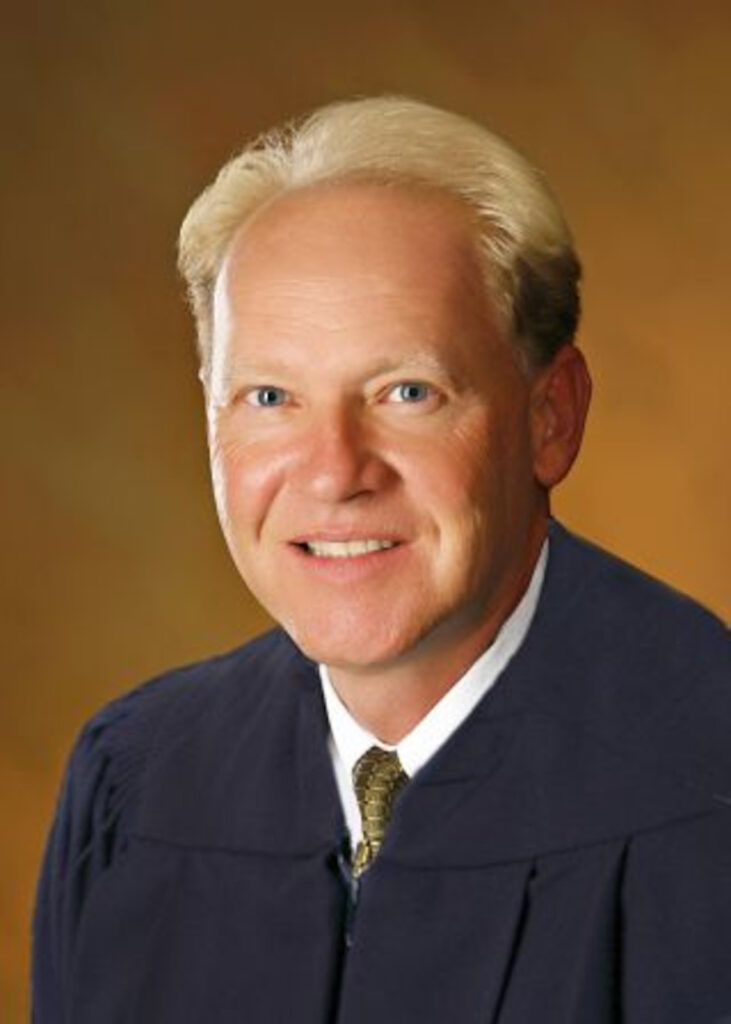
It said Matzkin’s Oct. 6, Oct. 7, and Oct. 9 emails constituted unauthorized practice of law, a third-degree felony under Florida law. It struck communications and legal documents allegedly sent or prepared by him. It admonished him. It enjoined future communications until admission or association with Florida counsel.
That order turned a dispute over clerk emails and pro se filings into a professional grenade. And it flies in the face of the court record.
Florida law makes the move even more suspect. Article V, Section 15 of the Florida Constitution gives the Florida Supreme Court “exclusive jurisdiction” over admission and discipline of attorneys. Florida UPL cases are traditionally brought by The Florida Bar in the Florida Supreme Court, not built through a private litigant’s motion in a circuit-court side fight. Florida Supreme Court UPL cases such as The Florida Bar v. Brumbaugh and The Florida Bar v. Schramek confirm that the Bar brings these matters to the Supreme Court when seeking UPL injunctions.
Hales and Shochet argue that Matzkin crossed a line by sending “substantive emails” and “preparing documents” without Florida admission. That’s their theory. It runs straight into the First Amendment.
The Constitution protects the right “to petition the Government for a redress of grievances.” U.S. Const. amend. I. That includes access to courts. The Supreme Court has made it clear that “the right of access to the courts is… one aspect of the right of petition.” California Motor Transp. Co. v. Trucking Unlimited, 404 U.S. 508, 510 (1972).
That matters here. Because the conduct labeled as “UPL”—emails to a clerk, helping with filings—falls squarely within petitioning activity. Unless it is a sham, it is protected. Id. at 511–12; BE & K Constr. Co. v. NLRB, 536 U.S. 516, 524–25 (2002).
Hales and Shochet’s position boils down to this: only they get access to the courts. The Constitution says otherwise.
But a close read of the record points to a harsher possibility. This was not about protecting the court or policing the bar. It was about manufacturing a headline.
The objective appears to have been an order stamped with the word “felony”—not for its legal necessity, but for its utility. Once that label existed, it could be recycled everywhere: bar complaints, settlement leverage, and, critically, content.
In that light, the courtroom looks less like a forum for adjudication and more like a production stage. The “UPL” label becomes the hook. The order becomes the script. And the fallout becomes the product.
That is not how judicial process is supposed to work. It is how content farming works.
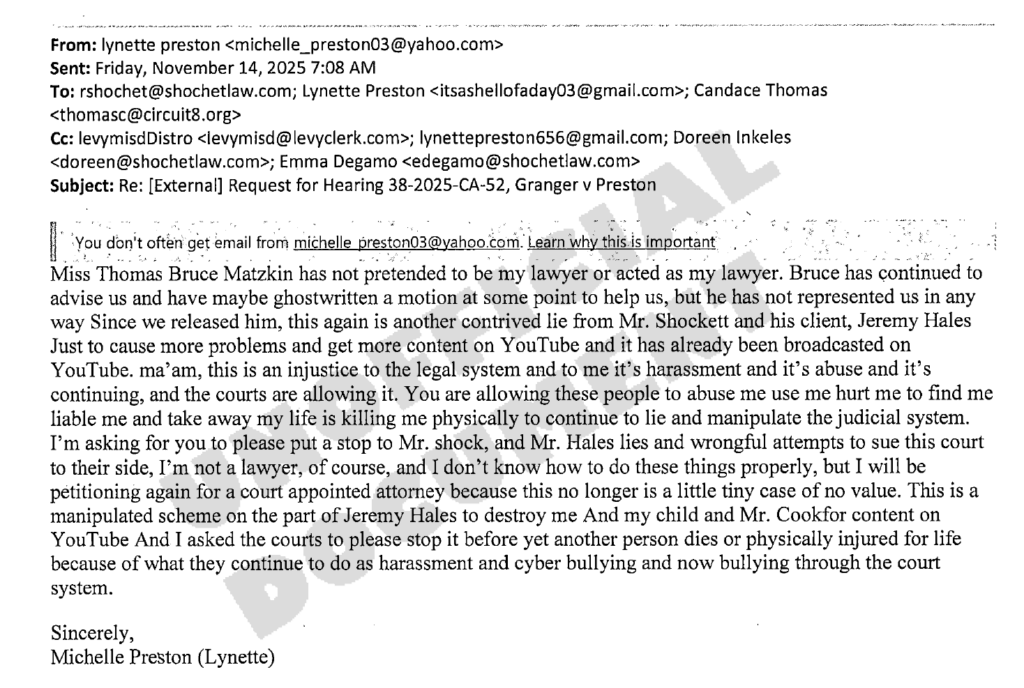
We asked Judge Groeb’s judicial assistant, who readily communicated with Randy Shochet for months in the email chain, for answers. As of press time, we have not heard back. Here is what we asked:
From: Rick LaRivière <Ri***********@****on.me>
Date: On Wednesday, April 29th, 2026 at 6:30 AM
Subject: MEDIA INQUIRY: Questions on Levy Court Hearing, Docket Entries, and Notice Issues
To: th*****@******t8.org <th*****@******t8.org>
CC: Michael Volpe <mv*******@***il.com>, RA**********@********il.com <ra**********@********il.com>, Richard Luthmann <ri**************@********il.com>, Frankie Pressman <fr*************@********il.com>, Modern Thomas Nast <mt*********@********il.com>
Dear Candace Thomas,
We are independent reporters working on coverage examining the Levy County proceedings that led to the December 2025 order by Circuit Judge Robert K. Groeb, accusing an out-of-state attorney of unauthorized practice of law — a ruling now being cited in multiple jurisdictions.
The paper trail raises serious questions about how this unfolded, and I want to give you a fair opportunity to respond before publication.
Specifically:
– Why were certain email communications entered onto the docket weeks after they were sent?
– What was your role, if any, in coordinating the December 17 hearing after direct contact from counsel?
– Were all affected individuals — including non-parties referenced in the motion — properly notified under standard procedures?
– Is it typical for a hearing of this nature to be scheduled through email exchanges with chambers rather than standard docketing channels?
This reporting is based on court filings, deposition testimony, and internal email chains. The timeline suggests an unusually fast-moving process with significant downstream consequences, including bar complaints and related litigation.
If there is context missing from the public record, now is the time to provide it.
Please respond as soon as possible, as we plan to go to press shortly. If we receive your response after publication, we will incorporate it into a follow-up.
Thanks,
Rick LaRivière
Independent Journalist
(239) 766-5800
Follow Me On Substack
If we hear back from Candace Thomas or anyone related to Judge Groeb or the Levy County courts, we will give an update.
Kentucky Shows The Real Pressure Play
The Kentucky record makes motive hard to ignore.
On Nov. 25, 2025, Jefferson Circuit Judge Julie Kaelin denied Forman’s motion to dismiss Matzkin’s defamation suit under Kentucky’s UPEPA statute. The court found Matzkin had stated a prima facie case for defamation and that, on the limited record, he may be able to show actual malice.
Then, on Dec. 31, Forman’s Kentucky counsel, Jeremy Rogers of Dinsmore, sent Matzkin’s lawyer a settlement proposal. The proposal did not merely mention the Florida order. It used it.
Rogers wrote that the Florida court found Matzkin engaged in unauthorized practice, that the conduct was a felony, and that the order could trigger inquiries from Florida, Connecticut, and Massachusetts authorities. He then said the development undercut Matzkin’s defamation claims against Forman. The offer demanded that Matzkin pay Forman’s legal fees, dismiss the lawsuit, and accept confidentiality.
That is not a legal footnote. That is a squeeze.
Legal ethics rules draw a bright line here. A lawyer “shall not… present, participate in presenting, or threaten to present criminal charges solely to obtain an advantage in a civil matter.” Ky. Sup. Ct. R. 3.130(3.4)(g) (formerly 3.4(f)). The same principle appears nationwide. The ABA has long warned that invoking potential criminal exposure to gain civil leverage is improper. See ABA Comm. on Ethics & Prof’l Responsibility, Formal Op. 92-363 (1992) (threats of criminal prosecution in civil negotiations are unethical if used solely to obtain advantage).
Read against that standard, the email is not just aggressive advocacy. It raises the question whether the Florida “felony” label was being deployed as pressure—leveraging the specter of criminal and disciplinary fallout to force a civil surrender.
That is not ordinary settlement posture. That is exactly the kind of conduct the rules are designed to prevent.
We asked attorney Larry Forman about it. He did not respond as of press time. Here is what we asked:
From: Rick LaRivière <Ri***********@****on.me>
Date: On Wednesday, April 29th, 2026 at 6:58 AM
Subject: MEDIA INQUIRY: Florida UPL Order, Kentucky Case, and Settlement Pressure
To: lf*******@***il.com <lf*******@***il.com>
CC: Michael Volpe <mv*******@***il.com>, RA**********@********il.com <ra**********@********il.com>, Richard Luthmann <ri**************@********il.com>, Frankie Pressman <fr*************@********il.com>, Modern Thomas Nast <mt*********@********il.com>
Dear Larry Forman,
We are independent reporters working on coverage examining the Levy County proceedings that led to the December 2025 order by Circuit Judge Robert K. Groeb, accusing out-of-state attorney Bruce Matzkin of unauthorized practice of law — and its apparent use in your Kentucky litigation.
The timeline is raising serious questions, and we want your side on the record before publication.
Here’s what the documents show:
– A Florida court order labeling Matzkin’s conduct as “unauthorized practice” and referencing felony exposure
– That same order being circulated immediately after issuance
– A December 31 settlement communication from your side, citing the order as leverage while demanding dismissal and fees in the Kentucky case
The sequence matters. The order comes down. Your motion to dismiss in Kentucky has just been denied. Then the order becomes part of a pressure package.
So we need to ask directly:
– Did you or your counsel coordinate in any way with Randy Shochet or Jeremy Hales regarding the UPL motion or hearing?
– Were you aware in advance that such an order was being pursued?
– Do you believe it is appropriate to invoke potential criminal exposure to gain leverage in a civil settlement?
– Was the Florida order intended to influence the trajectory of the Kentucky case?
This report is grounded in court filings, emails, and the documented timeline. If there’s context that changes the interpretation, we want to hear it.
Please respond as soon as possible, as we plan to go to press shortly. If we receive your response after publication, we will incorporate it into a follow-up.
Thanks,
Rick LaRivière
Independent Journalist
(239) 766-5800
Follow Me On Substack
Matzkin says the timeline compels an inference that Forman, Rogers, Shochet, and Hales used the Florida UPL order as a pressure device in Kentucky. Luthmann’s reading is blunter. The Florida order became the club they needed after losing the Kentucky dismissal motion.
Florida Courtroom Content Farm: Truth In Levy County
This is where the story turns from document review to unconcealment. It is not about one filing. It is the motion, the wrong docket, the Stark deposition, the clerk emails, the bankruptcy-stay memo, the Shochet draft order, the felony language, the bar-complaint utility, and the Kentucky settlement threat.
Each piece reveals the next piece.
Stark did not throw Matzkin under the bus. The UPL motion did. The emails did not arise in the thumbnail case. The motion did. The memo did not brief service and jurisdiction. It briefed bankruptcy. The order did not stay narrow. It branded Matzkin’s conduct as felony UPL. The Kentucky email did not treat the order as incidental. It weaponized it.
That is the story. Not a bar complaint. Not a neutral ethics concern. A litigation machine.
The conclusion is simple. Jeremy Hales and Randy Shochet appear to have built a courtroom storyline first, then hunted for legal labels to make it stick.
Bruce Matzkin says he was framed. The documents reveal enough to ask the real question: Was this justice, or was it WhatTheHales content dressed up as Florida law?
Leave a Reply