CharityWatch, Danesh Meltdown, Joey Camp, and the Fast-Food Federal Court Circus
LUTHMANN NOTE: This one is simple. If you accuse me of being part of a paid smear campaign, show the payment. Show the check. Show the wire. Show the invoice. Show the contract. CharityWatch did not. Danesh wants to play victim while running the influencer-lawfare machine. Hales wants the federal court to work like a fast-food counter. I do not play that game. I bring receipts, filings, screenshots, transcripts, and federal rules. The watchdog can bark. The influencer can cry. The YouTuber can sue. But when the lights turn back on them, they all start blinking. The receipts are here. On this episode, the watchdog got watched, the influencer got exposed, and the courtroom content machine got handed a McDonald’s meme with legal teeth. This piece is “Luthmann Turns the Tables.”
By M. Thomas Nast with Richard Luthmann
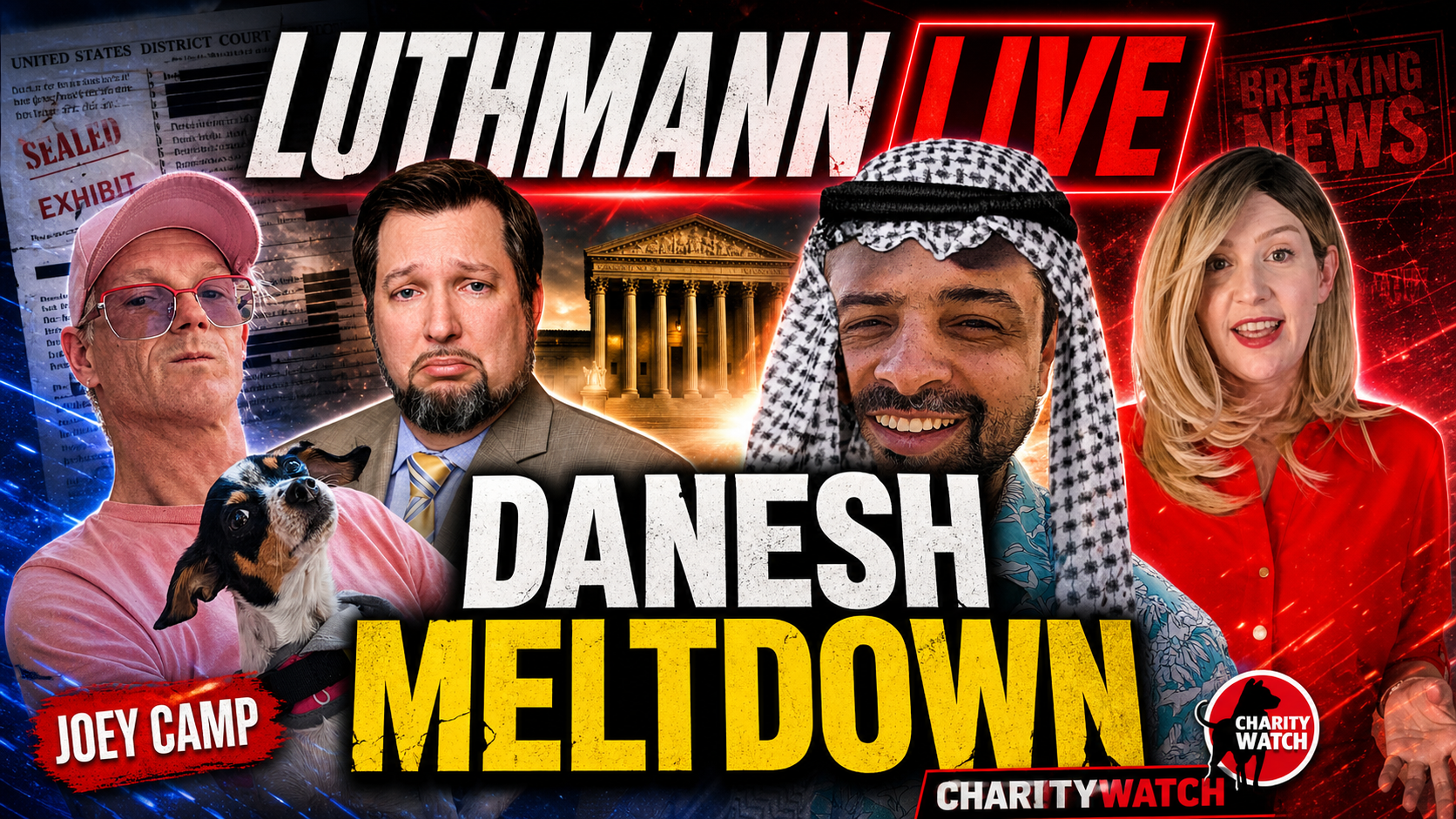
(FLORIDA, USA) – Richard Luthmann opened his latest Luthmann Live episode with the kind of document-heavy, bare-knuckle treatment his audience has come to expect: court filings on screen, screenshots loaded, receipts ready, and a cast of lawfare characters dragged from the shadows into the spotlight.
The show moved across three fronts: CharityWatch’s explosive article tying Luthmann to a “paid smear” narrative, Danesh Noshirvan’s ongoing meltdown over Jennifer Couture, Ralph Garramone, and Joey Camp, and Jeremy Hales’ attempt—through lawyer Randy Shochet—to get federal court moving like a drive-thru window.
Luthmann’s message was blunt: the people who make a living judging others tend to hate it when the spotlight swings back.
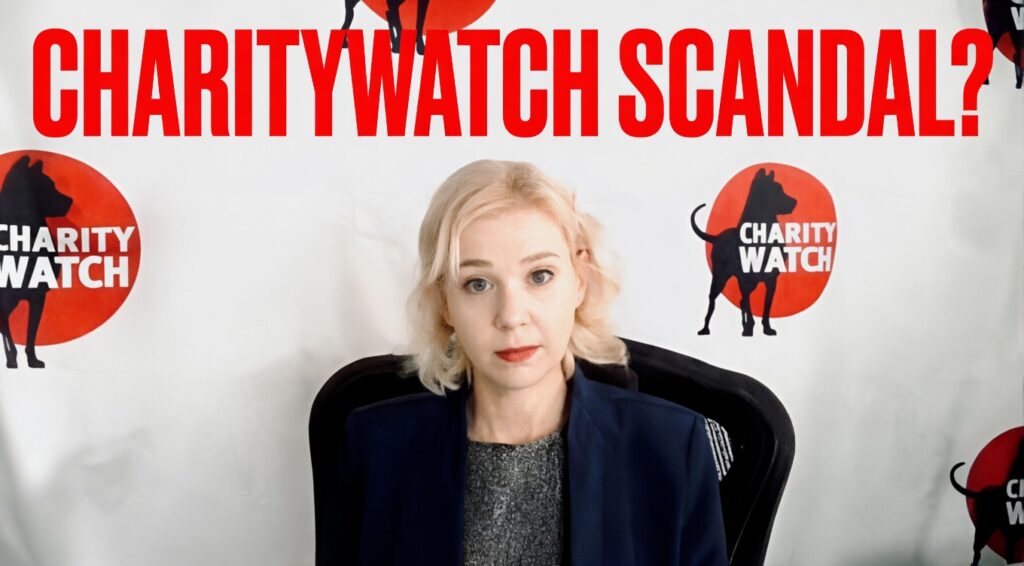
The first target was CharityWatch, the nonprofit watchdog that published an article titled “Convicted Felon Paid By Animal Charity to Smear Its Critics Amid FBI Investigation And Kidnapping Plot.” The article centered on alleged payments from D.E.L.T.A. Rescue to publisher Frank Parlato. But it also brought Luthmann into the narrative as Parlato’s associate, recounted his criminal history, and placed him inside the same rhetorical structure as alleged donor misuse, retaliation, an FBI investigation, and an alleged kidnapping plot.
Luthmann’s central objection was simple: CharityWatch identified alleged payments to Parlato, not to him.
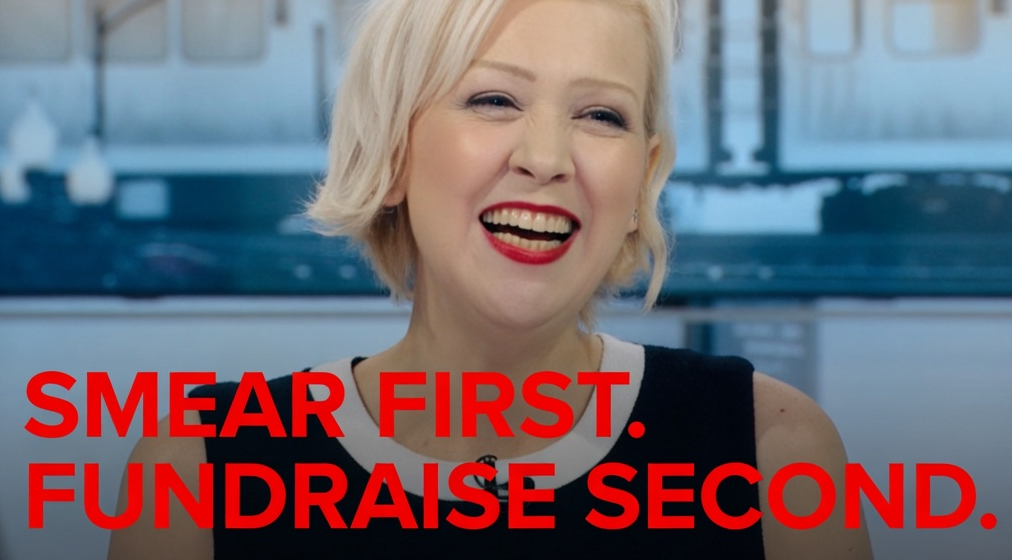
In his written demand to CharityWatch, Luthmann said the article tied him to a paid smear campaign “without showing one check, one wire, one invoice, one contract, one reimbursement, one consulting agreement, one bank record, or one dollar.” He demanded a correction, stating that CharityWatch has no evidence that he was paid by Leo Grillo, D.E.L.T.A. Rescue, Living Earth Productions, Animals Are People Too, Frank Parlato, or any related person or entity.
That became the night’s first refrain: Where is the check?
From there, Luthmann widened the frame. He reviewed CharityWatch’s own public filings and asked whether a nonprofit that judges other nonprofits should be immune from scrutiny. CharityWatch’s 2024 Form 990 identifies the organization as American Institute of Philanthropy d/b/a CharityWatch, a 501(c)(3), with $606,956 in contributions and grants, $648,528 in total revenue, $613,010 in total expenses, and $1,118,474 in ending net assets. The same filing lists Laurie Styron as CEO/Executive Director with $159,273 in reportable compensation and reports one individual receiving more than $100,000.
For Luthmann, the point was not merely accounting. It was credibility.
CharityWatch claims to police nonprofit wrongdoing. Luthmann says the watchdog just became the story. If CharityWatch can scrutinize charities, he argued, donors and journalists can scrutinize CharityWatch.
Then the show pivoted to Danesh Noshirvan.
Luthmann moved from nonprofit filings into a full-blown media analysis of what he called “Couture-Garramone Derangement Syndrome.”
He discussed Danesh’s federal case involving Jennifer Couture and Ralph Garramone, the well-known Fort Myers plastic surgeon, the underlying parking-lot video, the claims that followed, Joey Camp’s role, and Danesh’s repeated public framing of his litigation opponents as stalkers.
The show presented Danesh’s approach as a cancel-culture template: manufacture outrage, demonize opponents, raise money, and use litigation as both weapon and content engine.
Luthmann also highlighted Danesh’s own recorded rhetoric, including a clip in which Danesh called for “organized left-wing militias” to confront ICE and declared that when ICE appears in a community, “a militia should show up right in front of them and tell them to leave.”
For Luthmann, that clip was not a throwaway. It was the connective tissue between online outrage, political radicalism, and the real-world consequences of influencer mobs.
The third front was Jeremy Hales and Randy Shochet.
Luthmann reviewed his opposition filed in Hales v. Preston, where he argued that Hales’ request to expedite a ruling on service-related fees was procedurally defective, unsupported by emergency circumstances, and premature. According to Luthmann, the motion attempted to accelerate a collateral service-cost dispute while service and jurisdiction questions remained contested.
In the accompanying declaration, Luthmann said the litigation reflected what he calls “POLAMOP”—protraction of litigation and multiplication of proceedings. He argued that Hales and Shochet were not trying to efficiently resolve legitimate legal issues, but to generate motion practice, conflict, and content.
Then came the visual hook.
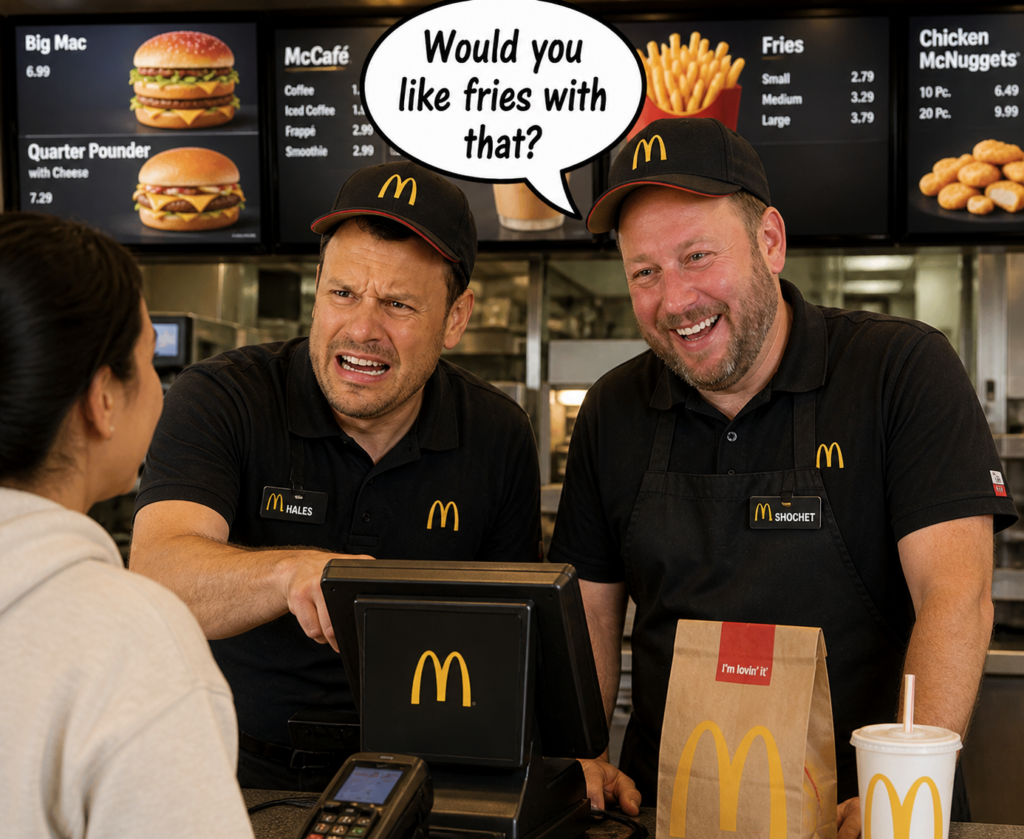
Attached to the court filing as Exhibit A was a McDonald ’s-style image showing Hales and Shochet behind a counter under a speech bubble reading, “Would you like fries with that?” Luthmann used it to hammer home the theme: federal court is not YouTube, not a content farm, and not a fast-food stand.
What might have been a dry Rule 4 service-fee dispute became a courtroom meme with legal teeth.
By the end, the episode had tied together nonprofit warfare, influencer lawfare, donor-funded reputational combat, and the modern courtroom-media feedback loop. Luthmann’s argument was clear: CharityWatch wanted to bark, Danesh wanted victimhood theater, and Hales wanted fast-food justice.
Luthmann brought the leash, the tape, and the federal rules.
The receipts, he said, are not coming later.
They are already here.
Leave a Reply