Big Checks, Bigger Ambitions: Shapiro’s 2026 Cash Haul Signals 2028 Dreams
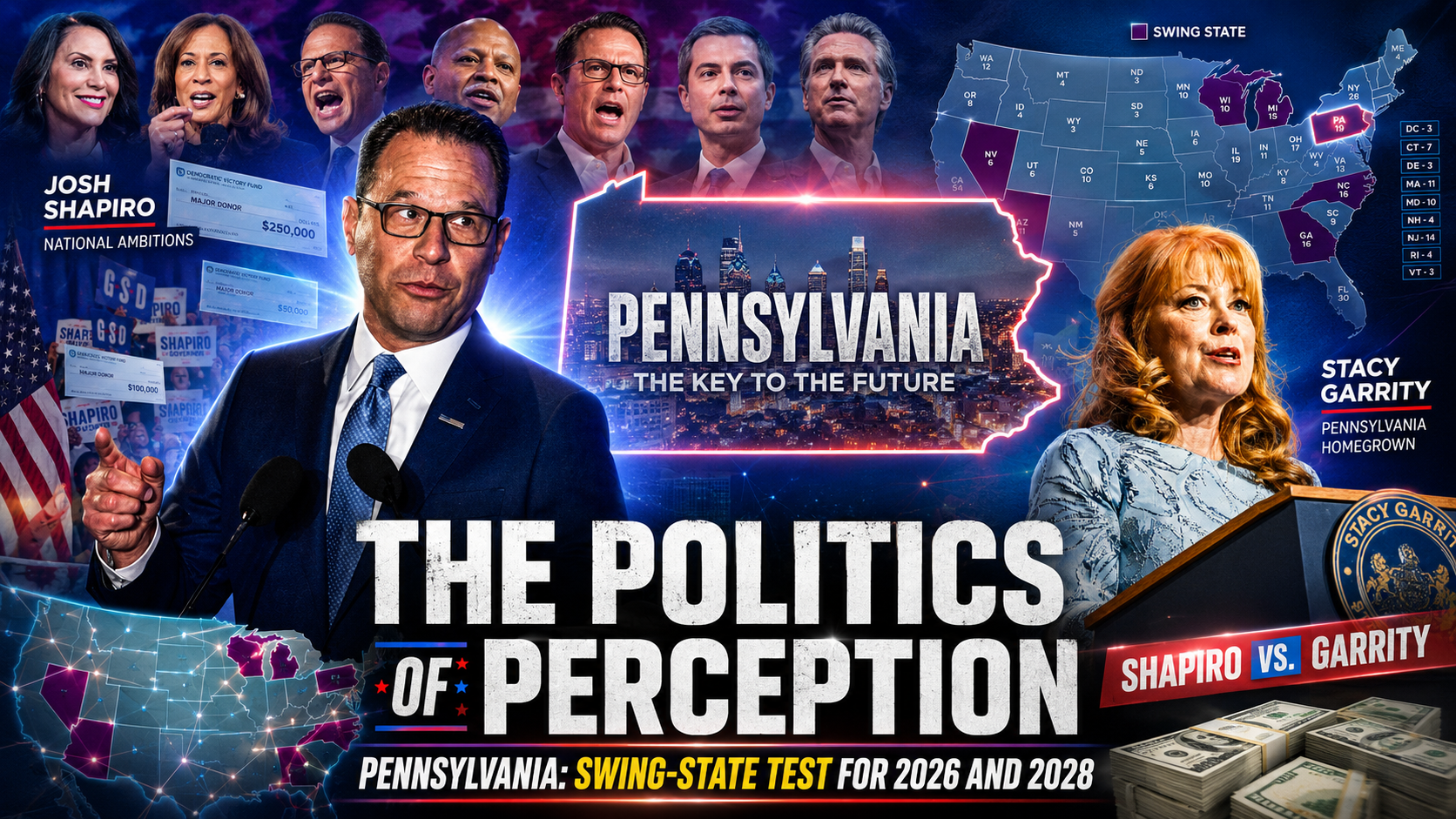
LUTHMANN NOTE: Pennsylvania is where political theories go to live or die. Shapiro has the money, the media sheen, the donor-class blessing, and the résumé Democrats love to polish for national consumption. But the question is not whether he can impress California billionaires, unions, and presidential handicappers. The question is whether Pennsylvania voters see a governor or a stepping stone. Garrity is outgunned, but not necessarily outmatched if she can turn Shapiro’s national ambition into a local liability. This is why Pennsylvania matters. It is not Red Florida or Deep Blue New York. It is still contested ground, and contested ground tells the truth. This piece is “Politics of Perception.”

By Greg Maresca
(PENNSYLVANIA, USA) – Money may be the mother tongue of politics, and Gov. Josh Shapiro speaks it fluently, setting Pennsylvania fundraising records while out-raising his Republican challenger, State Treasurer Stacy Garrity, by a staggering margin of ten‑to‑one.
While promoting his memoir, Shapiro’s campaign brought in $10.5 million between Jan. 1 and March 30. He ended the period banking $36 million.
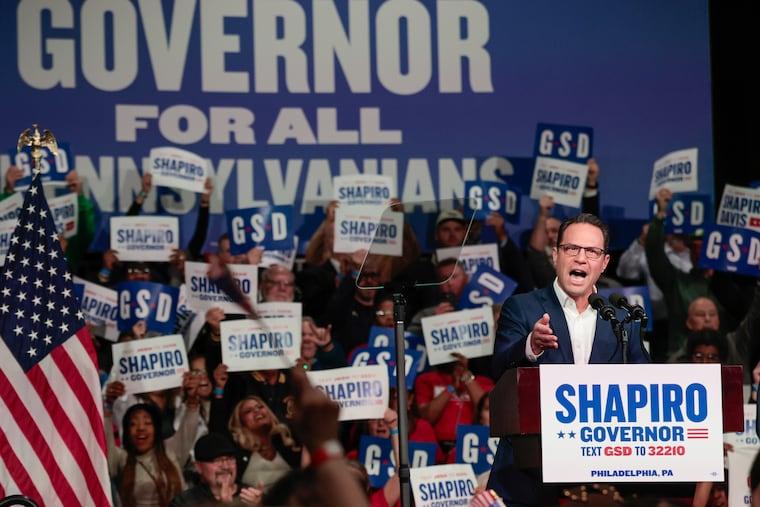
One single March check outgunned Garrity’s entire three months of fundraising. That $1 million came from California cryptocurrency billionaire Chris Larsen, who has given Shapiro a combined $2.2 million since 2023.
The Pennsylvania State Education Association, the state’s largest teachers’ union, gave Shapiro $100,000. Labor and trade unions combined gave $1.4 million to Shapiro, while Garrity has received nothing.
Shapiro’s overwhelming lead is no accident. It reflects a combination of incumbency, national ambition, political branding, and a donor network that extends far beyond Pennsylvania’s borders.
Shapiro has spent years building a national donor network that is paying dividends money-wise but not necessarily through voter enthusiasm. Much of his money comes from out-of-state billionaires, tech executives, Hollywood, and national political interests who see Shapiro as more than a regional figure. Those donors can write checks that dwarf traditional in-state contributions, giving Shapiro a scale advantage that compounds quickly.
As a sitting governor, Shapiro is the odds-on favorite. Donors gravitate toward candidates who look inevitable. With no primary opponent, along with Republicans’ struggles to mount a financially competitive challenge, it reinforces the perception that backing Shapiro is a safe political investment.
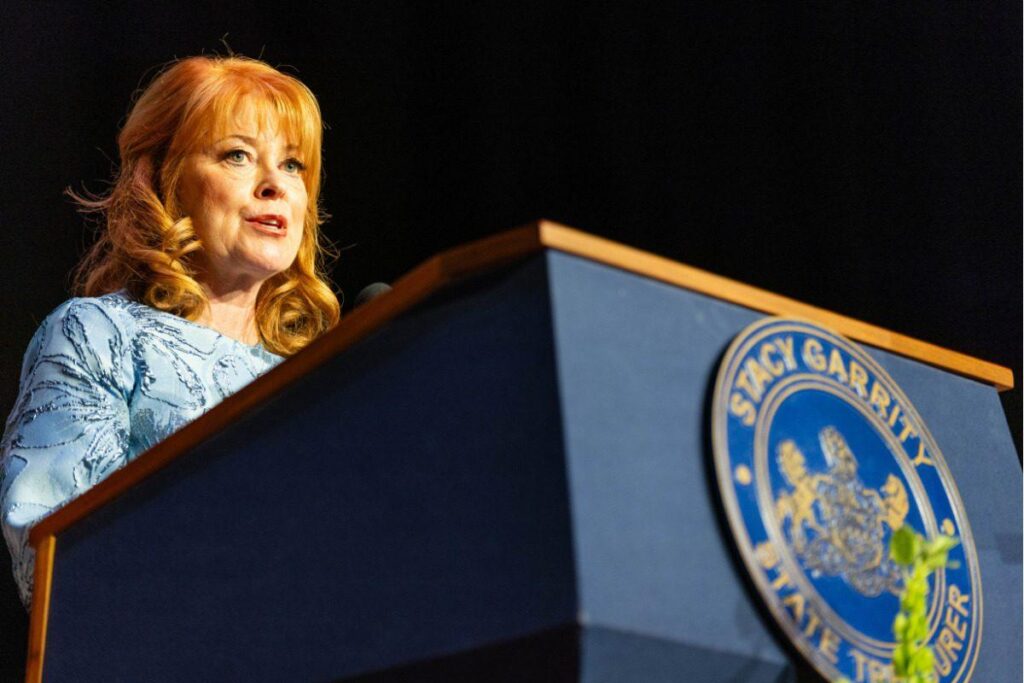
Garrity held a fundraiser at Mar-a-Lago, President Donald Trump’s private Florida club. Other Garrity events were lower-key, including a lunch with supporters in rural Somerset County and an appearance at the Scranton St. Patrick’s Day Parade.
Approximately half of Shapiro’s donations over $50 came from Pennsylvania, compared to approximately 90% of Garrity’s.
Heavy investment in digital advertising, staff, and travel reflects a campaign built to project strength and inevitability, not merely to survive. Early spending, backed by massive reserves, helps reinforce donor confidence and discourages serious opposition.
Money doesn’t guarantee victory, but in politics it defines reality. Shapiro’s fundraising dominance is more than just money; it is about momentum, perception, and power.
Garrity’s support base is different, as nearly 90% of her donations came from Pennsylvanians, a sign that her campaign is rooted in local support rather than national influence.
In a governor’s race, that distinction matters. A candidate backed primarily by in‑state donors can credibly argue that their campaign reflects the priorities of the people who actually live and work in the commonwealth.
The report shows Garrity running a disciplined, efficient campaign. While Shapiro spent $4.6 million in three months, Garrity spent just $527,000.
National organizations such as the Republican Governors Association have not yet prioritized Pennsylvania; their involvement could significantly shift the financial landscape. Garrity’s ability to win two statewide elections for treasurer with comparatively modest fundraising underscores she can outperform expectations.
Garrity’s donor base includes a mix of grassroots supporters, elected officials, and conventional Republican individuals. Garrity is building a coalition that spans both grassroots conservatives and traditional Republican constituencies.
Incumbents draw money from groups seeking favorable regulatory or legislative outcomes. Garrity can contrast this with her own record as treasurer, where she has emphasized transparency, fiscal responsibility, and independence.
The fundraising gap reflects two very different campaign philosophies. Shapiro is running a nationalized, big-money operation, while Garrity’s campaign is built on local support and fiscal discipline without large fundraising advantages.
Garrity may be the underdog on paper, but the early numbers show she has the foundation, the message, and the homegrown backing to stay in this fight and maybe spring the kind of upset she pulled off when she won the treasurer’s race.
Leave a Reply