

The ‘Racist’ Smear That Lost Its Meaning
LUTHMANN NOTE: When Danesh Noshirvan screams “RACIST,” ask for the evidence. Ask for the quote. Ask for the record. Ask for the context. In my case, he called me “an actual hardcore racist” because Dr. Brian Mark Rigg appeared on my podcast. That was the proof. That was the whole trick. Danesh’s claims, in media and in open court, collapse when tested against facts. He has turned a serious word into a mob signal. If everyone is racist, then the word means nothing — except that Danesh wants the mob to move. This piece is “Dog Whistle Danesh.”

By Rick LaRivière and M. Thomas Nast with Richard Luthmann
Luthmann, Dr. Rigg, And The Same Old Smear
(FORT MYERS, FLORIDA) – Richard Luthmann has seen the Danesh Noshirvan machine up close, and the latest move was not subtle. On his June 28, 2026 podcast, Noshirvan talked about Dr. Bryan Mark Rigg, accusing Dr. Rigg of harassing utility workers, asking for immigration status, calling ICE, and challenging Danesh’s content.
Then came the tell. Danesh said the “most racist of all” thing Dr. Rigg allegedly did was go on Richard Luthmann’s podcast, calling Luthmann “an actual racist, like an actual hardcore racist.”
There was no evidence attached. No quote from Luthmann. No video clip. No article. No public record. No racist statement. No factual predicate. Just the magic word, launched into the feed.
That is the Luthmann frame. That is also the Dr. Rigg frame. Luthmann: racist. Rigg: racist. The mere act of appearing on Luthmann’s platform becomes “most racist of all.”
That is not journalism. That is guilt-by-association with a racial detonator glued to it. And it fits a larger record.
Danesh’s own archive trail shows 463 matching entries for “racist” across usernames and platforms in the Wayback Machine Data Viewer. The search results span X/Twitter, TikTok, Bluesky, and related accounts. They include repeated formulations such as “this racist,” “being racist,” “terrible racist,” “awfully racist,” “horribly racist,” “racists,” and “racist statement.”
At some point, the word “RACIST” stops being a finding. It becomes a dog whistle.
Dog Whistle Danesh: The Victim Roll Call
The victim list — or, more precisely, the target list — is long enough to make the point by itself. Luthmann: racist. Dr. Bryan Mark Rigg: racist. James Iannazzo: racist. Paul J. Currie: racist. Erik Kotek: racist. Stephanie Weiland Knarr: racist. Jennifer Kehs: racist. Kenneth Fillion: racist. Julian Jackson-Fannin: racist.
Add in other hits: Chris Shelby “racist,” Candice Reed “racist teacher,” Howard Freelove “awful racist,” Zachary Bonfilio “racist,” Porter, Texas teachers “being racist,” and even generalized attacks on “racists/transphobes,” “racist cyberbully,” and “racist bigots.”
This is not occasional moral language. It is a tagging system.

Danesh does not even argue that conduct was wrong. He merely identifies the target, names the target’s employer or profession where useful, attaches the “racist” mark, and leaves the audience to complete the punishment cycle.
That is why the word works so well for cancel-culture politics. It is short, explosive, and socially radioactive.
The general audience hears “racist” and assumes there must be evidence somewhere. They assume a clip exists. They assume a quote exists. They assume Danesh has done the homework.
But in the Luthmann example, the video shows the label and nothing else. In the Dr. Rigg example, the “racist” accusation is tied to alleged, unproven, and now debunked conduct and association, then escalated because Dr. Rigg appeared on Luthmann’s platform.
That is the problem. The smear travels faster than the proof.
Dog Whistle Danesh: James Iannazzo – The Industrial Example
James Iannazzo is the industrial-strength example of Danesh Noshirvan’s “racist” tag becoming a campaign device.
The archive does not show one passing reference. It shows the Iannazzo accusation appearing again and again across captured X/Twitter entries, with Danesh saying he had “identified this man as James Iannazzo of @MerrillLynch being racist and assaulting a minor.”
The same phrasing appears repeatedly in archive captures, sometimes in translated or mirrored versions of the same post.
That repetition matters. It shows the “racist” label functioning not merely as description, but as brand placement: name the person, name the employer, attach the moral detonator, and keep the tag alive in circulation. Whether Iannazzo’s underlying conduct was ugly, disputed, recorded, or independently newsworthy is not the point here.
The point is Danesh’s method. The label is paired with identification and institutional pressure. The audience is not simply told what allegedly happened. Instead, Danesh tells who the person is, where he works, and what moral box to put him in.
This is not neutral reporting. It is reputational targeting with a loaded word at the center.
And because the Iannazzo entries appear so frequently, they reveal something else: for Danesh, “racist” is sticky content.
It is repeatable. It is reusable. It keeps a story alive by reducing a human being to a single radioactive tag.
Dog Whistle Danesh: Currie, Kotek, Knarr – The Professional Pressure Points
Paul J. Currie, Erik Kotek, and Stephanie Weiland Knarr show how Danesh’s “racist” tag often comes fused to professional pressure.
Currie was not merely described as racist. Danesh says, “I’ve identified this racist,” then naming Paul J. Currie as a psychology professor at Reed College in Portland, while adding the extra insinuation “possibly drunk driver?”
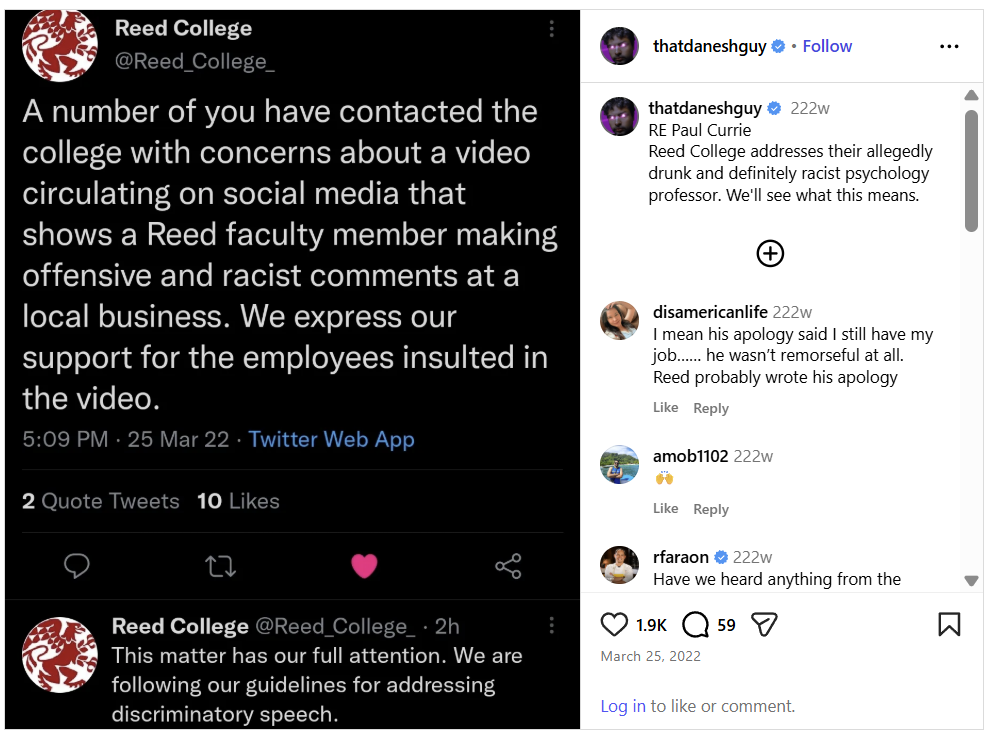
That is a full reputational payload: moral accusation, personal identification, professional affiliation, and collateral character damage.
Kotek received the same structure. The archive preserves Danesh’s formulation: “I’ve identified this racist at a Wisconsin Badgers game as Erik Kotek of @SAP.”
Again: accusation, name, employer. The target is not just criticized; he is routed toward consequences. A sports-event incident becomes a professional-pressure campaign once the employer is placed in the blast radius.
Knarr’s example is even more direct. Danesh addressed her as “Dr. Stephanie Weiland Knarr of North Laurel, Maryland” and asked: “Do your clients know that you’re racist?” That is not subtle commentary. That is a consumer warning dressed as activism. It is designed to reach the professional relationship itself — clients, reputation, trust, livelihood.
This is the pattern Luthmann is exposing. “Racist” is not being used like a careful factual conclusion. It is used like a lever. Once the lever moves, the mob knows where to push.
Dog Whistle Danesh: Kehs, Fillion, And The Stacked Smear
Jennifer Kehs demonstrates the layering effect of Danesh’s smear style. The archive shows him saying he had verified that Jennifer Kehs, “seen here being racist, anti-mask, and antivax,” worked for Pfizer.
Another archive entry says Kehs, identified as a school board member for Oxford Area School District, “made racist comments during a school board meeting.”
Still another reference places her in a broader cluster: “Far right-wing extremists like Jennifer Kehs” and “racists/transphobes like Kari Macrae.”
That is classic Danesh stacking. The target is not simply wrong. The target is racist, anti-mask, anti-vax, far-right, extremist, transphobe-adjacent, professionally suspect, and socially radioactive.
The label is no longer a moral diagnosis. It is an ideological booking sheet.
Kenneth Fillion may be the cleanest example of the raw stamp itself. The archive captures Danesh writing: “I’ve identified this terrible racist as Kenneth Fillion of Fall River, Massachusetts.”
That sentence contains the whole machine. “I’ve identified” gives Danesh the posture of investigator. “This terrible racist” gives the audience the moral verdict. “Kenneth Fillion of Fall River, Massachusetts” supplies identifying detail.
This is social-media wanted-poster language. It tells the crowd who to see, what to think, and how to feel before anyone has reviewed the record.
The word “racist” does not invite inquiry. It shuts inquiry down.
Dog Whistle Danesh: Julian Jackson-Fannin And The Absurdity Problem
Julian Jackson-Fannin is where the smear turns absurd enough to reveal the machinery. Noshirvan accused Jackson-Fannin, a prominent Black civil-rights attorney and opposing counsel in a multi-million dollar counterclaim case against Danesh in Fort Myers Federal Court, of “sharing revenge porn in court” for referencing OnlyFans material that had surfaced as evidence in litigation.
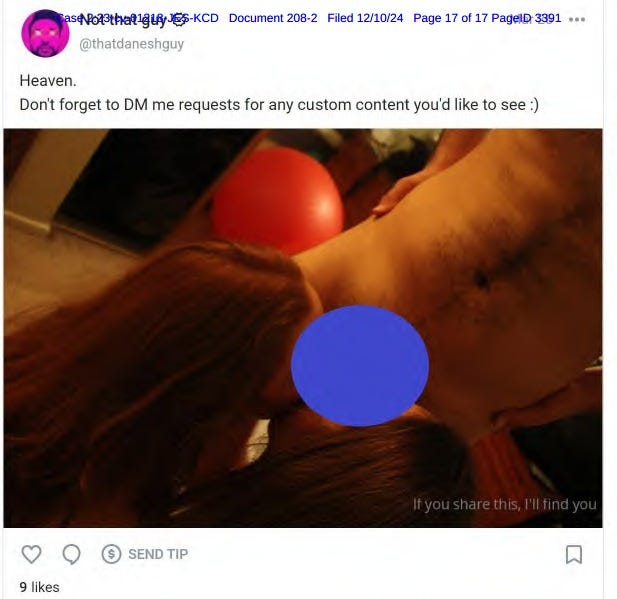
Noshirvan then smeared Jackson-Fannin as a “racist” when questioned about a sensitive photo of his wife.
That matters because it strips the “racist” label down to its operational purpose.

If a Black civil-rights attorney can become “racist” for adversarial lawyering in a court-evidence dispute, then “racist” no longer means what ordinary people think it means. It means: enemy. It means: target. It means: someone Danesh wants his audience to distrust, hate, and punish.
The OnlyFans dispute is part of a broader pattern in which Noshirvan uses explosive labels and online outrage to distract from uncomfortable legal realities. The court-filed OnlyFans issue put Danesh on defense, while he responded by claiming “revenge porn” and directing a racism smear at Jackson-Fannin.

That is the point. The word becomes useful precisely because it is so serious. It changes the subject. It poisons the room. It turns a legal issue into a moral panic.
Dog Whistle Danesh: The Harm To Ordinary Viewers
The real harm is not just to Luthmann, Rigg, Iannazzo, Currie, Kotek, Knarr, Kehs, Fillion, Jackson-Fannin, or the rest of Danesh’s target list. The harm is also to the ordinary audience.
Most people are not professional litigators, researchers, journalists, or opposition investigators. They hear “racist” and assume the speaker has evidence. They do not know whether the claim is supported by a transcript, a court filing, a video, a quote, or merely Danesh’s mood that morning.
That is where the dishonesty becomes dangerous—and profitable.
Danesh’s June 28 podcast shows the whole problem in one passage. He described Dr. Rigg, escalated the accusation, tied Rigg to Luthmann’s podcast, called Luthmann “an actual racist, like an actual hardcore racist,” and moved on.
There was no proof offered in the moment. No documentation. No supporting example. No attempt to let the audience judge the underlying facts.
For Danesh’s core audience, that may be enough. For the cancel-culture mob, the label is the evidence.
But for everyone else — employers, clients, neighbors, donors, platforms, courts, voters, strangers — the smear can look like a fact. It can cost business. It can trigger harassment. It can become search-engine residue. It can become a lie that survives because no one has time to unwind it.
That is not accountability. That is reputational arson.
Dog Whistle Danesh: The Word He Burned Out
Racism is real. Serious people should say so when the facts support it. But serious words require serious handling.
Danesh Noshirvan appears to use “racist” as a universal solvent. It dissolves nuance. It dissolves evidence. It dissolves context. It dissolves the difference between a proven act, a disputed accusation, a political disagreement, an adversarial legal position, and a person Danesh simply wants ruined.
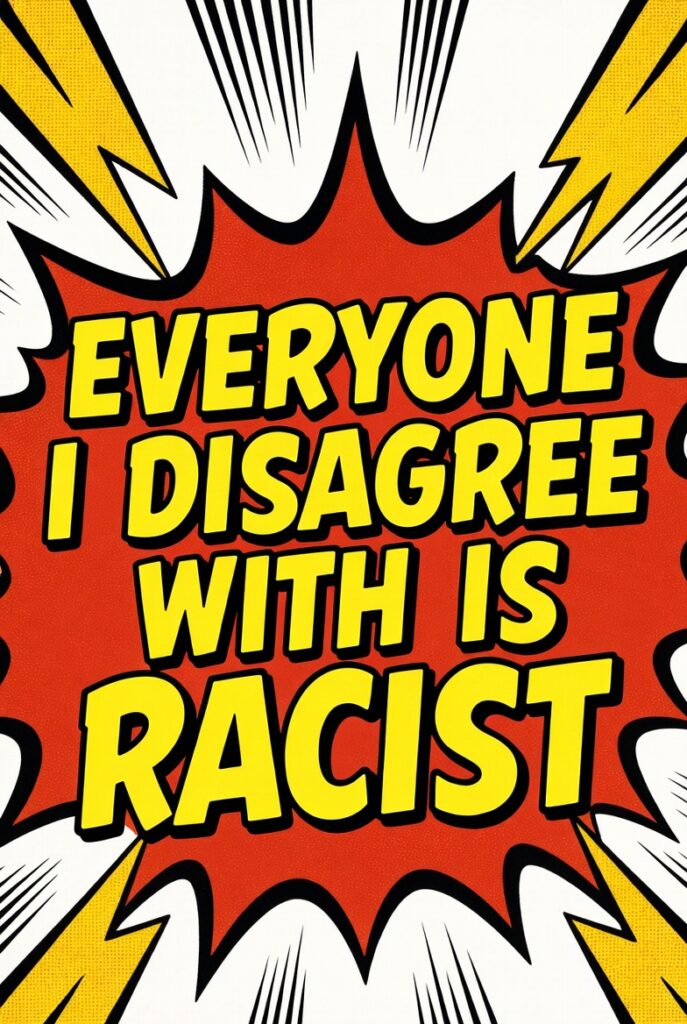
The data tells the story. A 463-match archive search for “racist” across associated Danesh Noshirvan’s usernames and platforms. Repeated Iannazzo entries by the dozens. Currie tagged as “this racist.” Kotek tagged as “this racist.”
Knarr confronted with “Do your clients know that you’re racist?” Kehs stacked with “racist, anti-mask, and antivax.” Fillion branded “this terrible racist.” And those are the tip of the iceberg.
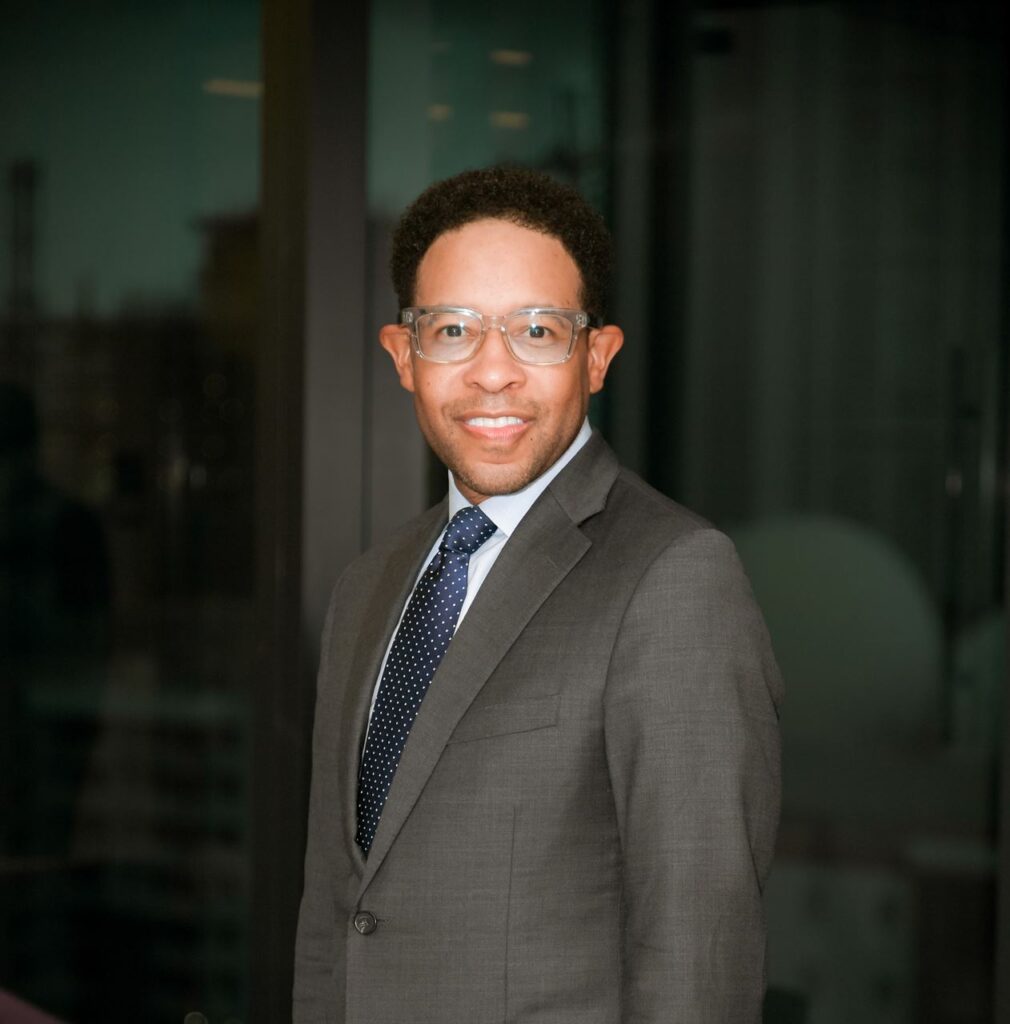
Jackson-Fannin, a civil rights lawyer and officer in Florida’s oldest Black Bar Association, was smeared as a “low-class racist” in a court-evidence fight.



Dr. Rigg, who studies the history of the Nazis and race, was called racist. Luthmann, a MAGA Trump supporter, was called “an actual hardcore racist” without any proof supplied.

That is not a vocabulary. It is a dog whistle and a weapons rack.
Luthmann’s answer is simple: “When Danesh screams ‘RACIST,’ ask for the evidence. Ask for the quote. Ask for the record. Ask for the context,” he said. “All of his claims, in the media and in open court, evaporate when tested with facts and the truth. He’s a Red-Green Coalition smear merchant, and not very good at his job.”

Because if everyone is RACIST, then the word means nothing — except that Danesh wants the mob to move.





Leave a Reply