
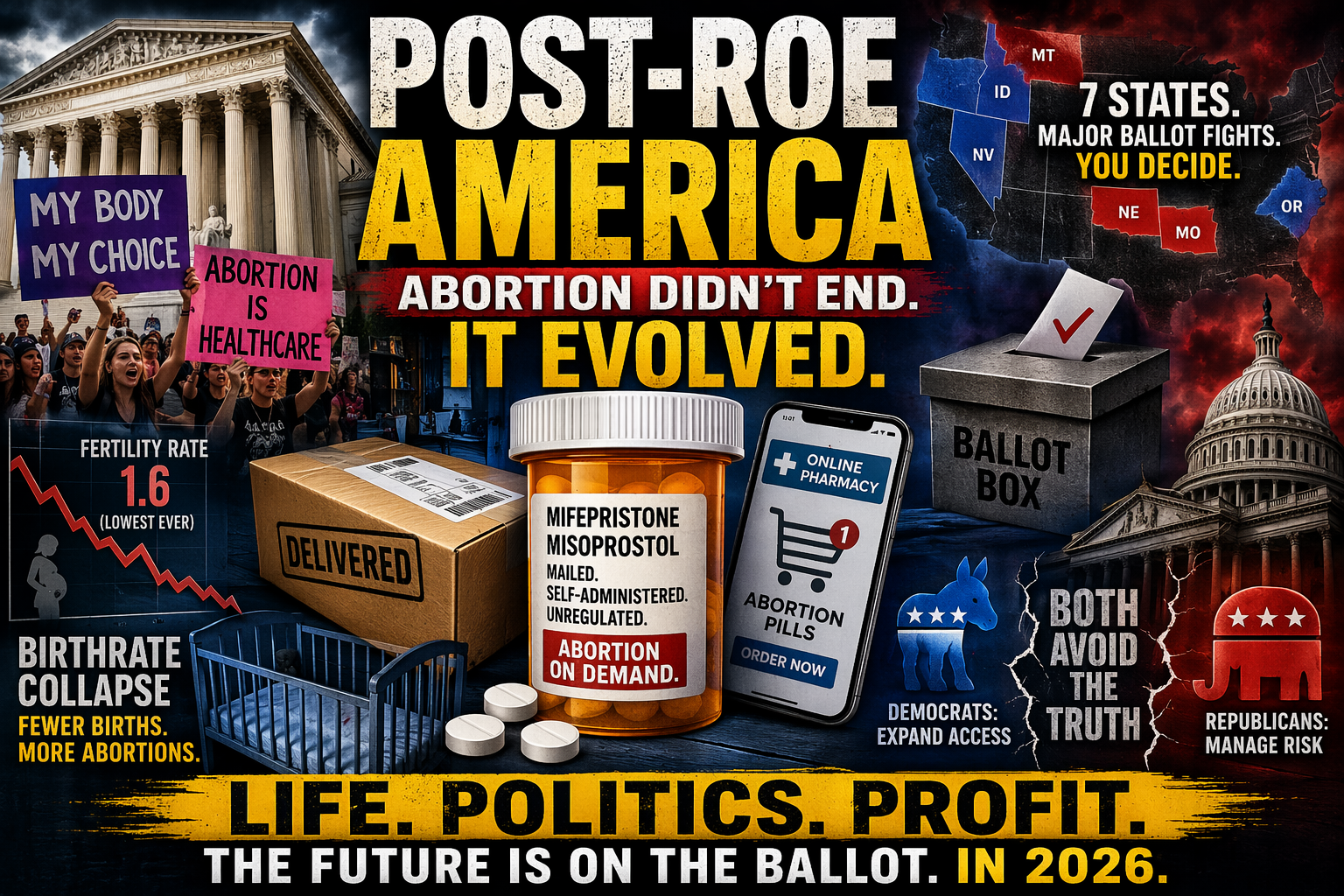
U.S. birthrate sinks as abortion industry grows
LUTHMANN NOTE: This isn’t about Roe anymore. That fight is over. What we’re seeing now is something far bigger—and frankly, more dangerous. Abortion didn’t shrink. It scaled. It went digital, decentralized, and detached from oversight. Pills in the mail. Decisions made alone. No friction, no accountability. Meanwhile, the country isn’t replacing itself. That’s not politics—that’s math. And neither party wants to touch it honestly. Democrats push access. Republicans tiptoe around optics. The result? A vacuum where culture used to stand. When life becomes logistics, the market fills the void. And markets don’t have morals—they have margins. This piece is “The Post-Roe Landscape.”

By Greg Maresca
The Supreme Court sentenced Roe v. Wade to the ash heap of history, but the abortion industrial complex is certainly not hurting. With abortion “rights” being enshrined in the constitutions of numerous states, business remains brisk with their marketing machine running full throttle.
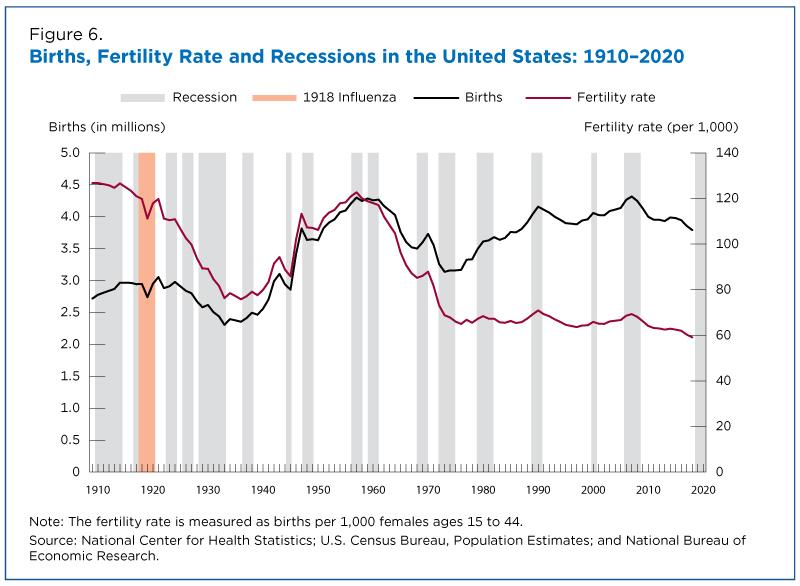
The Guttmacher Institute reports that abortion totals for 2025 increased to 1,126,000 in an American nation whose declining birthrate is now below replacement levels, an irony only a leftist can love. The nation’s fertility rate is its lowest ever at 1.6 children per woman. When figures are released later this year, the rate is expected to drop even further.
Lamenting the steady national birthrate decline is political theater, disguised as a sanitized form of eugenics.
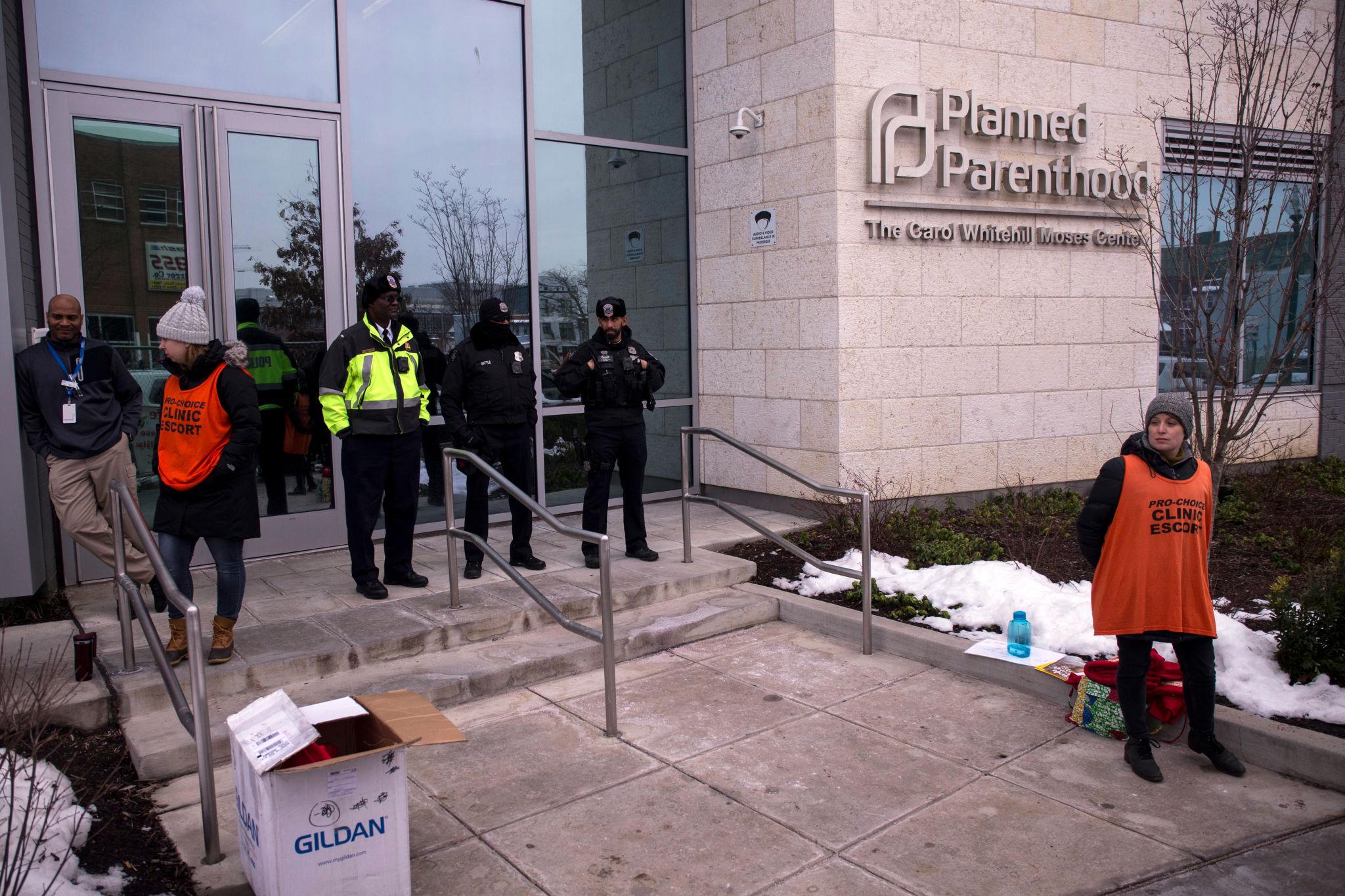
Abortion’s future is not confined to clinics like Planned Parenthood but in supply chains, where chemical abortion has slipped seamlessly into the saturated world of pharmaceuticals, where commerce, not care, drives the growth.
Abortion is no longer tethered to physicians, clinics, or geography, with chemicals now the dominant method distributed through mail‑order pharmacies. Shipped to homes and self-administered with minimal regulation or medical oversight, mifepristone and misoprostol have effectively domesticated abortion.
Democrats reject abortion limits outright, while Republicans tolerate chemical abortion and IVF, managing them as political risks rather than confronting their moral implications.
This paradigm shift exposes not just a policy failure but also a cultural one, in which a society increasingly outsources its moral burdens to technology, markets, and convenience. When the creation and destruction of life are arbitrated by apps and third-party distributors, the spiritual cost becomes easier to dismiss, and the political class of both parties is only too happy to oblige.

Such a contradiction is already reshaping the political landscape.
Ballot measures in 2026 will allow voters to confront what their parties refuse to articulate: whether Americans treat abortion as just another consumer good or a justified moral evil.
Though framed by referendums and political realignment, the issue is less about Roe and more about moral accountability. A nation that treats life and death as logistical problems will continue to get politics to match.
Polls underscore that the majority oppose mail-order abortion. A number of states are engaged in legislation to preempt their distribution. When voters were asked to limit abortion, 13 states did.
Seven more states will have abortion on the November ballot.
Missouri will decide whether to repeal its “Right to Reproductive Freedom” amendment with a more restrictive constitutional amendment.
Nevada can undo a previous pro-abortion measure.
Virginia, once a destination for lovers, will vote on a constitutional provision for abortion.
Idaho will have a measure to guarantee abortion.
Nebraska has two competing measures: one to protect abortion rights, another to restrict abortion after the first trimester.
Montana has a pro‑life measure, while Oregon has a pro-choice constitutional amendment in a state that allows abortion for any reason up to birth.

The future we inherit will be shaped less by politics than by the choices we make when no one is watching.
If a nation cannot articulate why life is sacred, it will be governed by those who profit from neglect. If anything, politics has proven this time and again that any moral retreat creates a void and such a void is never left unclaimed.
Any country that refuses to invest in its future will eventually finance its own destruction.
Leave a Reply