
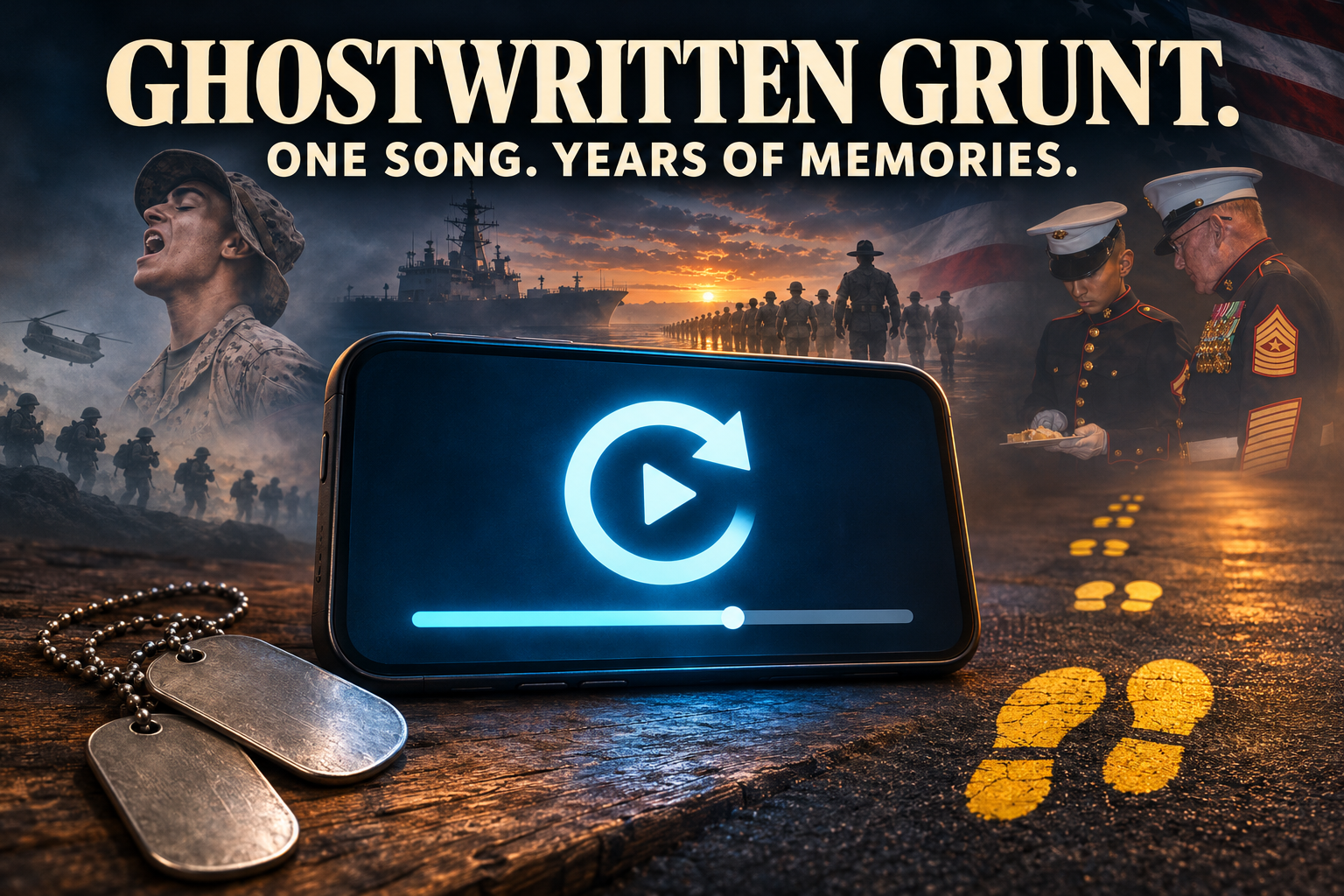
A country rock ballad takes Greg Maresca back to the Corps. The surprise is who got credit for writing it.
LUTHMANN NOTE: An algorithm can write about fire watch. It can’t stand it. It has never spent that last hour cold, tired, and waiting for somebody to relieve it. Still, Greg hit play twice. I take that second listen seriously. A song can get past your defenses faster than any speech, and this one brought a Marine back to people and places that still matter to him. Give the software its line in the credits. The memories belong to the people who served and the families who waited for them to come home. Save the salute for them. This piece is “Ghostwritten Grunt.”

By Greg Maresca
Days before the Marine Corps celebrated its 251st birthday on November 10, I was greeted by a six-minute song called “Don’t Shed No Tears.” Normally, I would not give such an interruption much time, but the ballad’s first two lines quickly caught my attention, so I listened.
Then I listened again.
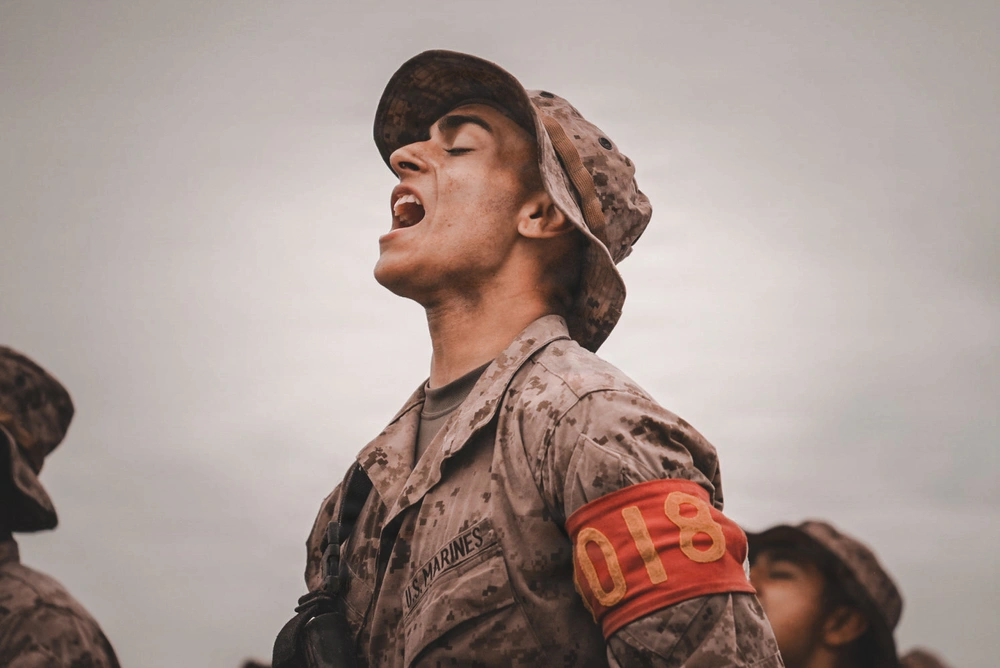
There was something fitting about this ballad, especially during the week of the Marine Corps’ birthday and Veterans Day, which is observed the following day.
For Marines, November has always been more than just another month on the calendar. It is a time to remember where you have been, who you served with, and what it all means.
“Don’t Shed No Tears” was released on October 6, 2026, under the name KYLE STG. The biggest surprise was who got credit for the lyrics and composition: “GenerativeAI.” The track appears on the KYLE STG Topic channel in a listing YouTube generated from a DistroKid release.
Something like this a generation ago would have been science fiction. Today it lands in your daily YouTube home feed.
It was not the music, a country rock ballad to my untrained ear, that hooked me. It was the story told in the lyrics. The song may have been created by AI, but it reaches deep into the human condition. It touched on themes that span generations of those who wore the uniform: duty, sacrifice, brotherhood, pride, loss, humor, and the unique bond among those who earned the Eagle, Globe, and Anchor, regardless of age or era.
The irony is fascinating. AI got credit for the lyrics, yet the song echoes stories that veterans, family members, and historians have spent generations telling in books, memoirs, articles, speeches, and songs about the Corps.
AI did not invent those emotions. It put them into words that resonated. It connected those yellow footprints to deployments with the Fleet Marine Force. Nostalgia is certainly powerful, but this was more than nostalgia.
It was recognition.
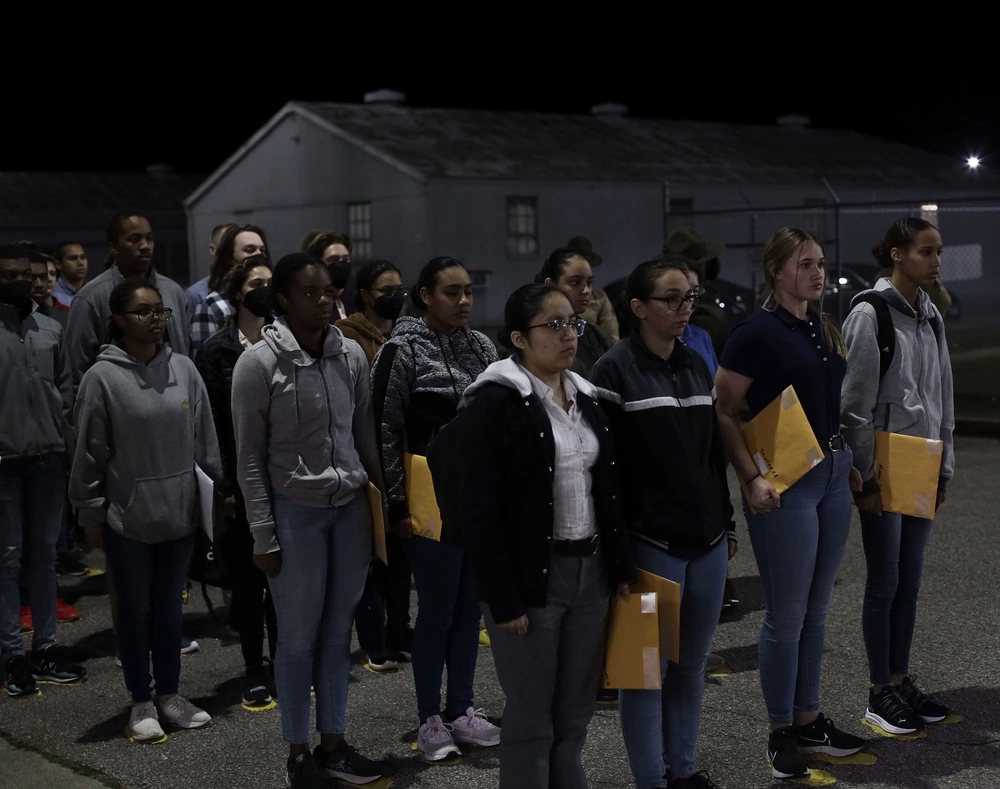
The surprising part was discovering that the song was credited to artificial intelligence. When we discuss AI, we tend to think of technology replacing human effort. Yet this song did the opposite. It reminded me of the very human experiences that shaped my service. In this instance, AI became an effective mirror, reflecting human experiences back to a human audience.
The AI credited on the song did not serve in the Corps. It never participated in a barracks field day, stood fire watch, pulled duty as an NCO, stood for an inspector general’s inspection, or humped a pack and a radio. It certainly never deployed. But the story it told felt familiar to someone who did.
Good writing, no matter where it comes from, including an algorithm, can accomplish the same thing. It can capture attention, make ideas clear and memorable, and persuade readers to act out of a shared sense of duty. In this case, six minutes of music made an old Jarhead stop, listen, remember, and hit play again.
That is a compliment that only a few songs earn.
The song arrived just days before the Corps’ birthday. No matter where you were stationed, whether stateside, deployed, or stuck in some prolonged field exercise, the celebration mattered. The food was always better and the mood much lighter, if only for a day.
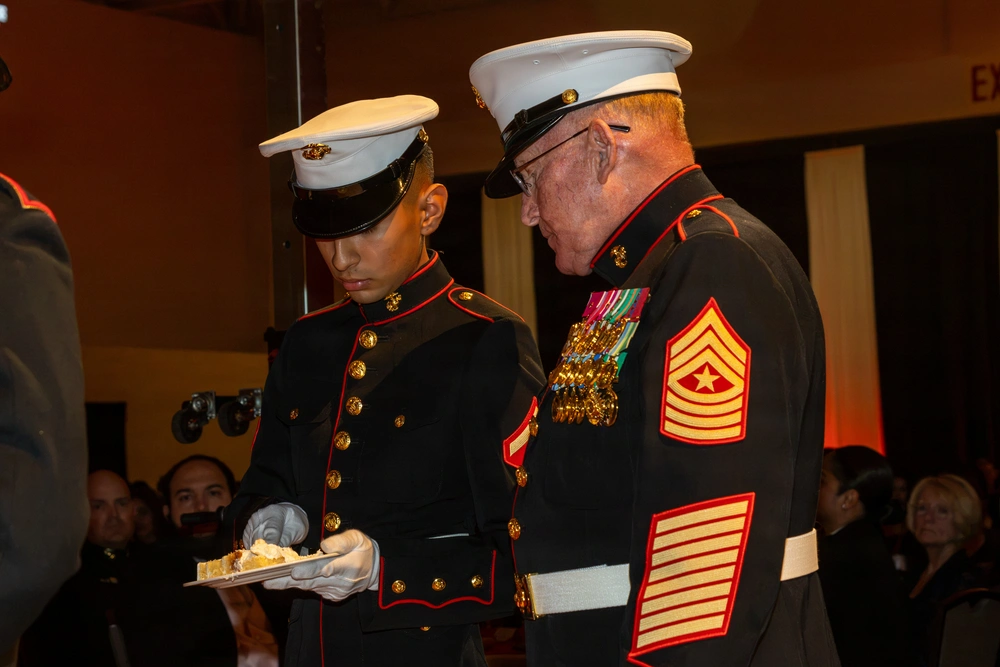
The Marine Corps experience is a timeless one. Whether told by veterans sitting around a table, passed down through generations, or somehow assembled by AI, those tales still have the power to make us stop, remember, and reflect.
And this ballad did exactly that.
Semper Fidelis.






Leave a Reply