
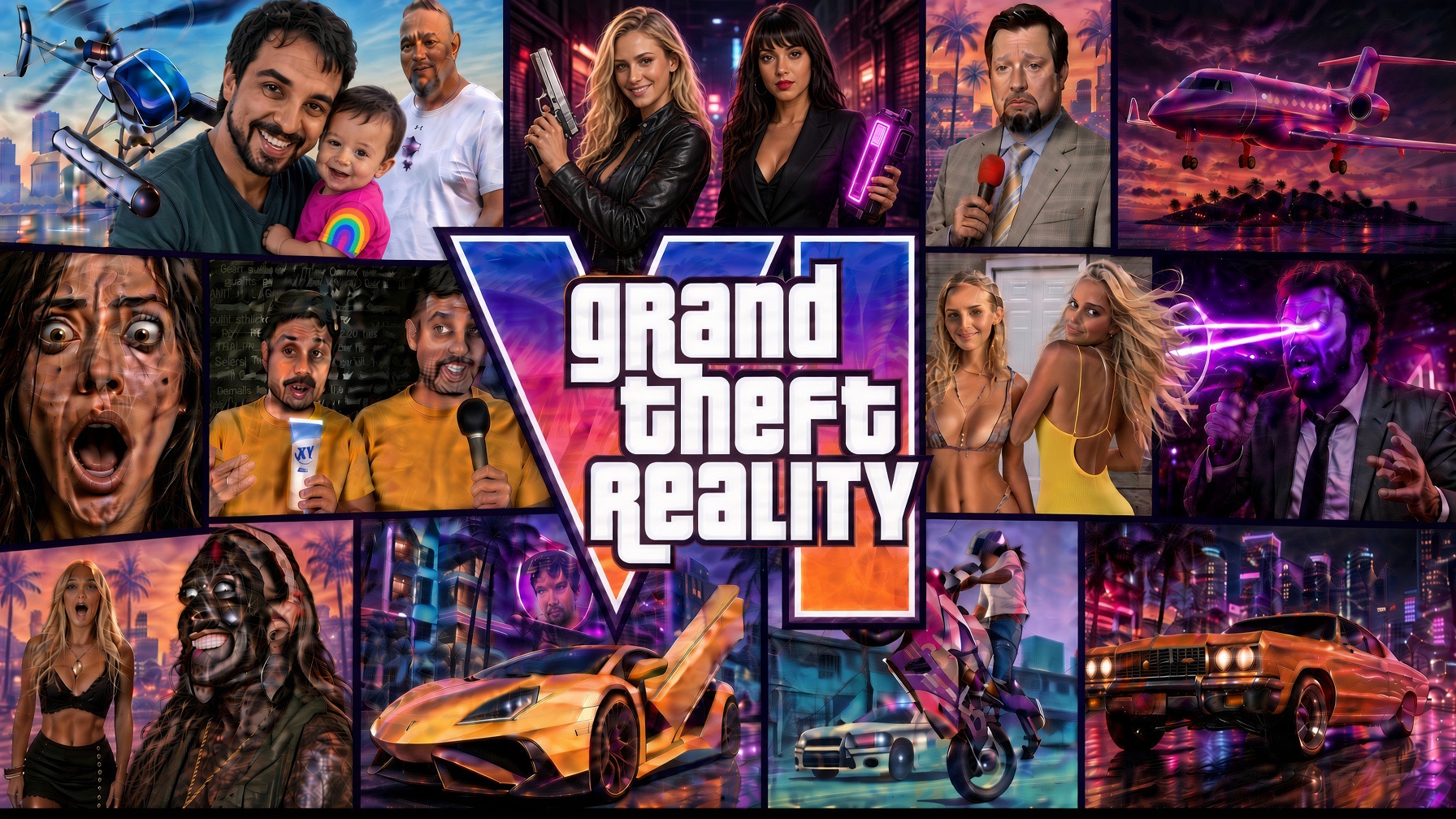
In Vice City, somebody writes the villains’ lines. In Fort Myers, a federal judge checked what a lawyer actually said after Danesh Noshirvan falsely played the Race Card.
LUTHMANN NOTE: I’ve sued Danesh Noshirvan for defamation. You ought to know that, and you ought to know that when I think he gets one right, I’ll call a spade a spade. It’s been diamonds, hearts, and clubs of late. When he shared the CBS interview with the Black women at Ole Miss, he put people who were actually there in front of an audience that needed to hear them. Now give Julian Jackson-Fannin the same courtesy. Read what the man actually said. Then read the finding Judge Steele made on page 30. If you’re willing to hear an eyewitness in Mississippi, why would you settle for an influencer’s version of a Florida deposition when you can read the damn thing yourself? This piece is “Grand Theft Reality.”
By Richard Luthmann
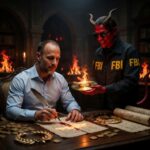
One day after Rockstar released Grand Theft Auto VI, TikTok mega-influencer Danesh Noshirvan announced his first great discovery: “I found a Karen in GTA VI.” Of course he did. Rockstar built an entire imaginary state, stocked it with cars a man could steal, and gave him the run of the place. Danesh found somebody to report to management. For once, I’m entirely comfortable with his identification. Somewhere on the Rockstar payroll is the person who wrote her lines.

The same day, Noshirvan tagged comedian Patrick Cutler and pronounced the epidemic of male loneliness self-inflicted. His evidence included a video game. Cutler’s complaint on TMZ Live was that he couldn’t steal cars in his own neighborhood and the game wanted him to buy groceries for his girlfriend. A man bought Grand Theft Auto and objected to the grocery list. I’d have called that a game review. Danesh got a diagnosis out of it.
I’d trust GTA 6 to tell me the truth before I’d trust Danesh’s account of some of the people he covers. Here’s why. Rockstar gives you a map and tells you it invented the place. Danesh gives you a real name and a verdict, and by the time somebody checks whether one belongs with the other, the phone at somebody’s place of work is already ringing. The philosopher Jean Baudrillard called this hyperreality: the map comes first, and people take it for the territory. You can skip the French theory and watch what happened at a coffee shop Tuesday.

Grand Theft Reality: Who owns the coffee shop?
On November 24, Noshirvan posted about Tasa Coffee Roasters in Chicago: “Tasa Coffee Roasters is owned by an ICE agent. I hope they go out of business.” Hours later came his update: the shop had permanently closed. If those were the only two items you saw, you could leave believing you knew who owned the place, what the owner did for a living, and maybe even who put the shop out of business.
Ambar Colón went and checked. The business records she reviewed listed Jackie Marquez as sole owner. The name in the leaked ICE records matched that of her husband. Colón found federal employment information associated with that name but couldn’t independently establish that the man in the leak was Jackie’s husband or that he’d worked for ICE. There was a fair question about ownership: the couple had described themselves as co-owners to CBS Chicago a year earlier. That gave a reporter a good reason to make another call. It didn’t give Danesh the missing answer.

The dates cut both ways. Workers walked out,t and the shop had already been egged on Monday. Danesh didn’t cause Monday on Tuesday. What he did was take a disputed identification, strip the doubt out of it, and tell his audience what he wanted to happen to the business. There’s plenty to criticize in the two sentences he actually wrote.
Grand Theft Reality: There were real people at that door
Earlier in November, Noshirvan made the treatment of Black students at Ole Miss the lead story on his podcast. A Ring camera recorded two women making monkey noises and gestures outside an apartment shared by three Black students. Danesh shared the CBS interview with the women who lived there. Good. Listen to Victoria Johnson describe what the camera missed: one woman apologized, she said, while the other kept making the gestures. Johnson was there. Her account adds something to the footage that no influencer can supply.

By part four of his coverage, Danesh was calling a fundraiser for one of the women, Lauren Mayfield, a “bribe.” The organizer said he might pull the fundraiser if she apologized. That’s an ugly condition to attach to a gift, and fair game for a columnist. But the reporting available that day couldn’t establish that Mayfield had anything to do with the fundraiser or would see a dime. Who offered money and on what terms? Answerable. What bargain did she make? Show me. As I wrote about Ole Miss, taking racism seriously means being willing to stop the accusation where the evidence stops. The women who answered that door lose nothing when a reporter gets the next fact right.
Grand Theft Reality: The lawyer who got a voicemail
Here’s where a name became a set of directions. In Fort Myers Federal Court Judge Kyle Dudek’s October 20 summary-judgment order, page 2, the court recounts how Noshirvan reposted footage of Jennifer Couture in a Fort Myers Dunkin’ parking lot, shared her phone number, and later identified her employers, Dr. Ralph Garramone and his practice. Strangers called, texted, and left reviews of the practice. Couture later pleaded to three misdemeanors over the parking-lot incident. People had every right to report what she did. What did somebody at home need her telephone number for?
I’ve sued Noshirvan for defamation. You needn’t take my word for what happened to attorney Julian Jackson-Fannin in a different case. Take the deposition exchange reproduced on pages 20 and 21 of Judge John Steele’s order. Jackson-Fannin asked Hannah Noshirvan about a photograph. She explained that she’d played a zombie. He asked whether she held any animosity toward Black people. She said no, objected to the photo being labeled blackface, and pointed out her zombie contact lenses. His contribution to that exchange, after she denied it, was “Okay.” He moved on. Danesh then told people the lawyer thought Black people looked like monsters. Read the exchange yourself. Try to find the line where the lawyer says that. You’ll have the same luck Judge Steele did.

Duane Morris got a flood of messages. Jackson-Fannin got a voicemail invoking his mother and sisters. Noshirvan disclaimed harassment. After an evidentiary hearing, Steele found the posts false and “intentionally made to incite followers to engage in foreseeable harassment and intimidation.” The court later ordered Noshirvan to pay Garramone Plastic Surgery $62,320 in attorney fees. That wasn’t a damage award to Jackson-Fannin, and the judge didn’t say Danesh placed the call. The judge found that the man who supplied the false story meant to set his followers in motion. That’s a much harder finding to explain away than an angry column by me.

Danesh has known for years what happens when an audience acts faster than a correction travels. In 2021, a South Carolina restaurant manager boasted that he’d fired 46 vaccinated workers. Reporter Jessica Lucas followed the story past the boast. The man didn’t own the restaurants. Nobody had been fired for getting vaccinated. Danesh identified the businesses, acknowledged he’d been misled,d and urged followers to leave the staff alone. By then, the actual owner, Michael Brown, said employees were quitting over the threatening calls. People with real jobs left them over a story about people who’d never lost theirs. Danesh told Lucas that strangers had threatened his children, too. Of all people, he ought to understand why it matters who picks up the phone.
I’ve called this a dog whistle. I’ll go a step further. Doxxing somebody to incite the mob against them is violence in my book. Printing a name in a story is ordinary journalism; feeding an audience a false racial accusation, pointing it toward a man’s workplace and leaving him to field threats against his family is something else. Jackson-Fannin’s mother wasn’t at the deposition. She didn’t ask the question. How did she wind up in the voicemail?
That’s why I’ll take Rockstar. Wreck a car in Vice City, and somebody at Rockstar wrote what happens next. In Fort Myers, a lawyer said, “Okay.” A man on the internet gave him a different line, and a stranger left him a message about his mother and sisters. The car in GTA was never real. The phone call was.



Leave a Reply