
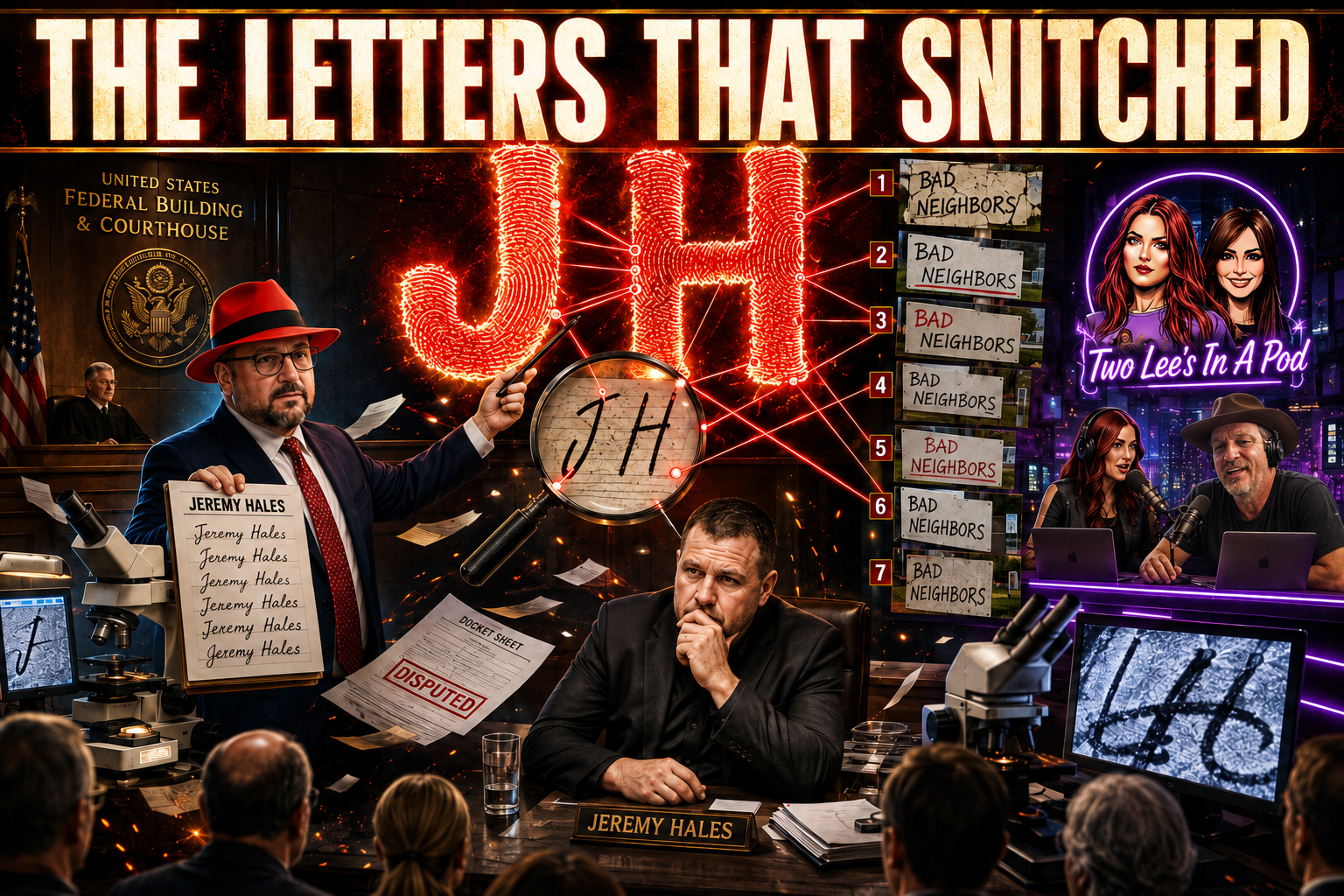
Forensic document report points toward Jeremy Hales, away from “Bad Neighbor” Michelle Preston, and straight into a Gainesville Federal Court credibility crisis
LUTHMANN NOTE: This is not about turning a podcast into a courtroom or pretending an expert report is already a verdict. It is about what Jeremy Hales must explain when his story meets his handwriting. In my opinion, as someone who is intimately familiar with handwriting analysis, the J’s and H’s are fatal. The report reportedly excludes Michelle Preston, traces the questioned writing back toward Hales, and gives a jury something brutally simple to see with its own eyes. Hales can hire another expert, attack the copies, and throw more paper at the docket. Fine. But if he wrote the signs that fueled his persecution story, Fed 1 is not merely weak. Jeremy Hales is cooked. This piece is “Handwriting On The Docket.”
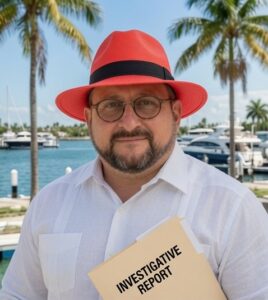
By M. Thomas Nast and Richard Luthmann
(GAINESVILLE, FLORIDA) — Jeremy Hales built his Gainesville Federal Court “Bad Neighbors” case around a story of persecution. Someone else supposedly made the signs. Someone else targeted him. Michelle Preston, John Cook, or another enemy allegedly supplied the malice while Hales played the injured protagonist before his YouTube audience and the federal court.

Then Richard Luthmann appeared with Lisa Lee and Robbie Keszey on Two Lees in a Pod, and the story hit two stubborn letters: J and H.

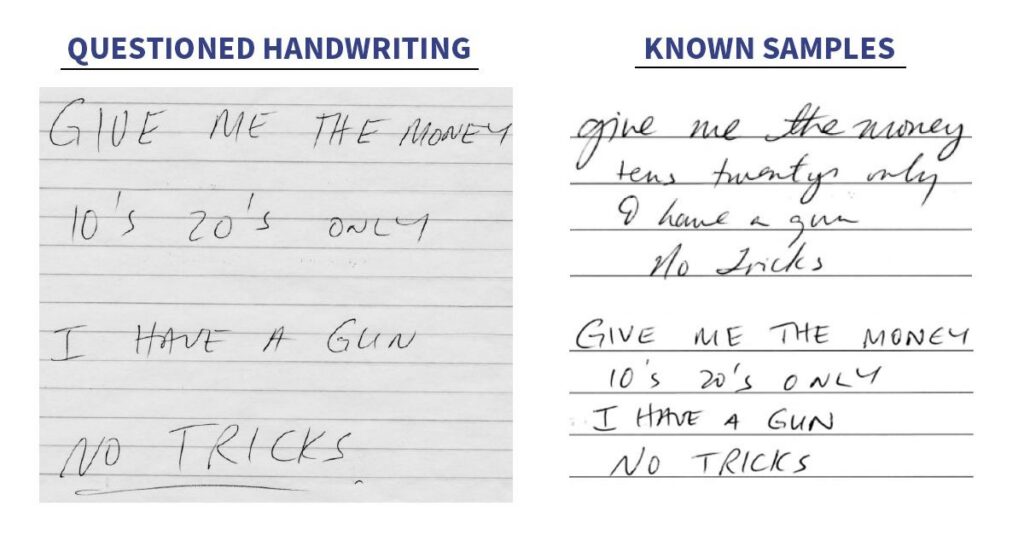
During the full broadcast, Lee displayed and discussed a forensic document examination attributed to handwriting expert Curt Baggett. The report, as presented on-screen, compared handwriting on seven questioned poster signs with known Jeremy Hales’ handwriting and signatures.
Its reported conclusion was not cautious: Baggett opined that the same person produced both sets and identified Hales as the signs’ author.
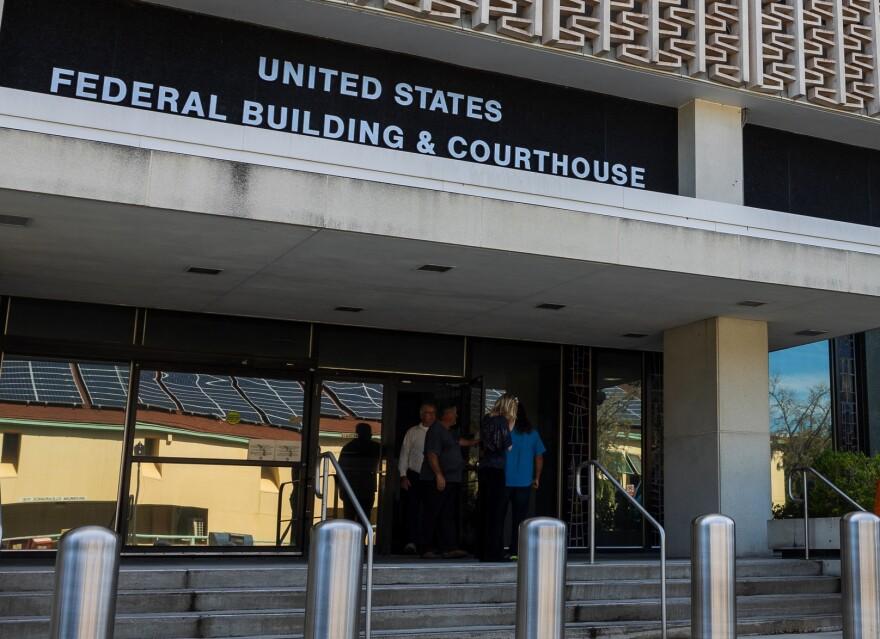
In Luthmann’s opinion, that makes Fed 1 dead on arrival once the evidence is squarely presented. Not because a podcast can decide a federal lawsuit. It cannot.
The problem is that Hales would have to sell a factfinder on an alternative author while the letter formations, comparison exhibits, and expert opinion point back toward him.
The Report Meets the Record
The first evidentiary segment begins at 30:09. Luthmann walks viewers through the examiner’s stated process: questioned handwriting, known exemplars, line quality, letter shape, slope, spacing, connecting strokes, starts, stops, proportions, and curvature. The broadcast also acknowledges an important limitation.
The examiner worked from clear copies rather than the original signs, meaning ink, paper, pressure impressions, and certain lighting examinations were unavailable.
That limitation is material, but it does not erase the visible comparison or the examiner’s opinion. According to the report as read during the program, the copies were sufficient to evaluate recurring writing habits using analysis, comparison, and evaluation.
A court could still scrutinize Baggett’s qualifications, methods, source materials, and conclusions. Hales could retain a rebuttal expert. Cross-examination would be certain.
But then comes the conclusion.
From 34:44 through 38:47, the broadcast reads the report’s description of significant similarities in size, height, width, angles, slant, line quality, and connecting strokes.
According to the version displayed, Baggett concluded that Hales authored the questioned handwriting and expressed willingness to defend that opinion in court.
That is an expert’s opinion, not a judicial finding. No court ruling establishing authorship was presented during the broadcast.
Still, litigation is not conducted in a vacuum. If Hales relies on the signs to portray Preston, Cook, or others as malicious actors, an admissible expert opinion pointing toward Hales could turn his evidence into an impeachment exhibit.
The Letters That Give the Game Away
The strongest clip is the simplest. From 38:47 through 42:48, the program places the enlarged samples before viewers. Luthmann focuses on the crossbar and construction of the J, then the pitch, shape, and repeated formation of the H in “Hales,” “Ohio,” and other words.
He also notes similarities involving other letters, including the T’s and S’s.
“Look at the J’s and H’s,” Luthmann repeatedly tells viewers. His point lands because it does not depend entirely on credentials or jargon. The audience can see the comparison.
One resemblance might be coincidence. Repeated formations across multiple questioned signs and known exemplars become harder to explain away.
The separate analysis concerning Michelle Preston, identified in the report as Lynette Preston, reportedly reached the opposite conclusion: she did not author the seven questioned signs. If both opinions survive evidentiary scrutiny, Hales faces a brutal courtroom geometry.
The evidence points away from the people he blamed and toward the man bringing the case.
The Halesverse Sideshow
The appearance ranged beyond handwriting. In one clip, Lee discusses claims that additional creators were being pulled into disputes involving crowdfunding, copyright complaints, privacy reports, and alleged business interference.
Another segment answers “Kimmy the Mod” through Lee’s firsthand account of their former relationship and conduct Lee says she personally witnessed. Those assertions remain Lee’s and may be disputed.
Two shorter clips deliver the broadcast’s rougher comedy. “Piglet: Public Figure, Public Dirt” is a satirical counterattack about online personalities who probe private lives and then object when scrutiny swings back.
“Demand an AIDS Test” is an intentionally outrageous riff, not a medical assertion about anyone.
Those detours supplied the tabloid sparks. The handwriting supplied the case-killer.
Hales may attack Baggett, challenge the copies, offer another expert, or argue that the signs are peripheral. That is litigation.
What he cannot do is make the report disappear. If the signs helped launch the “Bad Neighbors” narrative, their authorship goes directly to credibility, motive, and the integrity of the factual story placed before the court.
Luthmann’s verdict is already in: Fed 1 is cooked. The federal court will make the ruling that matters. But before Hales reaches that courtroom, he must get past his own J’s and H’s.
Leave a Reply