
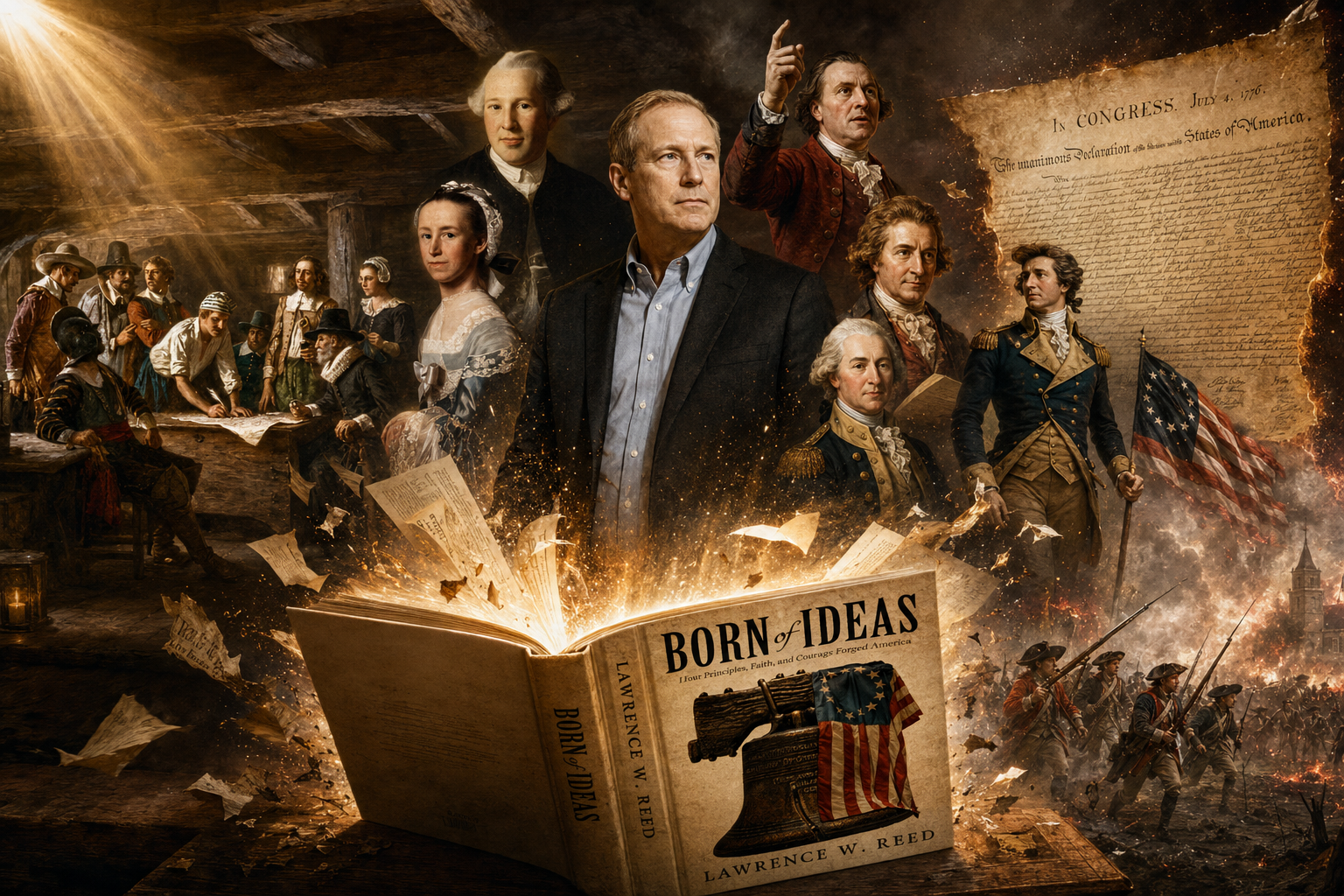
A new book returns readers to the principles that transformed 13 colonies into an exceptional nation.
LUTHMANN NOTE: Greg Maresca’s review lands at exactly the right moment. American history is too often flattened into grievance, mythology, or lifeless exam material. Born of Ideas restores the engine beneath the events: faith, moral courage, personal responsibility, and the consent of the governed. Reed’s thesis is not that the Founders were flawless. It is that their governing ideas changed history and still impose duties on us. I agree with Maresca’s closing judgment. This book belongs in classrooms, citizenship programs, and every serious discussion of what America is. A nation that forgets the ideas that created it will eventually surrender the liberty they produced. This piece is “Revolution of Ideas.”

By Greg Maresca
At a time when universities are shuttering their presses, Grove City College has launched Faith & Freedom Press through publisher Whitaker House. Their inaugural book, “Born of Ideas,” written by distinguished author, academic, and historian Lawrence W. Reed, frames how our nation’s founding was “born of ideas” through the lens of faith, personal responsibility, and divine purpose.

Rather than reiterating the more conventional Revolutionary yarns, Reed commences his dissertation not in 1776 but with the Mayflower Compact in 1620. Reed is a learned student of the genre and devotes nearly a quarter of his tome to explaining why the Mayflower Compact is not merely a political agreement but was rooted in the Pilgrims’ religious conviction that they were acting under God’s providence.
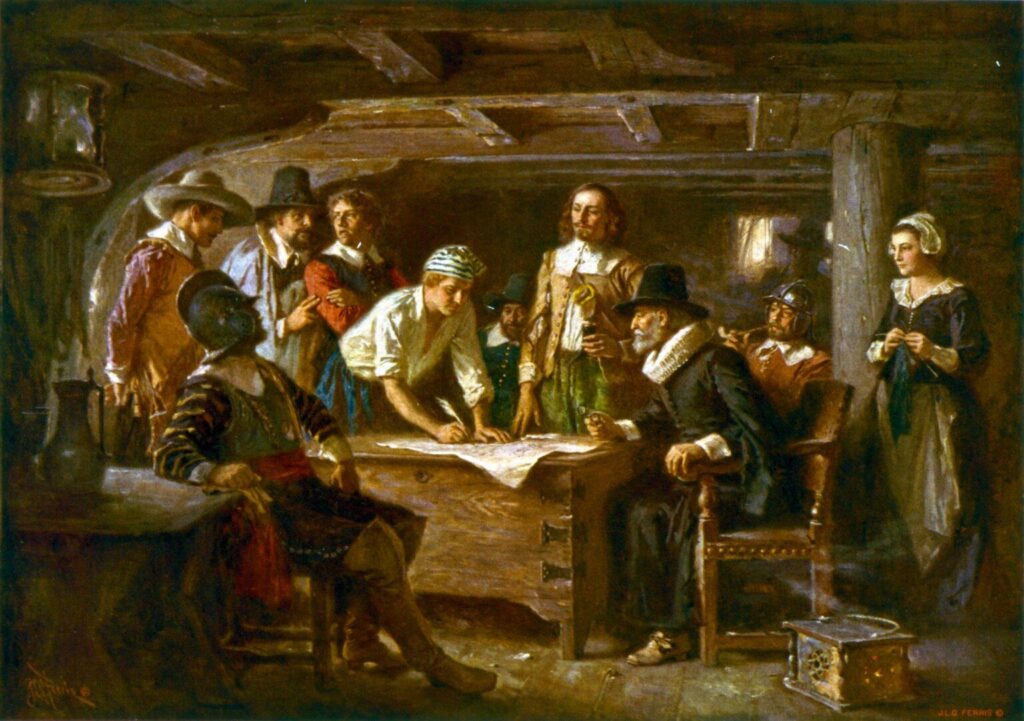
Reed, the author of more than a dozen books that blend liberty, economic history, and political philosophy, underscores how America emerged first not from battlefields or politics, but from covenantalism that shaped much of freedom’s prevailing rise.
Divine Providence is a partner to the covenant. It is with the whole of the people, not just between leaders, covering the whole of life and the consent of the governed mentioned in the Declaration of Independence. Historically, it dates back to the book of Exodus, which many scholars argue influenced the development of self-government and the later American doctrine of the consent of the governed.
Reed acknowledges America’s founding was first “a revolution of ideas” while still emphasizing the extraordinary nature of the American Revolution. As he writes in the Introduction, “Ours was first a revolution of ideas that produced a revolution in governance accomplished by heroes and ordinary Americans.”
The brevity of the 32 chapters does not diminish its clarity. Rather, it sharpens Reed’s argument and keeps the narrative moving into a fast read of 143 pages that can be accomplished in one sitting, delivering a fresh look at what makes the American experiment exceptional.
It is this mosaic approach that is the book’s defining strength. The chapters are historical vignettes that are crisp, thematic, and tightly focused, absorbing the founding era and its moral, philosophical, and economic foundations. These engaging essays, as Reed says, tell a particular story about a key figure or an aspect of the Revolution.”
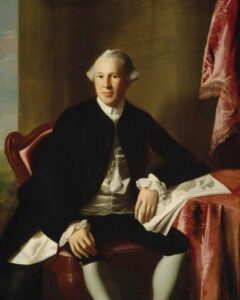

Reed introduces readers to both the known and unsung heroes whose convictions shaped a nation. Samuel Adams, Patrick Henry, and Thomas Paine appear, but Reed also devotes space to lesser‑known contributors: Pelatiah Webster, “America’s First Economist”; Mercy Otis Warren, “The Conscience of a Great Cause”; and Joseph Warren, the fallen hero of Bunker Hill who made the American experience unique and yet remains essential today.
Whether discussing paper money, Native American alliances, Lafayette’s contributions, or the Roman influence on American republicanism, Reed returns repeatedly to the same core ideas: liberty, moral courage, personal responsibility, and the belief that ideas, not accidents, forged the nation.
Reed’s prose is direct and unpretentious writing with the clarity of someone who has spent decades lecturing about economics and history. His tone is heartfelt, patriotic, and unapologetically celebratory of America’s founding ideals.
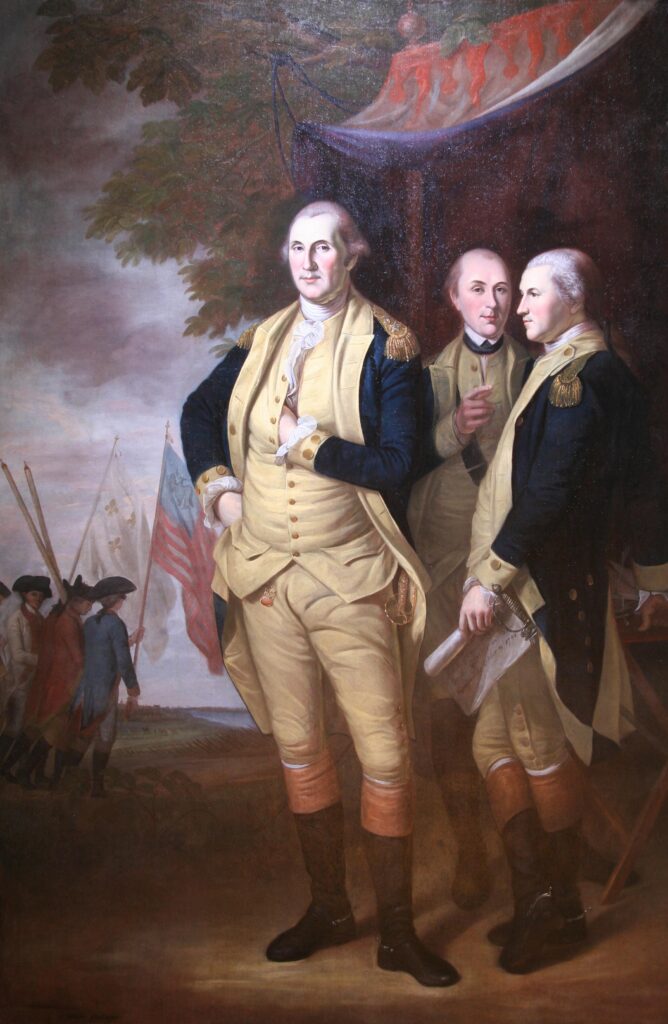
Reed’s dedication “to the students of Grove City College, who have kept the flame that was lit in 1776,” accentuates his belief that the American experiment is ongoing and requires stewardship.
In a time when historical memory is often lacking and politicized, Reed offers a refreshing reminder of how America was built on ideas worth knowing, debating, and defending.
Born of Ideas is an invitation to rediscover the American intellectual and moral foundations that still prevail more than two centuries later.
In the spirit of revolutionary ideas and without exception, Born of Ideas should be an integral part of our educational and immigration process – nationwide.
Leave a Reply