

Judge Kyle Dudek extinguished Lawyer Patrick Trainor’s counterclaims—and supplied Jennifer Couture and Ralph Garramone with the death-blow roadmap for Noshirvan’s own Joey Camp conspiracy narrative.
LUTHMANN NOTE: Danesh Noshirvan and I are adversaries in a separate federal litigation. He called me a “pedophile” and a “child rapist” with no evidence, in the State of Florida, where such crimes carry the death penalty. Readers should evaluate my conclusions with that conflict in mind. The late Judge John Steele wrote in an earlier sanctions order that anyone familiar with my work knows that I “hate Noshirvan.” Guilty as charged. He’s a mouthpiece for the Red-Green Alliance, hates America, and is the ideological brother of Haji Hasan Piker, an Islamo-Commie terrorist of the first magnitude, who believes America “deserved” 9-11. They both hate Judaism, Christianity, white people, church-going Black folk, conservatism, capitalism, America First, traditional values, and Donald Trump. I love them all. Importantly, Judge Steele also found no evidence that Joey Camp, I, or anyone else “directed” Danesh’s claimed “expert witness harassment”; that was yet another of his lies to mask a report that should have been sold as Swiss cheese. To be crystal clear for readers, the terms “Pyrrhic victory,” “SCOTUS Doxxer,” “Cancel Culture Killer,” and the nonsexual use of “predator” are editorial judgments, not language from Judge Dudek’s order, which applied New Jersey law to Attorney Patrick Trainor’s counterclaims. Noshirvan’s Florida-law claims require their own analysis. No court has ruled that Noshirvan caused Aaron De La Torre’s death, but I believe he did. The operative allegations concerning Joey Camp, Couture, Garramone, and GPS remain allegations, and Danesh has failed to establish them with admissible evidence—that is a fact. This piece is “Danesh’s Pyrrhic Victory.” Enjoy!
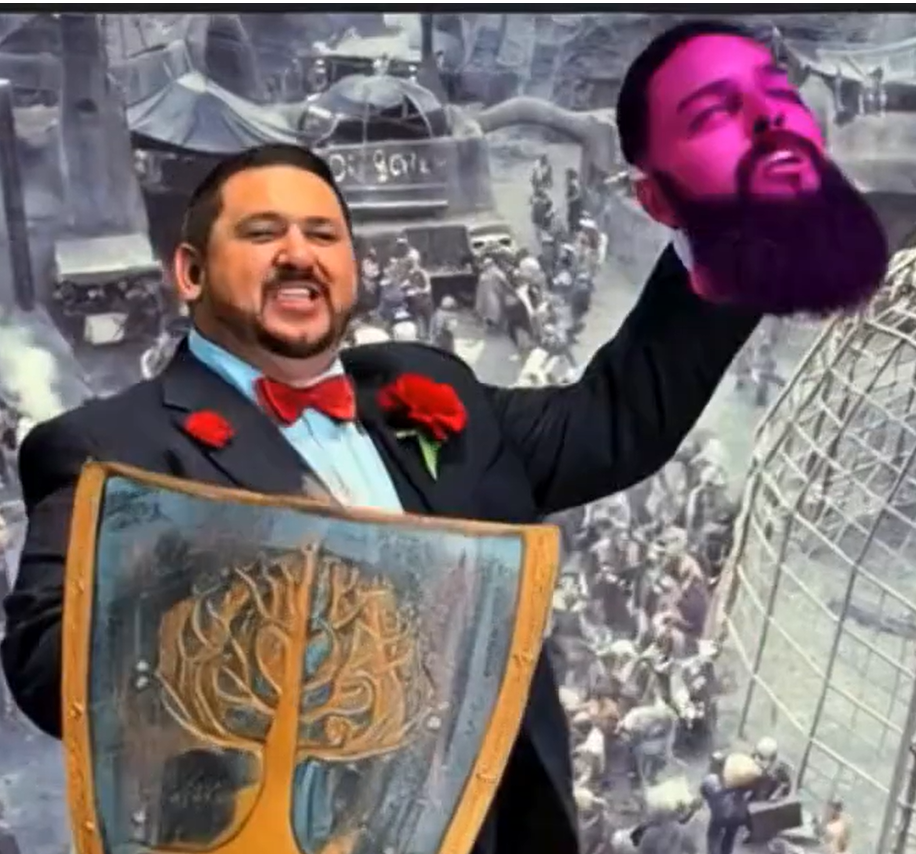
By Richard Luthmann
(FORT MYERS, FLORIDA) – Danesh Noshirvan prevailed in Fort Myers federal court on Friday, and the victory should trouble him. In an eleven-page order, U.S. District Judge Kyle C. Dudek entered summary judgment against Patrick Trainor on the remaining defamation and civil-conspiracy counterclaims in Noshirvan v. Couture, No. 2:23-cv-01218. Trainor takes nothing, although entry of judgment will await the conclusion of trial.
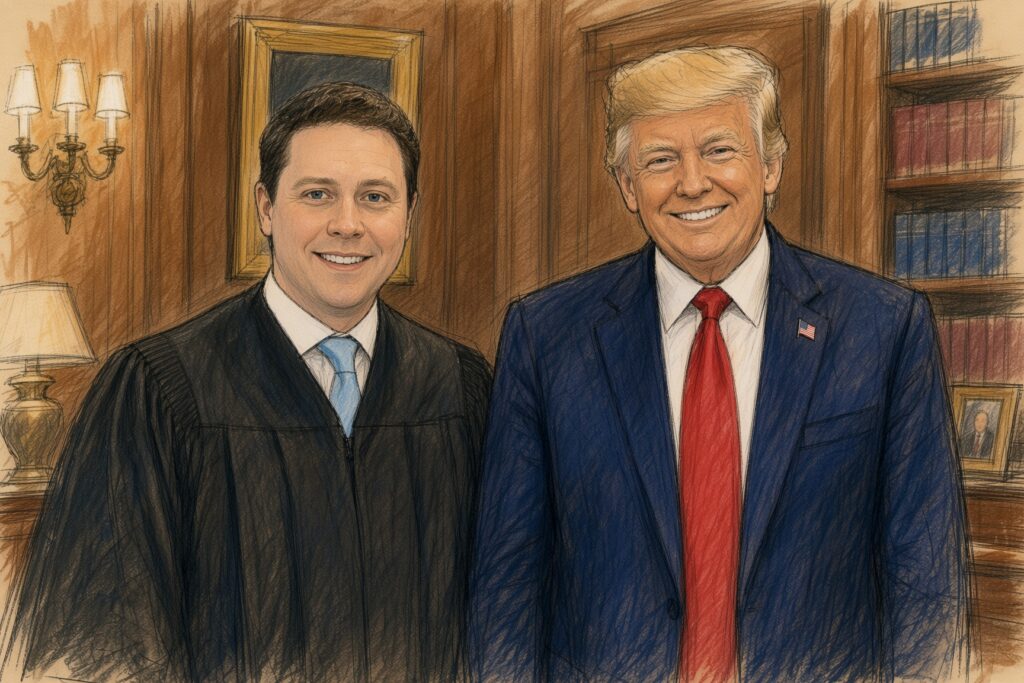
The ruling is decisive, lucid, and deserved, on the record Judge Dudek described. It also gives Jennifer Couture, Dr. Ralph Garramone, and Ralph Garramone, M.D., P.A., doing business as Garramone Plastic Surgery (“GPS”), the most useful judicial vocabulary yet for dismantling Noshirvan’s own attempt to convert relationships, payments, communications, and shared hostility into a sprawling conspiracy.
The national attention arrived within hours. UCLA law professor Eugene Volokh featured the decision at Reason, quoting Judge Dudek’s conclusion that Trainor had assembled “a patchwork of stale claims, non-actionable opinions, and a conspiracy theory lacking an actual agreement.”
Noshirvan is entitled to the judgment he won. He is also bound by the discipline that produced it. Judge Dudek required concrete proof of a meeting of the minds, refused to attribute one publisher’s speech to another without that proof, and protected caustic name-calling that could not be tested as true or false.
Those principles do not belong to Noshirvan. They belong to the law.
Danesh’s Pyrrhic Victory: From a Parking Lot to Two Federal Cases
The litigation began in January 2022 with a parking-lot confrontation outside a Fort Myers Dunkin. A bystander’s video showed Couture arguing with another woman, reaching into the woman’s vehicle, and later moving her SUV. Criminal charges and an avalanche of online condemnation followed. Noshirvan, the social-media personality behind @ThatDaneshGuy, repackaged the encounter for his enormous audience.
In a November 2023 order, Judge Sheri Polster Chappell described his commercial niche as “cancel culture”: he finds a video, edits it, identifies the person by name, employer, contact information, and other personal details, casts the person as an antagonist, and earns money through TikTok’s gifts, tips, and subscriptions while the audience supplies the punishment.
That campaign produced the first federal action, Couture v. Noshirvan, No. 2:23-cv-00340. The case has been narrowed considerably since it was filed. Couture’s individual conspiracy theory is gone, TikTok and ByteDance are gone, and GPS is the remaining plaintiff. What survives is commercially concrete: GPS claims Noshirvan intentionally interfered with identifiable patient and business relationships, both directly and through collaboration with followers. Their damages figure exceeds $12 million in actual losses.

Judge Polster Chappell’s April 9, 2024 order held that the Second Amended Complaint adequately pleaded knowledge and interference by asserting that a former employee with practice-wide information supplied Noshirvan with patient-related intelligence, which he then used to flood patients’ social-media accounts. Those remain allegations requiring proof, but they give Case 340 a direct architecture: publication, identification, audience mobilization, a known business relationship, and loss.
Noshirvan counterattacked in December 2023 with Case 1218. His operative Third Amended Complaint runs 113 pages, demands more than $5 million, and places the nonparty journalist-provocateur Joseph “Joey” Camp at the center of an alleged retaliatory enterprise. Noshirvan says Couture and Garramone, acting personally and through business entities, paid Camp, housed him, met with him, authorized him, and used him to destroy Noshirvan’s reputation and livelihood.


Camp is indispensable to the story Noshirvan tells, although Noshirvan chose not to sue him in this action.
The dispute therefore presents two rival accounts of the same digital war. Noshirvan describes himself as a citizen journalist punished for exposing public misconduct. Couture, Garramone, and GPS describe a monetized cancellation campaign that escaped the boundaries of the original video and invaded a family, a medical practice, its patients, and its professional relationships. A jury can disapprove of Couture’s parking-lot conduct and still conclude that Noshirvan’s response became disproportionate, commercial, and destructive.
The legal question begins when the newsworthy event ends: what did Noshirvan publish, whom did he identify, what did he ask millions of followers to do, and what losses followed from those choices?
Danesh’s Pyrrhic Victory: The Cancel Culture Predator and the Speech Used Against Him
Noshirvan prefers “accountability culture.” The court record supplies a more candid description. Judge Dudek, while serving as magistrate judge, quoted Judge Chappell’s account of Noshirvan’s business model in an April 2025 order: people pay him to republish negative videos while supplying a target’s identity, employer, contact information, and other personal details. The online audience then does what a mobilized audience predictably does.
That model explains why this publication has called Noshirvan the SCOTUS Doxxer. Earlier reporting identifies Noshirvan as the source of posts circulating the home addresses of six conservative Supreme Court justices during the upheaval after Dobbs, the case that overturned Roe v. Wade. Separately, The Daily Signal documented the address campaign and Meta’s removal of sponsored Instagram posts. Judge Dudek’s order does not decide this issue. “SCOTUS Doxxer” remains an editorial conclusion based on this outlet’s reporting, not a judicial title.
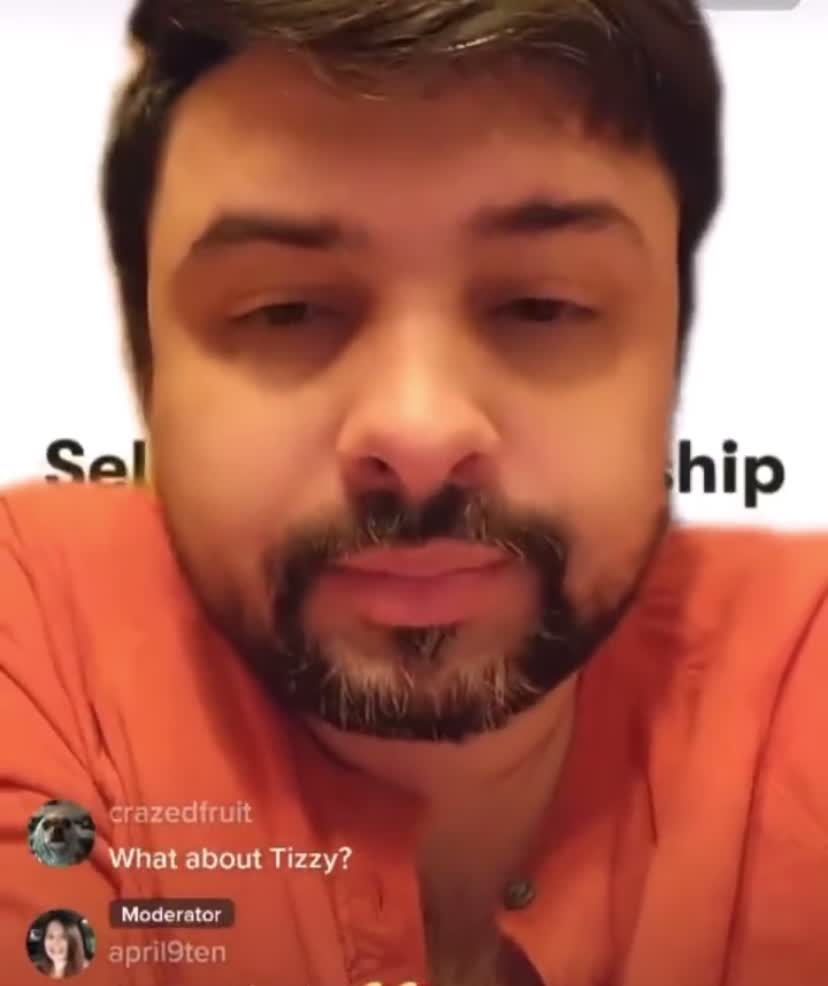
The same method reached Texas football coach Aaron De La Torre. The Fort Worth Star-Telegram reported that police reviewed surveillance video, witness statements, and the encounter involving a juvenile; the juvenile’s parent concluded that no criminal activity occurred, declined charges, and the investigation closed on October 1, 2024. De La Torre died eight days later.

Our reporting, relying on sources outside the court record, described the death as suicide and applied the phrase Cancel Culture Killer to Noshirvan’s role in the public campaign. No court has found that Noshirvan caused De La Torre’s death. The chronology nonetheless poses the moral question that animates the label: what responsibility does a professional influencer bear for placing an identified private person before an enraged audience after law enforcement has found no crime?
I have also called Noshirvan a predator, using the ordinary, nonsexual meaning of the word. Merriam-Webster defines “predator” as “one who injures or exploits others for personal gain or profit.” Noshirvan’s public business model invites the comparison: another person’s worst moment becomes his content, the person’s identity becomes the distribution mechanism, and the resulting outrage becomes reach, leverage, and revenue.
Readers may accept or reject the judgment. The term, in that usage, expresses a moral conclusion drawn from the disclosed conduct; it does not accuse Noshirvan of a sexual offense in the same way he baselessly accused me of one.
The counter-campaign brought that judgment to Noshirvan’s hometown. A billboard and PennySaver advertisement carried his face beside the declaration “DOXXING IS VIOLENT” and invited people who believed they had been injured to call a telephone number.
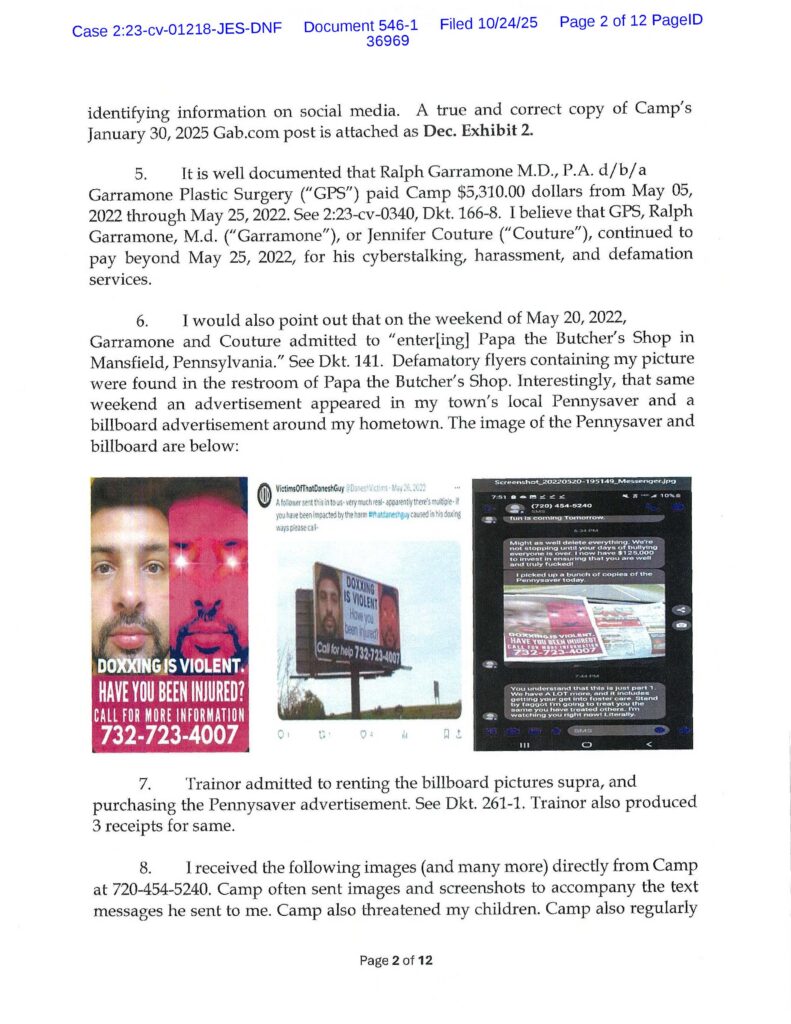
Noshirvan treats the advertising, companion flyers, and their dissemination as components of defamation and conspiracy. Yet “doxxing is violent” reads as political advocacy about the real-world consequences of exposing personal information to a hostile crowd. Judge Dudek’s speech analysis now gives that defense a formidable constitutional vocabulary.
Danesh’s Pyrrhic Victory: The Alliance Judge Dudek Refused to Call a Conspiracy
Attorney Trainor’s counterclaim depended upon the proposition that Noshirvan, James McGibney—the operator associated with @bullyville—and an anonymous account called @credibleintel acted together to defame him. Dudek did not sanitize the relationship. His order says Noshirvan and McGibney “joined forces” sometime in 2022 and remained in regular contact. McGibney sent Noshirvan money through Venmo and celebrated them as “the most brutal heavy hitters out there.”
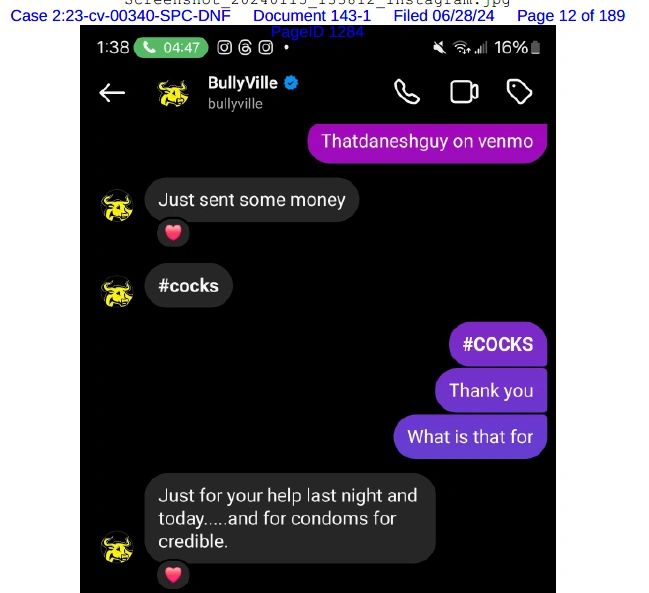
When the Trainor dispute moved from private correspondence to public combat, McGibney offered to post about Noshirvan’s lawsuit through the Couture camp and bullyville accounts. Trainor also pointed to a sustained barrage of posts that branded him a harasser, a professional wrongdoer, a Neo-Nazi, and a pedophile.
The association was palpable; the agreement was missing. New Jersey law governed Trainor’s claims, and Judge Dudek required evidence from which a reasonable jury could find a real confederation with a common design to commit the particular tort. The offer to post about the lawsuit proved “nothing more” than the offer itself. Other communications were too remote in time, unrelated to the defamatory publications, or concerned motions and drafted court filings.
Judge Dudek concluded that “through no stretch of the imagination” could the cited documents establish an agreement to defame. Once the conspiracy theory disappeared, McGibney’s publications could not be attributed to Noshirvan. Older direct claims were barred by New Jersey’s one-year limitations period, and the lone timely statement failed on the merits.
That analysis is the ruling’s central gift to Couture, Garramone, and GPS. Noshirvan’s own pleading repeatedly substitutes emphatic verbs for proof:
- Paragraph 101 says a former relative and employee placed Camp in closed-door meetings at the surgery center.
- Paragraphs 119 and 123 say Couture and Garramone allowed Camp to live at a related property and conducted significant planning there.
- Paragraphs 214, 227, and 232 assert knowledge, agreement, and a common campaign.
- Paragraphs 245 through 247 allege biweekly payments, reporting lines, required approval, account credentials, and the right to control Camp’s work.
- Paragraphs 281 and 282 say Couture authorized accounts and knowingly supplied substantial assistance.
If admissible evidence corroborates those particulars and connects them to specific harmful publications, Noshirvan possesses a stronger case than Trainor presented. If the proof establishes only payment, housing, conversation, mutual antagonism, and parallel publication, Judge Dudek has already explained why a jury may not fill the remaining space with suspicion.
If Danesh has corroborating admissible evidence, we haven’t seen it.
The distinction between pleading and proof has followed Noshirvan throughout this litigation. In June 2025, the late Judge John E. Steele held that Florida conspiracy allegations must be “clear, positive and specific,” although an agreement may be inferred from circumstantial facts at the motion-to-dismiss stage. Judge Steele found a plausible conspiracy as to several defendants based on the Second Amended Complaint, while dismissing others; he also held that compensation alone showed “mere economic control,” not the command over Camp’s methods required for actual agency.
Noshirvan used the Third Amended Complaint to add far more detail about approval and control. Those additions earned him a better pleading. They did not relieve him of Judge Dudek’s summary-judgment command to leave the pleading behind and identify concrete evidence in the record.
Judge Steele’s August 2025 sanctions order furnishes an ominous preview. In the narrower evidentiary record presented there, Judge Steele said the communications suggested relationships among Couture and Luthmann, Trainor and Camp, and Garramone, Couture, and Camp—“but not more.” He found no evidence that an expert witness had been harassed at any defendant’s behest. That ruling’s significance lies in the missing connective tissue: relationship evidence existed, while evidence of direction toward the challenged wrong did not.
The goose-and-gander principle is unavoidable. Noshirvan’s insistence that money, frequent contact, mutual praise, common enemies, and an offer to publish did not prove his agreement with McGibney. Couture, Garramone, and GPS may now demand equal rigor when Noshirvan points to money, contact, common hostility, and Camp’s independent eruptions. Florida and New Jersey conspiracy law are not identical, but both require an actual agreement directed toward an unlawful objective.
Association can be evidence. It cannot become the verdict by incantation.
Danesh’s Pyrrhic Victory: The First Amendment Comes Home
Judge Dudek’s defamation analysis creates the second symmetry. The only timely direct publication before him was an Instagram story juxtaposing a Senate exchange about Kash Patel with Noshirvan’s caption, “Sounds like Patrick Trainor.” Trainor argued that the comparison branded him a neo-Nazi. Judge Dudek held that generalized accusations of bias, extreme ideology, and bigotry, untethered to reasonably specific and verifiable facts, are protected opinion. The caption was “a textbook example” of rhetorical comparison rather than actionable defamation.
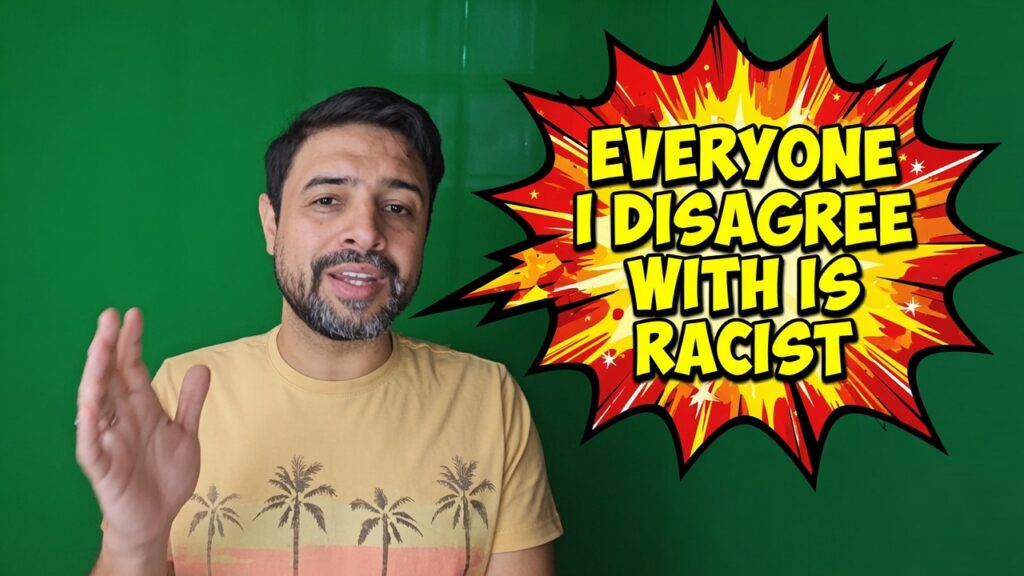
That holding does not immunize every word spoken in this feud. A concrete accusation that someone committed a crime, abused a child, or made a specific admission in court can be proved true or false and may carry a defamatory sting. Context remains decisive. Yet the rule must operate evenly. If Noshirvan’s snark, ideological labels, and moral denunciations are protected when Trainor sues him, then Noshirvan’s own claims against Couture, Garramone, GPS, and other defendants must survive the same separation of fact from opinion.
“Predator,” used with a disclosed dictionary definition and an explanation of the conduct being condemned, has a powerful opinion defense. “Doxxing is violent” states a political judgment about consequences. The surrounding text, imagery, and any specific factual implication still matter, but wounded pride cannot convert moral condemnation into a verifiable fact.
The same principle reaches the six defamation counterclaims brought by Couture, Garramone, and GPS in Case 1218. Steele’s February 2026 order allowed those claims to proceed past dismissal; it did not decide their truth, falsity, or constitutional status. Judge Dudek’s ruling gives Noshirvan a legitimate defense wherever the challenged language amounts to hyperbole. It gives the counter-plaintiffs an equally legitimate case wherever Noshirvan converted a court proceeding into a false assertion of specific criminal or racist conduct.
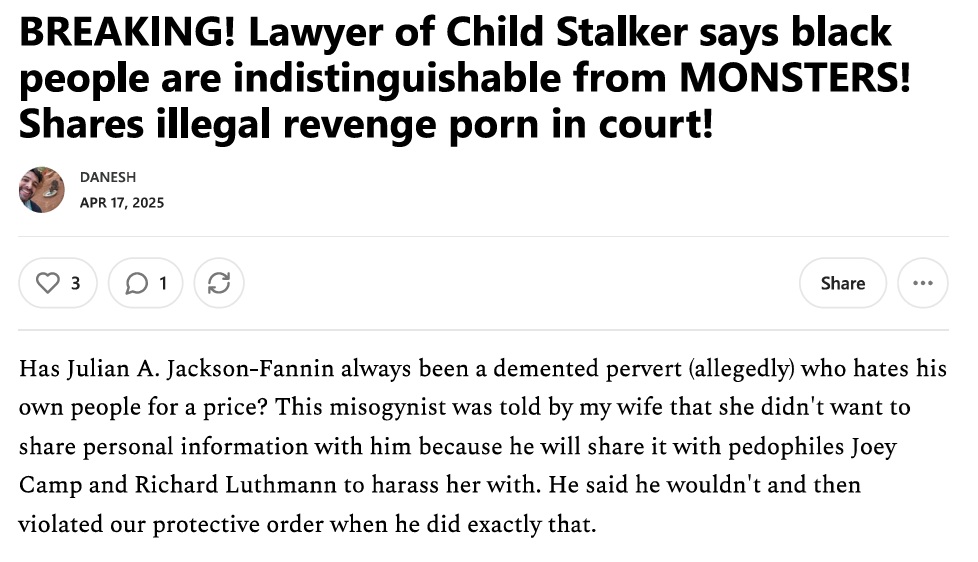
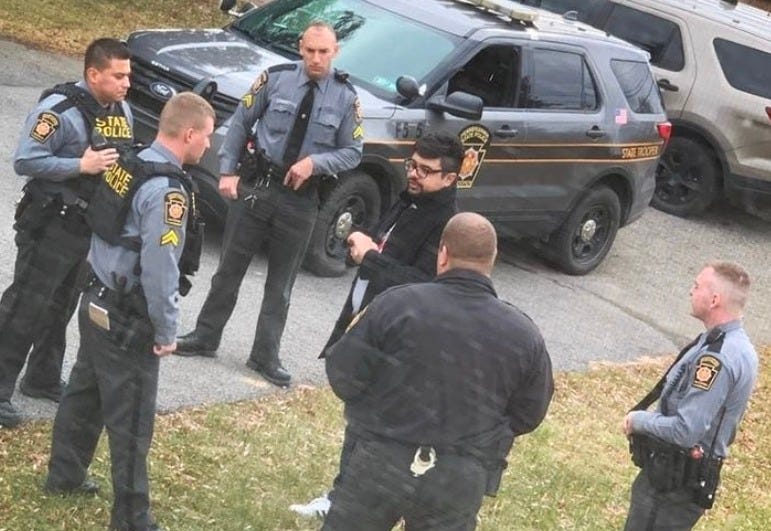
The court has already found one such conversion in the sanctions record: Judge Steele determined that Noshirvan’s post-deposition communications falsely claimed opposing counsel had said Black people looked like monsters, and that the publications were intentionally made to incite foreseeable harassment and intimidation. Judge Steele found subjective bad faith, warned that repetition could lead to dismissal, publicly reprimanded attorney Nicholas Chiappetta, and later awarded GPS $62,320 in fees.
GPS enters this phase with an additional strategic advantage. Its surviving Case 340 claims concentrate on Noshirvan’s own publications and his own alleged interference with known patient and business relationships. GPS need not transform Camp into anyone’s agent to connect Noshirvan with material Noshirvan personally published. Case 1218 asks whether Camp’s conduct can be carried across a legal bridge to Couture, Garramone, and GPS. Case 340 can proceed along the shorter road from Noshirvan’s post, to an identified relationship, to an audience response, to a measurable loss.

The long season of accusation is ending. The record will have to carry the weight.
Noshirvan won the Trainor motion because Dudek refused to manufacture a conspiratorial agreement from association and refused to turn a sarcastic comparison into a provably false fact. That is a genuine victory. Its strategic cost may be enormous. The order strips Noshirvan of the indulgent logic on which much of his own narrative depends and hands his adversaries a concise method of attack: identify the exact tort, identify the exact publication, identify the exact agreement, identify admissible proof of direction or control, and reject every invitation to treat proximity as guilt.
A Pyrrhic victory does not mean the victor secretly lost the motion. It means the price of winning may exceed the value of the ground gained. Trainor’s counterclaims are dead. Noshirvan’s larger case remains alive.
Couture, Garramone, and GPS now approach it carrying an order that treats Noshirvan’s documented financial and publishing alliance with McGibney as legally insufficient without proof of a tort-specific agreement. Noshirvan asked Judge Dudek to insist upon that distinction. The court obliged. He will now have to live under it.
Primary Case Record
• Judge Dudek’s August 28, 2026 summary-judgment order, Doc. 674, disposing of Trainor’s remaining defamation and civil-conspiracy counterclaims.
• Magistrate Judge Huguelet’s August 27 discovery order, Doc. 673, restricting the reopened discovery and setting the September deadlines.
• Noshirvan’s operative Third Amended Complaint, which pleads the Camp-centered conspiracy in Case 1218.
• Judge Chappell’s April 9, 2024 order in Case 340, addressing GPS’s surviving tortious-interference and conspiracy theories.
• Judge Steele’s June 2025 pleading order and August 2025 sanctions order, distinguishing a plausible pleading from proof and assessing the earlier relationship evidence as “but not more.”
• Judge Steele’s February 2026 counterclaim order and the order awarding GPS $62,320 in fees.
Leave a Reply