
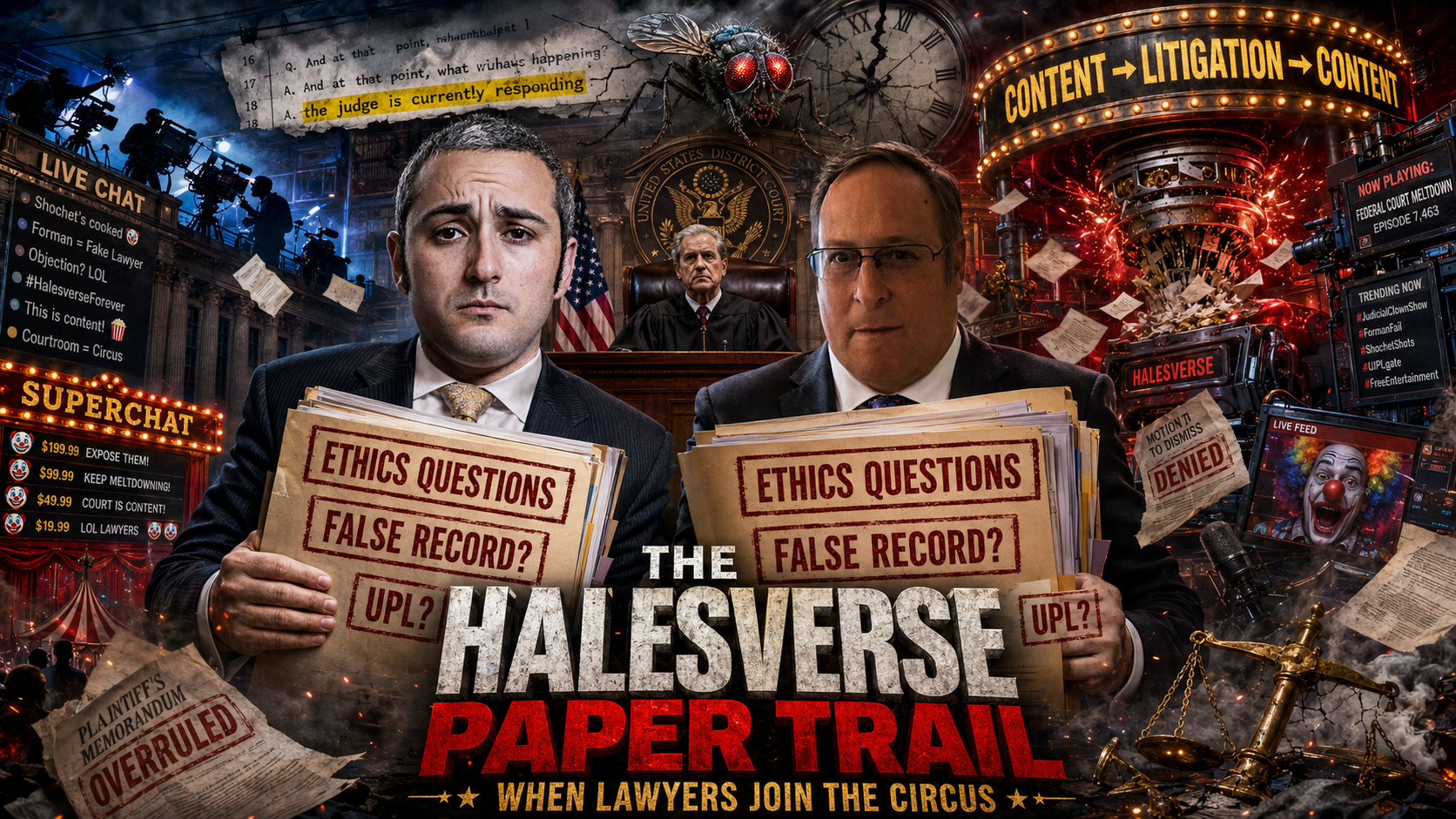
Larry Forman and Randy Shochet put the Halesverse’s legal paper trail under the microscope.
LUTHMANN NOTE: The Halesverse spent years turning court pain into content. Now the lawyers have made themselves part of the act in the Florida Courts. Larry Forman’s public pitch raises questions no bar should ignore. Randy Shochet’s filings raise questions no court should ignore. And the Fly on the Wall transcript raises questions no honest observer should laugh off. This is not about internet drama anymore. It is about lawyers using their licenses, public trust, and court access inside a monetized outrage machine. Once lawyers start laundering YouTube garbage into court papers, the show stops being funny. It becomes a legal ethics problem. It’s become a reality problem that Judge Robert Hinkle must sort out in Gainesville Federal Court. This piece is “Florida Court Lies By Lawyers.”

By Dick LaFontaine and Richard Luthmann with Michael Volpe
The Halesverse Has A Lawyer Problem
(FLORIDA, USA) – The Halesverse was always sold as entertainment. A YouTube circus, drama farm, and grievance machine with microphones, moderators, cartoon mascots, and court papers waved around like carnival tickets. But every circus eventually runs into the same problem: somebody has to sign the papers.
That is where the lawyers come in.
On a recent live broadcast, Richard Luthmann and Michael Volpe walked through the problem now sitting at the center of the Halesverse. This is no longer just Jeremy Hales doing his usual camera-facing routine, mugging for an audience, turning court carnage into content, and pushing his followers to believe whatever storyline keeps the clicks moving.
Now the issue is lawyers. Lawyers making public statements. Lawyers making representations to courts. Lawyers marketing themselves to vulnerable people. Lawyers certifying service. Lawyers describing evidence. Lawyers taking the Halesverse’s YouTube sewage and laundering it into legal filings.
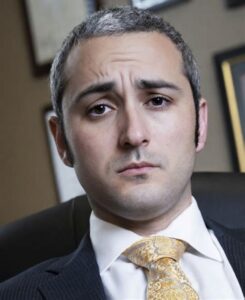

Two names matter here: Larry Forman and Randy Shochet.
Forman is the Kentucky lawyer who appears to have decided that the internet spotlight was too sweet to resist. Shochet is the Florida lawyer carrying Jeremy Hales’ paper war in federal court. Different roles. Same smell. One pitches himself to the public like a legal gun-for-hire with nationwide reach. The other files papers that, in Luthmann’s view, twist facts, dodge corrections, and try to turn satire into something it is not.
This is the real story: the Halesverse is not merely ugly. It has become lawyer-enabled.
Florida Court Lies By Lawyers: Larry Forman’s Nationwide Pitch
Larry Forman’s problem begins with his own mouth. During the discussion, Luthmann and Volpe played the clip.
Forman tells an online audience that he is a full-time practicing attorney. Then the pitch comes. If anyone “anywhere in the country” has an injury, “anywhere,” “all 50 states,” he says his operation covers the “entirety of the United States.” Then he drops the magic phrase: he is licensed in Kentucky, but he can go pro hac vice anywhere.
That is not a harmless flourish. That is not a barroom boast. That is a lawyer speaking to a public audience and making a legal-service pitch.
Pro hac vice is not a national license. It is not a golden ticket. It is not a passport that lets a Kentucky lawyer parachute into every personal-injury claim from Alaska to Florida because some YouTube viewer likes his style. Pro hac vice is case-specific, court-specific, and permission-based. It usually requires local counsel, a pending matter, a formal motion, and judicial approval. It is not “call me from all 50 states, and I will figure it out later.”
That matters because the public does not know the difference. A layperson hears “all 50 states” and “I can pro hac vice anywhere” and reasonably thinks: this lawyer can represent me. That is the consumer-protection problem. That is the unauthorized-practice problem. That is the advertising problem.
Forman may think he is being clever. He may think the internet lets lawyers talk like influencers. But a bar license is not a prop. When a lawyer markets a reach he may not actually have, the audience is not just being entertained. They may be misled.
Florida Court Lies By Lawyers: Forman’s Judge-Grudge Ethics Problem
The nationwide pitch is only one piece of the Forman problem. The other is his role in the Halesverse “Judge Grudge” machine.
Forman did not merely comment cautiously on a case. He jumped into the online fight and wrapped himself in his lawyer identity. He invoked his bar license. He attacked a sitting Florida judge in blistering terms. He amplified Halesverse talking points. He treated the judicial process like a reaction-video target.
Private citizens can say a lot about judges. Journalists can criticize judges. Litigants can complain about rulings. That is America. That is the First Amendment.
But lawyers occupy a different position. They are officers of the court. They have professional obligations. They do not get to throw their bar license on the table, whip up an online mob, and then pretend they were just another guy yelling into a webcam.
Forman’s problem is not that he criticized a judge. Judges can be wrong. Judges can be criticized. Judges can be exposed. The problem is the mix: lawyer status, audience monetization, judicial attacks, Halesverse grievance content, and a public legal pitch. That combination creates the appearance of a lawyer using professional credibility to fuel an online pressure campaign.
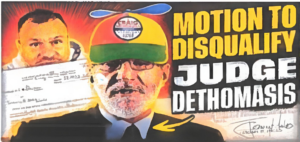
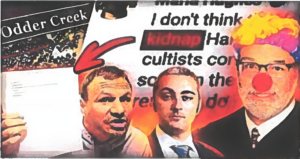
There is a difference between sober legal analysis and performative courtroom rage. Forman’s commentary, as discussed on the show, looked much closer to the second category. That matters because the Halesverse audience does not separate legal analysis from fan-service outrage. They hear a lawyer and think the story is certified.
That is how internet mobs become legally weaponized. That is how content becomes pressure. That is how a lawyer becomes part of the machine.
Florida Court Lies By Lawyers: Randy Shochet’s Certificate Problem
Then there is Randy Shochet.
Shochet’s issue is not YouTube swagger. His issue is court-paper precision. That is worse. A lawyer can embarrass himself online and maybe survive. But when a lawyer certifies something to a federal court, the words matter. The date matters. The method matters. The record matters.
The dispute Luthmann and Volpe discussed is simple. Shochet filed a certificate of service representing that a filing was served by email on June 16, including service on Luthmann as a pro se party.
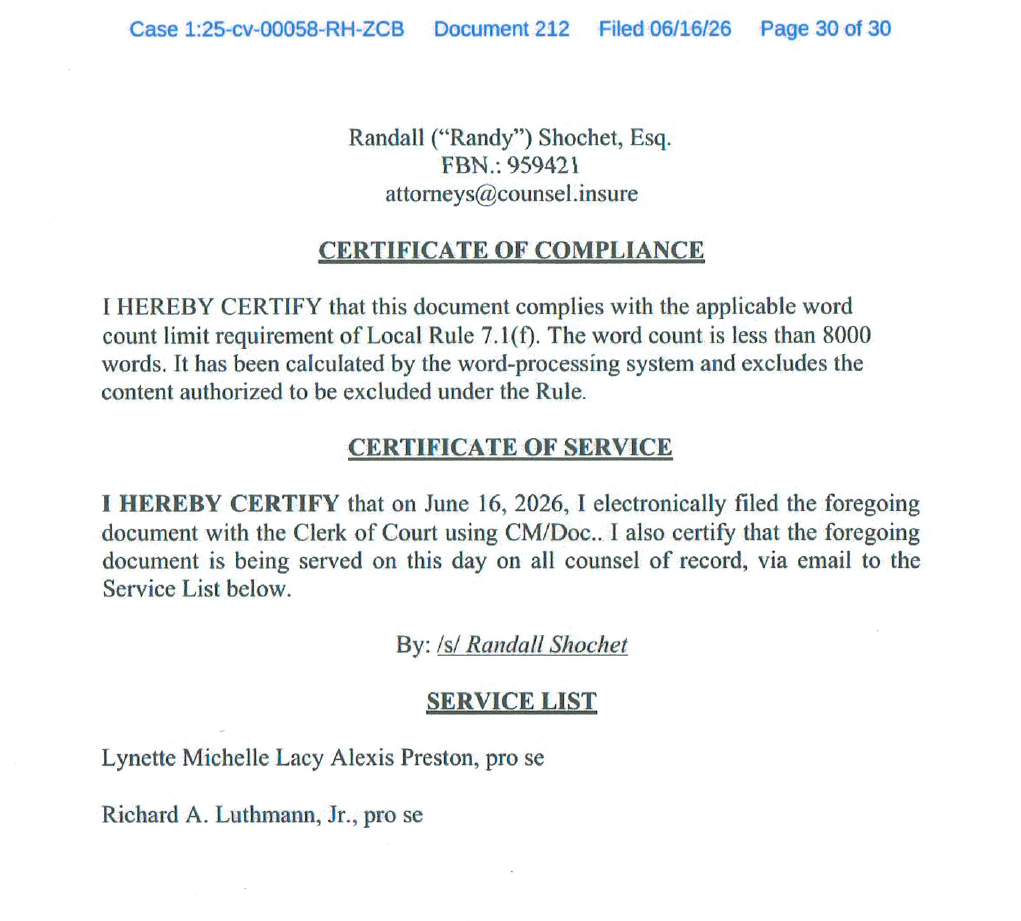
Luthmann says he had no record of receiving it by email that day. He asked Shochet for proof. Instead of producing a June 16 service email, Shochet later forwarded a CM/ECF notice. That notice, as Luthmann explained on the show, said Luthmann would be served by USPS and would not be electronically mailed.
That is not a cure. That is confirmation.
A next-day forwarded notice is not June 16 email service. A certificate that says one thing cannot be rescued by a later event that says the opposite. And this is not a clerical detail when the party on the receiving end is pro se, not an ECF filer, and dependent on accurate service to protect deadlines and rights.
Shochet should have corrected it. A careful lawyer would have said: mistake made, certificate corrected. Instead, in Luthmann’s view, he let the false record sit.
That is the point. This is not about technical gamesmanship. It is about whether a lawyer can make a factual representation to the court, get challenged, fail to prove it, and refuse to clean it up.
Florida Court Lies By Lawyers: Shochet’s Evidence Problem
The service issue is only one layer. The deeper Shochet problem is the way the Hales side has described the challenged video, which is now evidence in the case.
The core question is not complicated. They represented that the video depicts Jeremy Hales engaging in oral sex with a journalist. Fine. Then show the frame. Show the timestamp. Show the second. Show the image. Show the actual evidence.
They cannot.
Instead, the Hales side tries to move the goalposts. Suddenly it is about digitally manipulated content, semantic disputes, developing law, altered media, emotional injury, and whatever else can be thrown into the fog machine. But the court does not need fog. The court needs the exhibit.
If a lawyer tells a federal court that a video depicts something, the video either depicts it or it does not. If the statement is literal, the lawyer should point to the literal evidence. If the statement is not literal, then the lawyer should not present it as a factual description.
This matters because the Halesverse thrives on exaggeration. On YouTube, exaggeration becomes engagement. In court, exaggeration becomes misrepresentation. There is a line.
The video, according to Luthmann’s position, is satire.
Crude satire, sharp satire, offensive satire if critics want to call it that.
But satire is not the same thing as an actual sex tape. A satirical setup is not the same thing as real sexual conduct. A manipulated joke is not the same thing as revenge porn.
That is why the limited-reply motion matters. It asks the court to focus on the actual record, not Shochet’s rewrite of it.
The Fly On The Wall
And then there is the Fly on the Wall.
This is where the Halesverse gets especially strange. In the clip, Halesverse participants talk about a “Fly on the Wall” who supposedly knows what the judge is doing, who allegedly says the judge is responding to documents “as we speak,” and who “hooked” them up with documents first.
Then comes the secrecy language: they cannot get the fly in trouble; this is their ace; the fly will never be named.
Precision matters here. Luthmann is not saying that courthouse infiltration has been proven. He is not saying bribery has been proven. He is not saying a specific clerk, employee, lawyer, party, or court-adjacent person has been identified.
His argument is narrower and stronger: the concern did not come from thin air.
If adversary-aligned YouTubers publicly brag about a hidden source with supposed real-time court information, a pro se litigant has a good-faith basis to ask questions. Maybe they were lying. Maybe they were puffing. Maybe they were titillating their audience. Maybe it was ordinary docket-watching dressed up as espionage. Fine. But those are explanations. They do not erase the trigger.
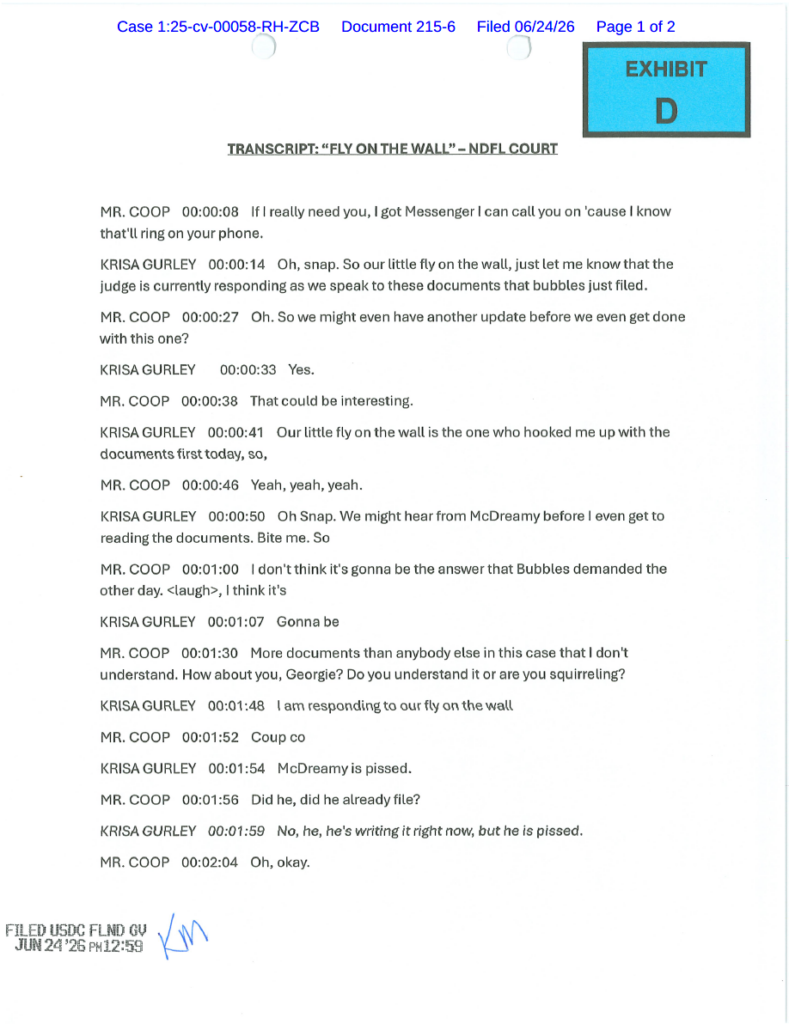
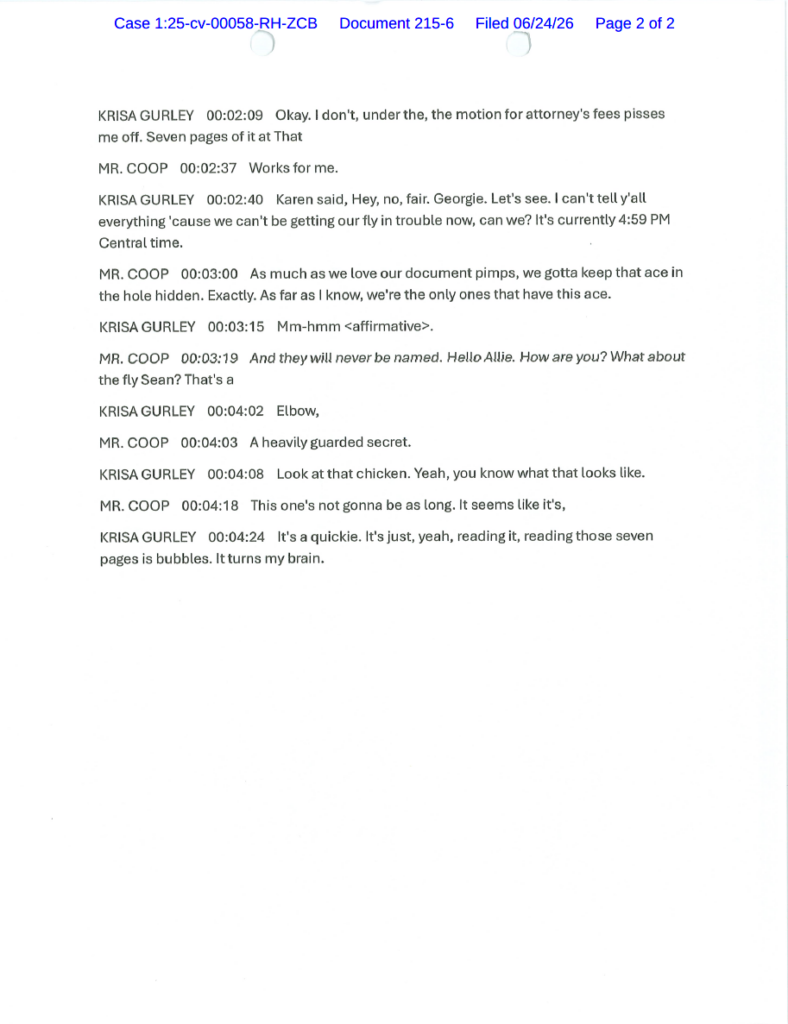
Judge Hinkle called one of Luthmann’s assertions “detached from reality.” Luthmann respectfully disagrees that the concern was invented from nothing. The Fly on the Wall transcript is the reason. If the court thinks his inference goes too far, then the court can say that. But it should not pretend the Halesverse never said what it said.
Chief Justice John Roberts has already warned the country about exactly this kind of poison. In his 2024 Year-End Report on the Federal Judiciary, Roberts distinguished legitimate criticism from illegitimate attacks, stating that not all actors engage in “informed criticism” and identifying disinformation as one of four threats to judicial independence and the rule of law.

He warned that distortion of the factual or legal basis for a ruling can undermine confidence in the courts, and that judges are especially vulnerable because they usually speak only through their decisions, not press conferences or rebuttals. He also noted that social media magnifies the problem by giving rumor and false information an instant delivery system.
That is the Halesverse in miniature. The “Fly on the Wall” stunt is the case in point: a content ecosystem publicly peddling the idea that it has some hidden source with real-time courthouse knowledge, then hiding behind ambiguity when called on it.
Whether the “fly” is real, fake, puffery, or bait, the effect is the same — it injects suspicion, rumor, and courthouse paranoia into the public bloodstream. That is not accountability. That is judicial disinformation dressed up as YouTube entertainment.
The Fly is not proof. The Fly is smoke. And smoke justifies looking.
Why The Accommodations Motion Matters
The accommodations motion is not a stunt. It is a shield.
The court now has a pro se defendant without CM/ECF access, facing a represented plaintiff, disputed service issues, a hostile internet ecosystem, and a judicial order that used the phrase “detached from reality.”
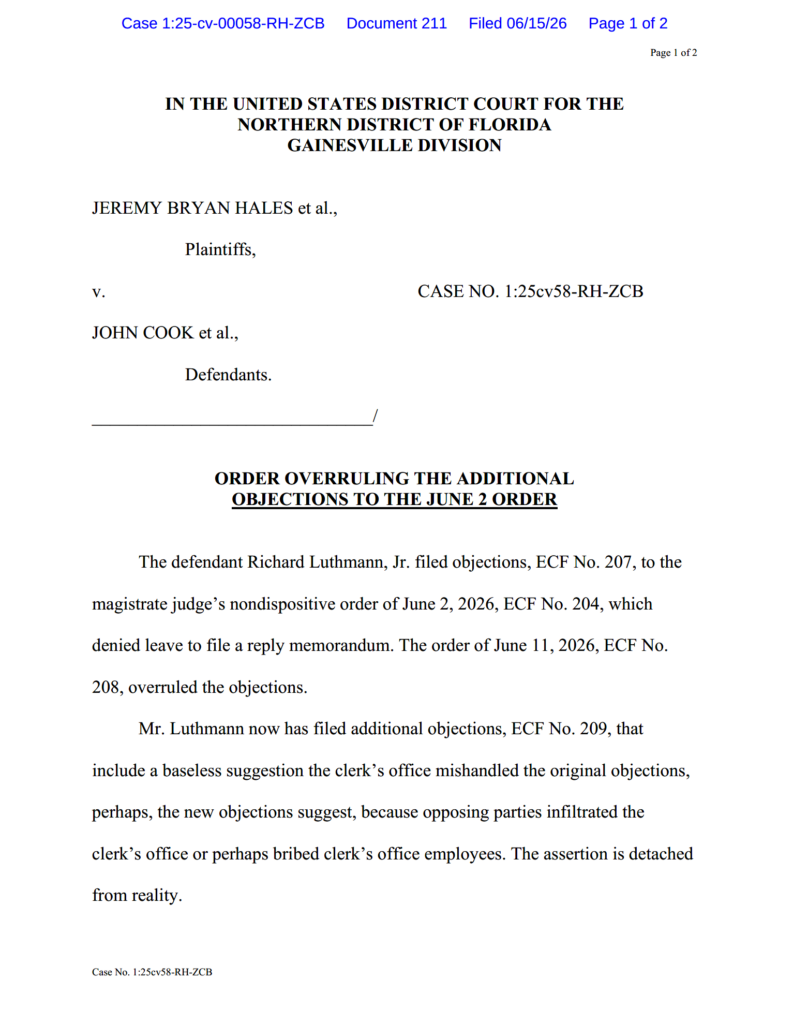
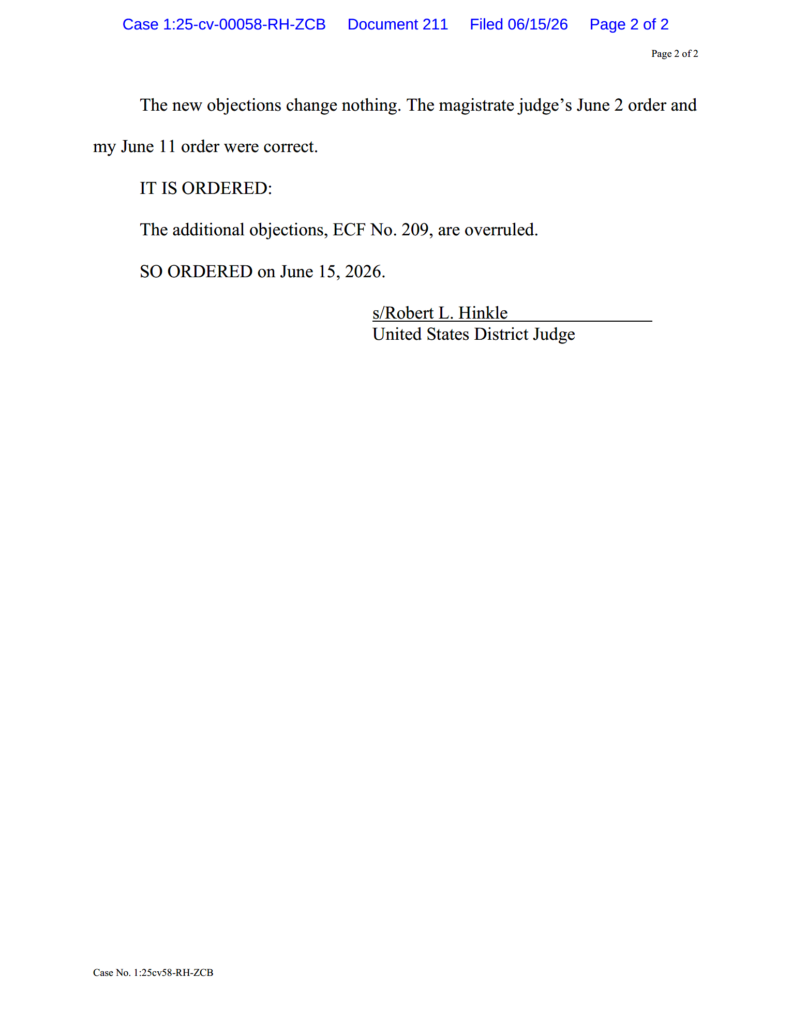
That phrase matters. If a court views a litigant’s reasoning as impaired, distorted, or unreliable, the answer should not be procedural ambush. The answer should be clarity.
Luthmann asked for practical safeguards: liberal construction, courtesy electronic service, accurate certificates of service, reasonable time where service is delayed or unclear, and an opportunity to cure defects before waiver, forfeiture, contempt, dismissal, or sanctions. That is not immunity from the rules. That is meaningful access to the court.
Hales calls Luthmann “Paint Chips.” His ecosystem mocks Luthmann’s mental state.
Then his lawyer wants Luthmann treated like a fully staffed attorney with full electronic access and no functional disadvantage. They cannot have it both ways. If Luthmann is impaired when they want to mock him, then the court should account for practical impairments when procedure matters.
This is not about special treatment. This is about fair treatment.
The Halesverse wants the worst of both worlds: ridicule the defendant as damaged, then demand lawyer-level precision from him while their own lawyer plays loose with certificates, descriptions, and records. No. That game ends when the filings hit the court.
Fair process is not a favor. It is the floor.
Florida Court Lies By Lawyers: The Bigger Machine
The Halesverse is not just one man. It is a machine.
Jeremy Hales supplies the grievance. The audience supplies the adrenaline. The side characters supply the chorus. The law-tubers supply credibility. The lawyers supply paper. Then the whole thing loops: content becomes litigation, litigation becomes content, filings become livestream material, and livestream drama becomes more filings.
That is why lawyers matter so much here. Without lawyers, the Halesverse is noise. With lawyers, the noise becomes pleadings, certificates, motions, threats, sanctions demands, and federal-court pressure. That is when the system has to wake up.
Forman’s role raises the public-facing ethics question: can a lawyer use internet fame to blur licensing limits and sell legal reach he may not actually possess?
Shochet’s role raises the court-facing ethics question: can a lawyer advance the Halesverse narrative by overstating evidence, resisting correction, and making questionable service representations?
The Fly on the Wall raises the ecosystem question: how far are these people willing to go to make the audience believe they have special access, hidden sources, inside tracks, and secret power over the legal process?
All three roads lead to the same place. The Halesverse is built on a distortion field. It distorts facts. It distorts law. It distorts procedure. It distorts public understanding. And when lawyers participate, they are not merely spectators.
They become part of the act.
Florida Court Lies By Lawyers: The Courts And Bars Cannot Look Away
This is where the bars and courts come in.
A bar license is not a YouTube prop. A certificate of service is not a suggestion. A factual representation about evidence is not a dramatic caption. A court filing is not a community post. Lawyers do not get to play influencer on Monday, officer of the court on Tuesday, and victim on Wednesday when somebody calls them out.

Larry Forman and Randy Shochet are different men with different problems. But they illustrate the same danger. When lawyers enter a monetized outrage ecosystem, the pressure is to perform. To exaggerate. To please the audience. To harden the storyline. To make everything more dramatic than the record supports.
That is poison to the legal system.
The public can be loud. Journalists can be sharp. Litigants can be angry. But lawyers are supposed to know where the line is. The Halesverse keeps finding lawyers willing to dance near that line, step over it, and then complain when someone points to the footprints.
This is not just “internet drama.” That phrase is how guilty people try to shrink serious misconduct into background noise. This is about legal ethics, court integrity, public deception, and the abuse of litigation as content fuel.
Forman should answer for his public legal marketing and judicial commentary. Shochet should answer for his court-paper representations. And the Halesverse should answer for the Fly on the Wall circus it created.
Because once lawyers start lying, the show is over. The court becomes the stage. And the public becomes the victim.
Leave a Reply